REVIEW · CRUISES & BOAT TOURS
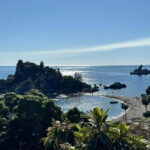
boat tour exploring and searching for dolphins in Acitrezza
Book on GetYourGuide →Operated by Navigando per trezza · Bookable on GetYourGuide
Sunset boats chase dolphins for real. From Aci Trezza, this 2-hour marine trip is a practical wildlife search: you’re out on the water, guided and equipped to look for cetaceans around the Cyclops seascape and protected waters.
I especially like the small group format (max 8), because it feels easier to spot movements and ask questions without shouting over everyone’s binoculars.
I also like the way the team leans on field skills, with more than 10 years in the sector plus binoculars and cetacean identification cards for learning what you’re seeing. In at least one trip, I saw Andrea named as the guide, which matches the tour’s focus on clear spotting and calm, respectful wildlife behavior.
A key consideration: you’re going out to search, not to tick off a guaranteed dolphin photo, and the boat only runs in favorable weather.
In This Review
- Key Points You’ll Actually Care About
- Aci Trezza at Sunset: A Simple 2-Hour Dolphin Search
- The Route Around the Cyclops Coast: Lachea Island First
- The Faraglioni and the Myth That Explains the Rocks
- Dolphin Marine Protected Area Off Catania: Where the Search Becomes Real
- The Visitor Center Stop: Briefing, Then You’re Off
- Onboard Timing, Swimming Options, and What to Bring
- Languages and Group Size: Why It Changes the Quality
- Price and Value at $67.97 for Two Hours
- Who This Tour Suits Best (and Who Should Skip It)
- Should You Book This Aci Trezza Dolphin Search?
- FAQ
- How long is the boat tour?
- Where do you meet for the tour?
- What time does the tour start?
- What animals does the tour look for?
- How far from the coast does the boat go?
- What’s included in the price?
Key Points You’ll Actually Care About
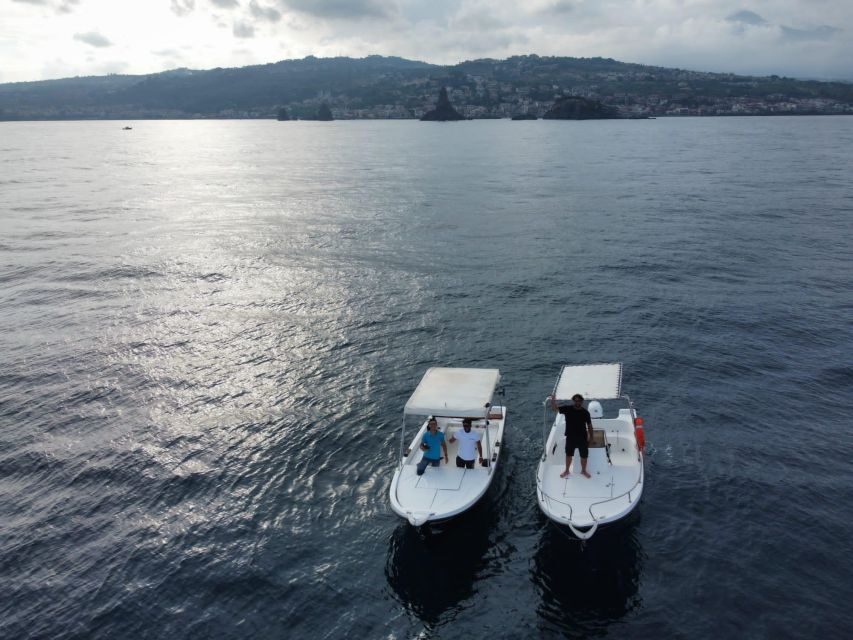
- Small group (up to 8) keeps dolphin watching focused and questions easy
- Binoculars and cetacean ID cards help you learn while you watch
- Sunset timing puts you in prime light for spotting surfacing movement
- Offshore reach is modest (about 3 nautical miles / 5 km), so you’re not on a long haul
- Protected-area focus supports better wildlife viewing practices and context
Aci Trezza at Sunset: A Simple 2-Hour Dolphin Search
This is a boat tour that treats wildlife watching like work you can enjoy: a short ride, clear guidance, and a plan built around where animals tend to show up. Departure is from the centenary port area of Aci Trezza, with a start time listed at 6:30pm, so the whole experience lives in that calm pre-night light that makes sea life easier to read.
You’ll be on board with a skipper and guide speaking English, Spanish, and Italian. That matters, because the guide isn’t just narrating rocks and legends; they also help you connect what you’re seeing to what’s known for these waters.
Other Cyclops Coast and boat tours from Catania we've reviewed in Catania


The Route Around the Cyclops Coast: Lachea Island First
Your first “where are we?” stop centers on Lachea Island, part of the protected area that includes the Lachea Island and Cyclops stacks. It’s the largest outcrop in the Cyclops archipelago close to Aci Trezza, and it’s described as being of subvolcanic origin—formed when magma intruded into seabed rock.
What I like here for you: this opening stop gives you a geographic anchor. Before the dolphin search gets serious, you get oriented to the archipelago layout, so later sightings (or missed sightings) still make sense in context.
A drawback to consider: Lachea Island is not huge, so if you’re expecting a long scenic landing or a major shoreline moment, you won’t get that. This is about viewing from the water with a guide’s commentary, not a sightseeing walk.
The Faraglioni and the Myth That Explains the Rocks
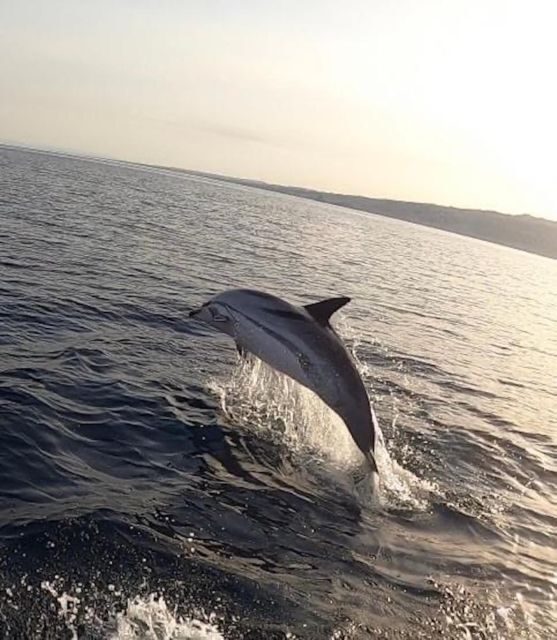
Next comes the Faraglioni, those stacked rock formations tied to the Cyclops stories from Greek mythology. The legend you’ll hear links the rocks to Polyphemus and Ulysses, which may sound like pure theater—but it also gives you a simple mental map when you’re scanning the sea.
You’ll also be in a protected marine area around the island, stacks, and additional rocks arranged in an arc. In practice, that’s useful because it signals the boat isn’t just cruising randomly; it’s operating in waters where monitoring and wildlife-aware rules apply.
One thing to watch: rock formations are visually impressive, but the tour’s main goal is cetaceans. If you love geology for its own sake, you’ll enjoy this section; if your main goal is dolphins, keep your attention on the guide’s “look here” cues.
Dolphin Marine Protected Area Off Catania: Where the Search Becomes Real
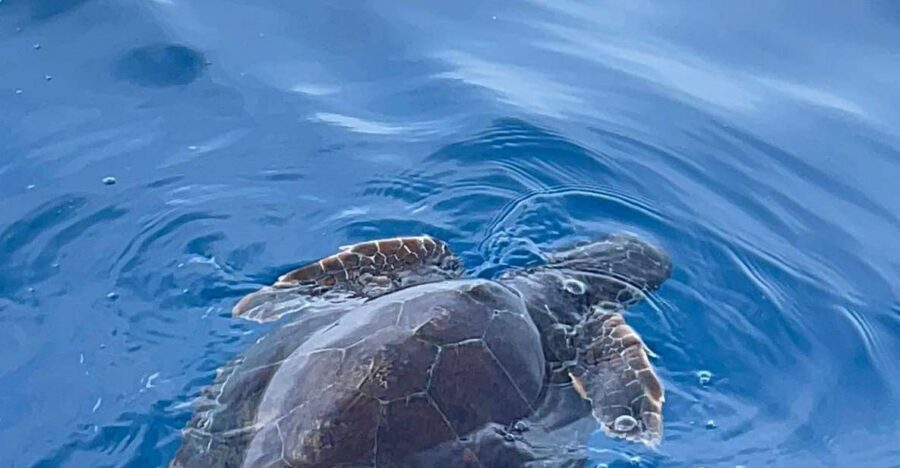
This is the core of the experience: the Dolphin Marine Protected Area around Catania at sunset. The tour is specifically about searching for cetaceans, mainly dolphins, and the description also includes turtles and typical Sicilian fish such as bluefin tuna.
The operational detail that helps you manage expectations: the boat moves away from the coast for about 3 nautical miles (about 5 km). That’s far enough for you to reach more open water where animals can travel and surface, but not so far that the outing becomes a long transit day.
How the spotting experience likely feels in real time:
- You’ll be given binoculars and cetacean identification cards, so you can match body shape and behavior to what the guide is calling out.
- The guide’s job isn’t just spotting; it’s teaching you what counts as a cetacean cue (surfacing, movement patterns, blow location).
Even in good conditions, dolphins are wildlife—so sightings depend on the day’s conditions. If you go in expecting a few minutes of action rather than a constant show, you’ll enjoy it more.
The Visitor Center Stop: Briefing, Then You’re Off
There’s a stop tied to a visitor center, and that’s where you’ll get a guided visit that leads into the boat experience. This part is more than a formality: it’s where the guide can explain the monitored area and what behaviors to watch for while you’re on the water.
This is valuable for you if you’re not an experienced marine spotter. The identification cards plus a short briefing can turn a vague “I think I saw something” moment into a real understanding of what you’re likely looking at.
A small practical note: the tour includes a timeboxed experience (it’s still a 2-hour total outing), so the center stop works best as a short learning burst—not as a long museum moment.
Other boat tours in Catania




Onboard Timing, Swimming Options, and What to Bring
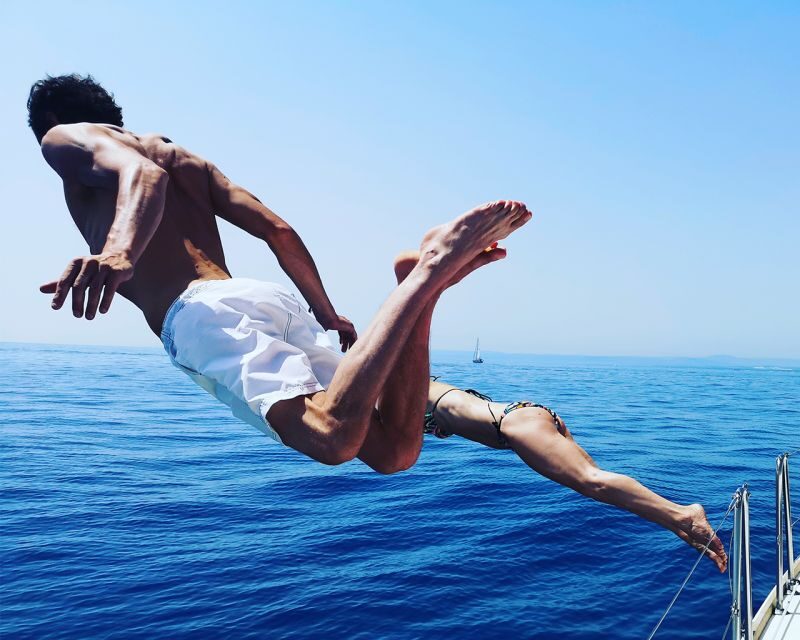
The tour is set up as a compact trip: you’ll be out, watching, and returning with enough daylight for sunset viewing. It also notes that during the stages in the Sicilian Ionian sea, you can stop for a swim. That’s the kind of extra that makes the evening feel like more than a search mission.
If you plan to swim, pack like an adult who hates soggy stress:
- Sunglasses
- Sunscreen
- Water
- Jacket (evenings can cool down fast on the water)
- Waterproof bag
Also, the tour is clear that it’s not suitable for people with heart problems or other serious illnesses. It’s also not wheelchair accessible, though it is stated as accessible for strollers. If you’re traveling with a mobility constraint, you’ll want to ask what boarding looks like in practice before you go.
Languages and Group Size: Why It Changes the Quality
This isn’t a huge crowd tour. The group is limited to 8 participants, which makes a real difference during dolphin watching. When animals surface, seconds matter. With fewer people, you’re more likely to get your turn with a good view and less likely to lose the moment in a sea of elbows.
The guide team speaks Italian, English, and Spanish, which is helpful if you want to understand the science side of the briefing. And if you’re traveling with friends from different language backgrounds, you won’t feel stuck with “one person translates everything” energy.
Price and Value at $67.97 for Two Hours
At $67.97 per person for a 2-hour experience, you’re paying for more than time on a boat. You’re paying for a practiced team (10+ years in the sector), wildlife-focused guidance, and equipment that supports actual identification—not just casual sightseeing.
The included items add real value:
- Skipper and guide (Italian and English listed in inclusions, with multilingual staffing overall)
- Civil liability insurance
- Binoculars and cetacean identification cards
- Information briefing on cetaceans and the monitored area
So the deal makes sense if you care about understanding what you’re seeing. If your priority is purely scenic cruising with zero learning, you might feel it’s more structured than you expected. But for dolphin searching, this format is exactly what you want.
Who This Tour Suits Best (and Who Should Skip It)
I’d point this tour toward you if:
- You’re in Sicily and want a focused Aci Trezza dolphin boat experience rather than a long day trip
- You like wildlife watching with guidance and equipment
- You can handle the reality that the ocean controls the show
It’s less of a fit if:
- You have heart problems or serious medical limitations
- You rely on wheelchair access
- You’re expecting guaranteed dolphin sightings every time (this is a search trip, and wildlife doesn’t follow schedules)
Should You Book This Aci Trezza Dolphin Search?
If you want a compact, sunset-timed outing with expert guidance, this is a solid booking. The small group, the binoculars + cetacean ID cards, and the protected-area focus are all strong signs that you’ll come away learning something, not just hoping for luck.
My main “wait and think” reason is simple: dolphin watching is still nature watching. If you can enjoy it even when sightings are brief—or if you prefer long, guaranteed sightseeing—consider another style of tour. But if you’re happy to scan the sea for a short, guided window, you’ll likely find this one worth your time and money.
FAQ
How long is the boat tour?
The duration is listed as 2 hours.
Where do you meet for the tour?
The start is listed as bazar del mare, and the departure location is also given as Via Lungomare Dei Ciclopi, 177.
What time does the tour start?
The specified start time is 6:30pm.
What animals does the tour look for?
The tour description says you’ll go in search of cetaceans, mainly dolphins, and it also mentions turtles and typical Sicilian fish such as bluefin tuna.
How far from the coast does the boat go?
It says the boat moves away from the coast for approximately 3 nautical miles, about 5 km.
What’s included in the price?
Included are the skipper and guide, civil liability insurance, binoculars, cetacean identification cards, and an information briefing on cetaceans and the monitored area.