REVIEW · AGRIGENTO & VALLEY OF THE TEMPLES
From Catania: Agrigento and Piazza Armerina Audioguide Tour
Book on GetYourGuide →Operated by Tourist Dream · Bookable on GetYourGuide
Ancient Sicily packs a lot into one day. I like this route because you get 2h30 at Agrigento’s Valley of the Temples and 1h30 for Villa Romana del Casale’s mosaics. The schedule is tight at the Roman stop, so arrive ready to move and plan a quick photo sprint.
Pickup is near Duomo Square in Catania, and you ride in an air-conditioned van driven by Interlingua while an audioguide talks in six languages. It is a clean way to experience UNESCO sites without hunting for buses or timing yourself.
In This Review
- Key highlights you’ll feel right away
- From Catania’s Duomo Square: the ride that sets the pace
- Valley of the Temples in Agrigento: Greek ruins with real presence
- Switching gears to Piazza Armerina: a Roman day trip mood change
- Villa Romana del Casale mosaics: where you’ll slow down (or wish you had more time)
- Audioguides on the road: great support, but watch the audio clarity
- Driver and operator: Interlingua and Tourist Dream in a nutshell
- Price and value: what you’re paying for (and what you’ll pay extra)
- Who this tour fits best (and who should skip it)
- My take: should you book this Catania day trip?
- FAQ
- How long is the tour from Catania?
- Where does the tour start and end?
- What’s included in the price?
- Are entrance tickets included for the archaeological sites?
- Is a guide included in the vehicle?
- What languages are available for the audioguide?
- Is food or drink included?
- What should I bring?
- Is this tour suitable for mobility impairments?
- Are alcohol or drugs allowed?
Key highlights you’ll feel right away
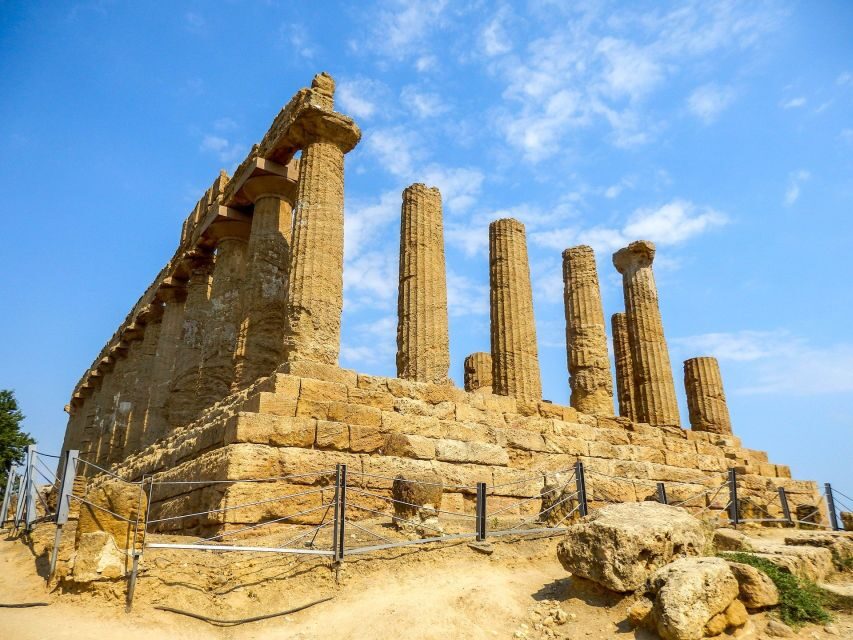
- Valley of the Temples, Agrigento (2h30): Doric Greek ruins in a UNESCO park setting
- Villa Romana del Casale, Piazza Armerina (1h30): Roman mosaics across floors, walls, columns, and even coins
- Multilingual audioguide (6 languages): English, Spanish, French, Italian, German, Russian
- Comfort-first transport: air-conditioned van and driver service from Interlingua
- Round-trip convenience: pickup and drop-off back near Duomo Square
From Catania’s Duomo Square: the ride that sets the pace
This day trip is built around one simple idea: get you out of Catania early enough to see two of Sicily’s biggest archaeology stops, without turning your day into a logistics project. You meet the driver just nearby Duomo Square, then you’re on the road in a comfortable, air-conditioned van.
The drive matters more than you might think. When you’re spending most of the day in sites that require walking and looking closely, travel comfort becomes part of the experience. This one is also audioguide-led, meaning the commentary is planned for the spots you’re visiting—not general “Sicily talk” that leaves you wishing you’d brought a book.
You also get a clear structure: first stop Agrigento’s Valley of the Temples, then Piazza Armerina for the Roman villa. That flow helps you switch gears from Greek to Roman without you having to figure out what you’re seeing while you’re tired. And because you return to the same meeting point, you’re not juggling anything at the end of the day when your feet are already voting for the couch.
Other Agrigento and Valley of the Temples tours we've reviewed in Catania


Valley of the Temples in Agrigento: Greek ruins with real presence
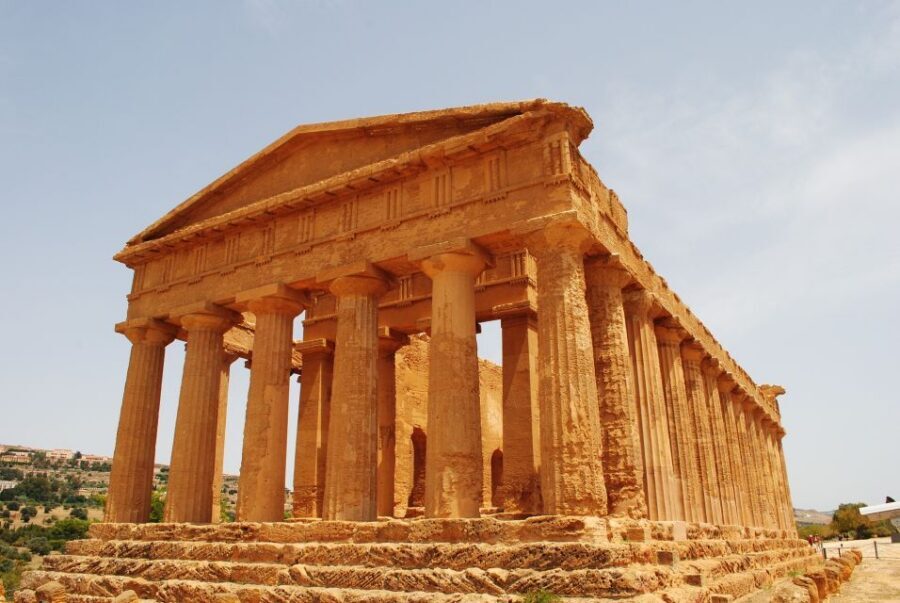
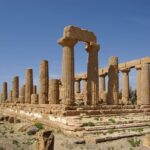
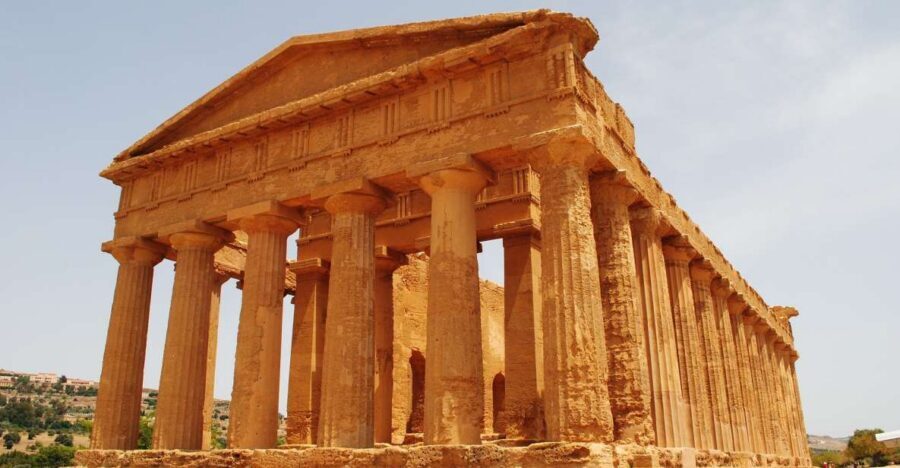
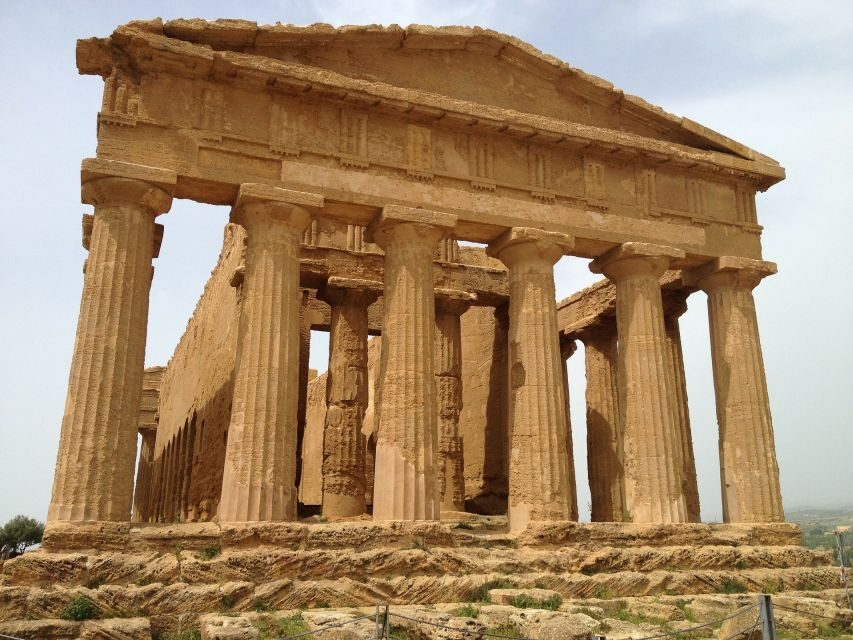
The Valley of the Temples Archaeological Park in Agrigento is the headline stop. This UNESCO site is famous for well-preserved Doric temples dedicated to Greek divinities, and the reason it works so well is that you can actually visualize the original grandeur. Even if you know the basics, the scale and layout help you connect the dots faster than you would standing in front of museum panels.
You’ll have about 2h30 to explore, which is a sweet spot. Long enough to wander between temple areas at a relaxed pace. Short enough that you’re not stuck doing the same loop for hours. Your audioguide helps here: it’s giving you context as you move through the park, so you’re not just looking at stones—you’re learning what you’re looking at.
Practical tip: wear shoes you’d wear for a long walk, not your “nice but not-so-flexible” pair. The park has uneven ground in places, and you’ll be grateful you brought something supportive. If you like photos, plan to grab your main shots early, then slow down for the details—columns, temple angles, and the way the ruins sit in the site.
One more thing I like about the setup: since the narration is multilingual (including English, Spanish, French, Italian, German, and Russian), you can follow along even if your group isn’t all speaking the same language. It keeps everyone oriented, rather than splitting into little text-and-map circles.
Switching gears to Piazza Armerina: a Roman day trip mood change
After Agrigento, you head to Piazza Armerina, another UNESCO-listed destination. This part of the day is where the character of your trip changes. In Agrigento you’re standing among Greek temple ruins; in Piazza Armerina you’re stepping into a Roman imperial world, preserved in a way that’s almost unreal.
You don’t get a lot of time to over-plan here, which is fine. The useful move is to treat the transfer as part of the experience: rest your feet, keep water and essentials in mind, and be ready to focus again when you arrive. Food and drinks aren’t included, so if you need snacks, bring something small. The tour’s value is in the archaeology time, not in a built-in meal stop.
Also, since you’re not traveling with a live guide, the audioguide becomes your “on-the-spot explanation” throughout. That means your attention is doing the work that a museum docent would do. If you listen while walking, you get more out of the mosaics than if you just glance and move on.
This is also the moment to mentally reset for the next format of “wow.” At Villa Romana del Casale, the wonder isn’t just the building—it’s the surface, the detail, the repeated patterns, and the tiny scenes that only reveal themselves when you stop and look.
Villa Romana del Casale mosaics: where you’ll slow down (or wish you had more time)
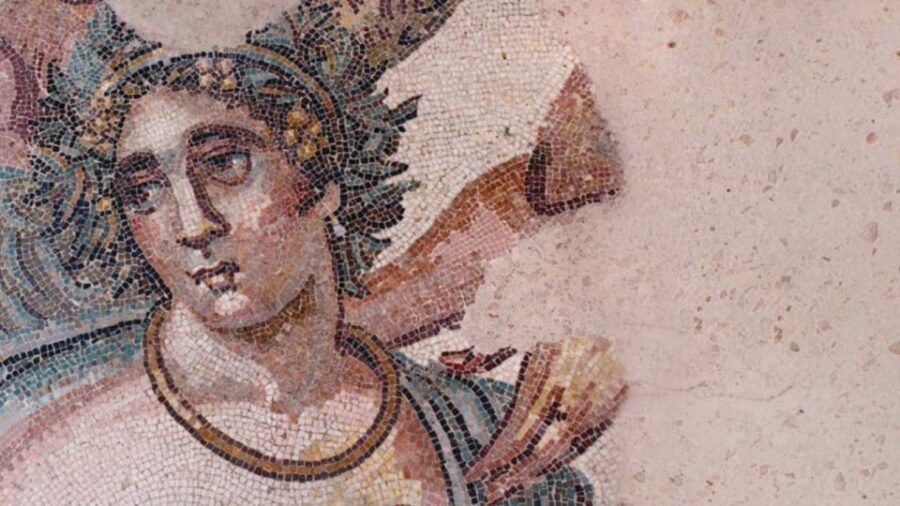
Villa Romana del Casale is the Roman highlight: an imperial villa known for extensive, vivid Roman mosaics. This is the kind of site where people often say they’re amazed, but the better takeaway is how much you can actually see in a short visit. The tour gives you about 1h30 here, which is enough to cover the main areas if you move with purpose.
What you’ll be looking at is more than decorative floor art. The mosaics are described as being found across floors, walls, columns, and even coins. That variety is key. It’s not one single room of impressive tiles—it’s a whole visual system that makes the villa feel lived-in rather than staged.
Here’s the balance check: the Roman stop can feel tight. Some timing pressure comes from the fact that you’re not the only group in the same spaces, and limited capacity can compress how slowly you want to wander. If mosaics are your main reason for booking, plan for a focused visit:
- Start with the biggest mosaic areas first.
- Give yourself permission to pause for 2–3 minutes longer on the sections that catch your eye.
- Then keep moving so you see more overall.
I also recommend keeping your phone and camera charging habits simple. With mosaics, you’ll want to take photos that capture the patterns without losing your place. Don’t let picture-taking turn into a second job.
Audioguides on the road: great support, but watch the audio clarity
This tour includes an audioguide in six languages: English, Spanish, French, Italian, German, and Russian. That’s genuinely useful. It means you’re not relying on everyone in your vehicle to agree on a guidebook language, and you get explanations tied to what you’re viewing.
The experience is designed for you to listen while you’re moving through the sites, which is exactly when context matters. Instead of guessing what Doric elements or Roman mosaic scenes represent, you get the story alongside the visuals.
One thing to keep in mind: audio can be inconsistent at moments. In practical terms, that means you should keep your volume at a comfortable level and pay attention when you’re switching between stops. If you notice you’ve missed a segment, don’t panic—just jump back in when the narration resumes clearly.
You’ll also want to protect your listening setup the way you would on any long day. Comfortable clothes help, too. You’ll likely be holding your attention for long stretches, and the better you feel physically, the easier it is to follow the commentary.




Driver and operator: Interlingua and Tourist Dream in a nutshell
The tour is driven by Interlingua, and the overall experience provider is Tourist Dream. What matters for you is how that translates on the ground: the van is described as comfortable, and the driving is handled well enough that you’re not arriving stressed.
There’s also an important support detail. If you have trouble finding the meeting point, there is mention of the operator calling to help when someone was lost a short distance away in Catania. That kind of back-up can turn a “bad start” into a normal one, especially in a busy historic center like Catania.
If you tend to arrive early and still manage to get turned around (I’m not judging), take this as a nudge to locate the meeting point area before you wander too far. Duomo Square is the anchor, but “just nearby” can still mean a few turns.
Price and value: what you’re paying for (and what you’ll pay extra)
At $130.28 per person for a 10-hour day, this isn’t a budget-only option—but it also isn’t just a way to get on a bus. You’re paying for transportation out of Catania city center, pickup and drop-off near Duomo Square, and the audioguide in six languages.
What’s not included is where your final cost can change: entrance tickets to the archaeological sites or museums, plus food and drinks. Since you’re visiting two major UNESCO attractions, the tickets can add up, so factor that in before you decide.
Where the value really shows is in time efficiency and reduced friction:
- You don’t have to coordinate separate transport between sites.
- The audioguide provides structured commentary for the key highlights.
- You avoid spending your day doing route planning instead of site time.
So the honest equation is this: if you were going to spend significant time and effort organizing a self-guided day, this becomes easier to justify. If you’re already planning a very independent route with your own transport and you don’t care about an audioguide, you may end up comparing it against a more DIY plan.
Who this tour fits best (and who should skip it)
This tour is a strong fit for you if you like big-name archaeology and want an organized, no-fuss day. It works especially well if you prefer explanations as you walk—because the audioguide is included and covers the main attractions in multiple languages.
It’s also a decent option if you’re traveling with mixed-language groups. Six languages are included, so people aren’t forced into one “dominant” language just to understand what they’re seeing.
On the other hand, it’s not suitable for people with mobility impairments. That’s the kind of restriction you should take seriously, since the sites you visit are built for walking and exploring.
If you’re the kind of visitor who wants slow, museum-style pacing at Villa Romana del Casale, this may feel rushed at times. The Roman villa stop is only 1h30, and crowding can squeeze your ability to linger.
My take: should you book this Catania day trip?
If your priority is seeing both the Greek ruins of Agrigento and the Roman mosaics of Piazza Armerina in one day, I think this tour makes sense. The structure is clear, the transport is comfortable, and the audioguide supports you through the key sights in multiple languages.
Book it if:
- you want a planned day with pickup from Duomo Square and return there
- mosaics and temple ruins are both on your must-see list
- you’d rather listen to context than piece it together on your own
Skip or reconsider if:
- you hate time pressure at major sites (the Roman villa stop can feel tight)
- you need accessibility support beyond what this style of tour can offer
- you want a built-in meal plan and would rather not manage snacks yourself
If you go in with comfortable shoes, a photo plan, and an expectation of a quick-but-meaningful Roman stop, you’ll leave with a day that covers two very different layers of Sicily—Greek sacred space, then Roman artistry—without you turning into a travel planner halfway through.
FAQ
How long is the tour from Catania?
The duration is listed as 10 hours.
Where does the tour start and end?
You’re picked up from Catania city center near Duomo Square and the tour ends back at the same meeting point.
What’s included in the price?
The tour includes pickup and drop-off from Duomo Square and an audioguide in six languages.
Are entrance tickets included for the archaeological sites?
No. Entrance tickets to archaeological sites or museums are not included.
Is a guide included in the vehicle?
No. A guide is not included.
What languages are available for the audioguide?
The audioguide is available in English, Spanish, French, Italian, German, and Russian.
Is food or drink included?
No. Food and drinks are not included.
What should I bring?
Bring a passport or ID card, comfortable shoes and clothes, and a face mask or protective covering.
Is this tour suitable for mobility impairments?
It is not suitable for people with mobility impairments.
Are alcohol or drugs allowed?
No alcohol and drugs are allowed, including alcoholic drinks in the vehicle.