REVIEW · ETNA & WINE TASTING
Catania: Volcanic Wine Tasting in a Metropolitan Market
Book on GetYourGuide →Operated by Kemedia · Bookable on GetYourGuide
If you think volcanoes are only for scenery, this tasting changes that. You’ll learn how volcanic soils shape aroma and flavor, then taste it in four guided pours paired with local bites.
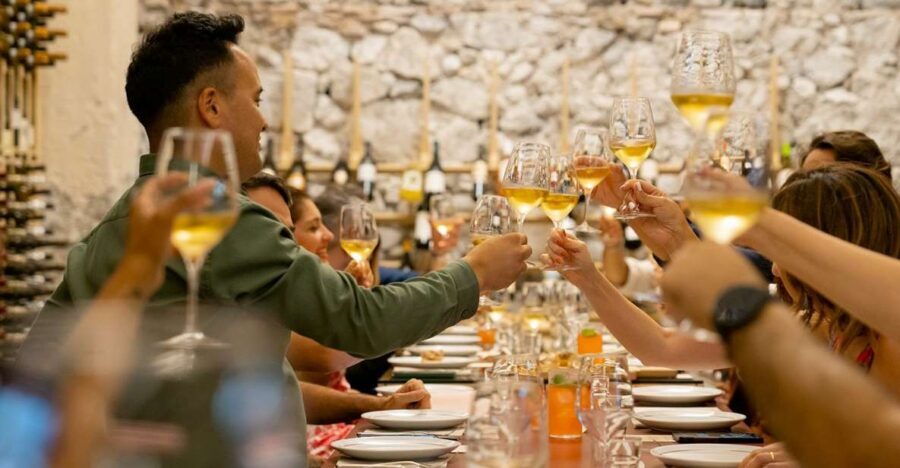
I especially like the format: short, focused explanations tied directly to what’s in your glass. I also like the venue idea—this happens in the center of Piazza Scammacca, so wine feels tied to real city life, not a sealed-off tasting room.
One consideration: the pacing between pours can feel slow at times, so if you hate waiting for the next pour, you may want to arrive a bit early and keep your questions ready.
Here’s the quick hit list before you go.
In This Review
- Key things I think you’ll care about most
- Piazza Scammacca: where wine meets everyday Catania
- What volcanic wine means in real life (and what you’ll taste)
- A practical way to taste along (so you get more from the pours)
- The chef pairings: small plates that actually match the wine
- The sommelier experience: what makes it feel personal
- How the geology lesson turns into tasting notes
- Timing it right in your Catania day (1.5 hours matters)
- Is it worth $53 per person? The value check
- Who should book this volcanic tasting, and who should skip it
- Should you book Catania’s volcanic wine tasting at Piazza Scammacca?
- FAQ
- FAQ
- How long is the wine tasting?
- What’s included in the price?
- How much does it cost?
- Where do I meet the guide?
- What languages are offered?
- Is it wheelchair accessible?
- Who is it not suitable for?
- What’s the cancellation policy?
Key things I think you’ll care about most
- Piazza Scammacca gives the experience a real street-level, Catania feel
- Four glasses of Sicilian volcanic wines, explained as you taste
- Wine + food synergy: small local bites made to match each pour
- Volcano-to-glass storytelling, centered on soil composition and its effects
- Hosts you might meet include Luca, Dominico, Andrea, Gabrielle, or Frederico
- Some pairings can work around gluten intolerance with advance care
Piazza Scammacca: where wine meets everyday Catania
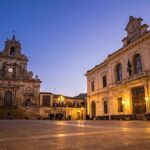
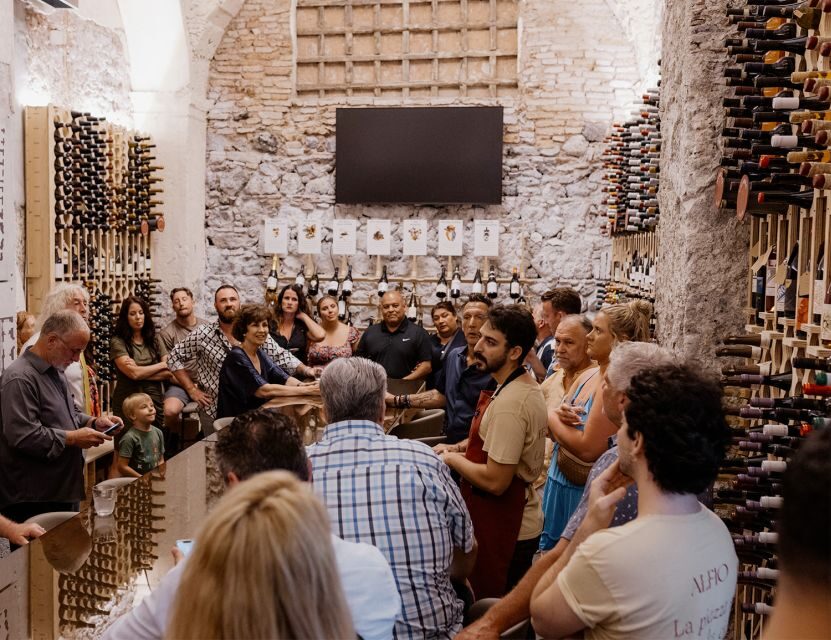
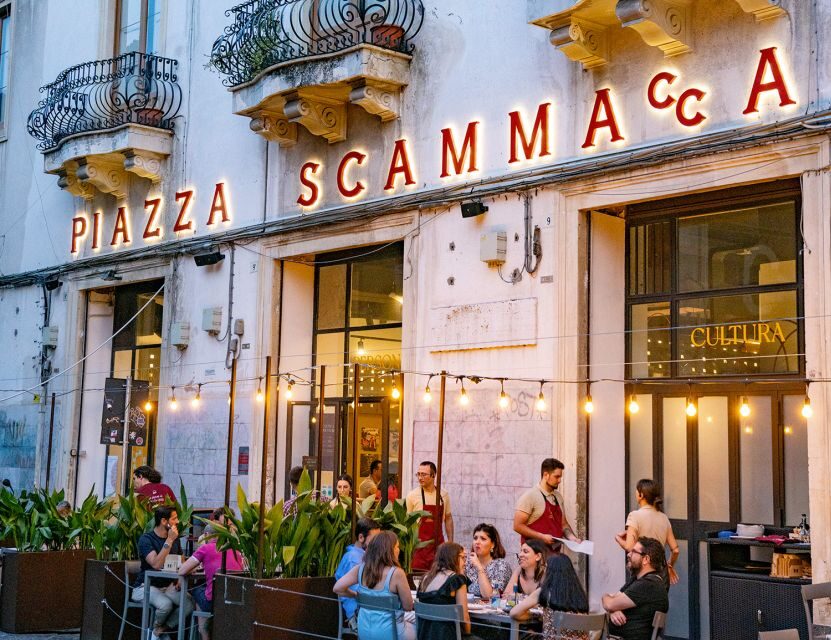
This is one of those Catania experiences that doesn’t try to pretend you’re somewhere else. You start at Piazza Scammacca, the first metropolitan market of Catania, where you get the sense that food and drink here are part of daily rhythms—not a museum exhibit. Show your confirmation voucher to staff at the entrance, then settle in for a guided tasting.
The atmosphere is practical and social. A few people also mention the interior as something special—an unusual room connected to an older religious structure (an old church/cathedral-style setting is part of the vibe). That mix is fun: market energy outside, a more “slow down and taste” environment inside.
If you’re the kind of traveler who likes to learn through place, this works. You’re not only tasting Sicilian wines; you’re tasting them while you’re actually in Sicily’s food-and-market context.
Other Mount Etna tours we've reviewed in Catania
What volcanic wine means in real life (and what you’ll taste)
The theme is Sicilian volcanic wines, and the point isn’t just marketing. You’ll be guided through how volcanic eruptions left behind soils with unusual characteristics, which then influence the smells and flavors in the wine. The way it’s explained tends to follow a clear logic: geology affects the vineyard, the vineyard affects the grape, and the grape affects what ends up in your glass.
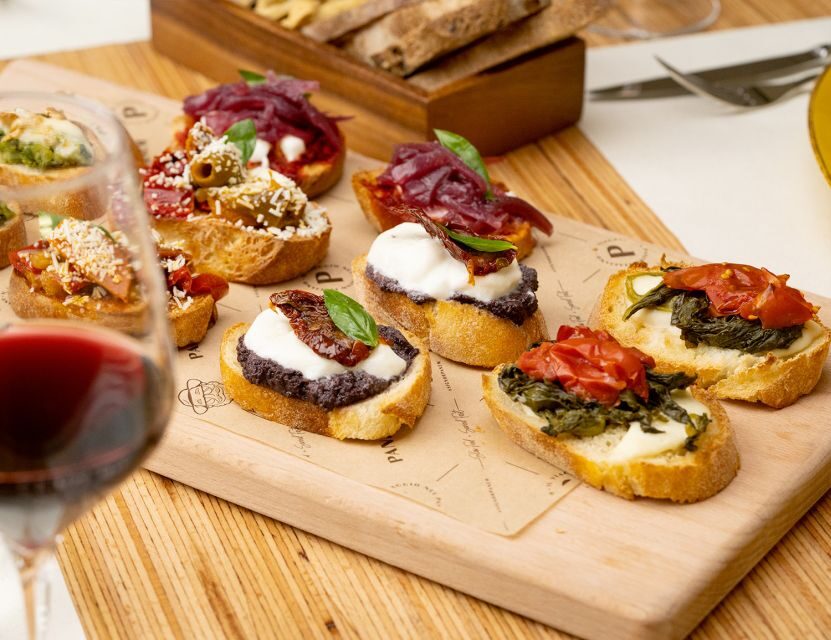
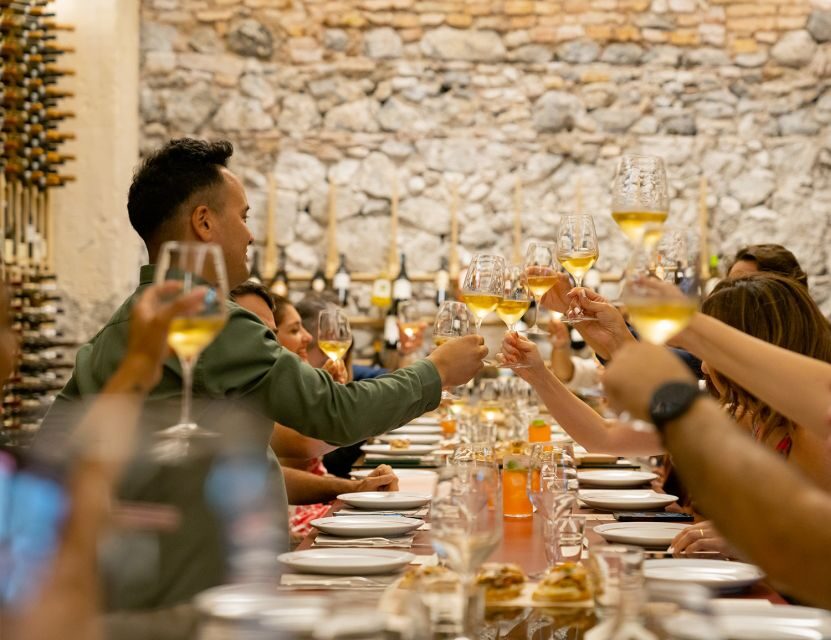
Your tasting includes four different glasses. Each pour comes with a short pairing story—why this wine fits this bite, and what to notice when you taste. One tip from the experience itself: the tasting often starts with a bubbly white (not prosecco or champagne). So be ready for the first glass to feel lively, not heavy.
You don’t need to be a wine expert to enjoy this. The whole structure is set up so you can follow along:
- You taste first.
- You learn what to look for.
- You taste again with that new lens.
That’s why this kind of tasting is worth doing even if you’ve taken other wine tastings. The volcanic angle gives you a specific theme, not just a generic “here’s a red, here’s a white” lesson.
A practical way to taste along (so you get more from the pours)
When the host starts talking, don’t try to memorize every term. Instead, pick one thing per glass:
- For the first pour, focus on smell (what stands out fast).
- For the second, focus on taste and texture (dryness, weight, mouthfeel).
- For the third, focus on aftertaste (does it linger? what kind of notes appear).
- For the fourth, focus on balance (does acidity or fruit lead, or does mineral character take over?).
This keeps the experience feeling active, even if the timing between pours isn’t lightning-fast.
The chef pairings: small plates that actually match the wine
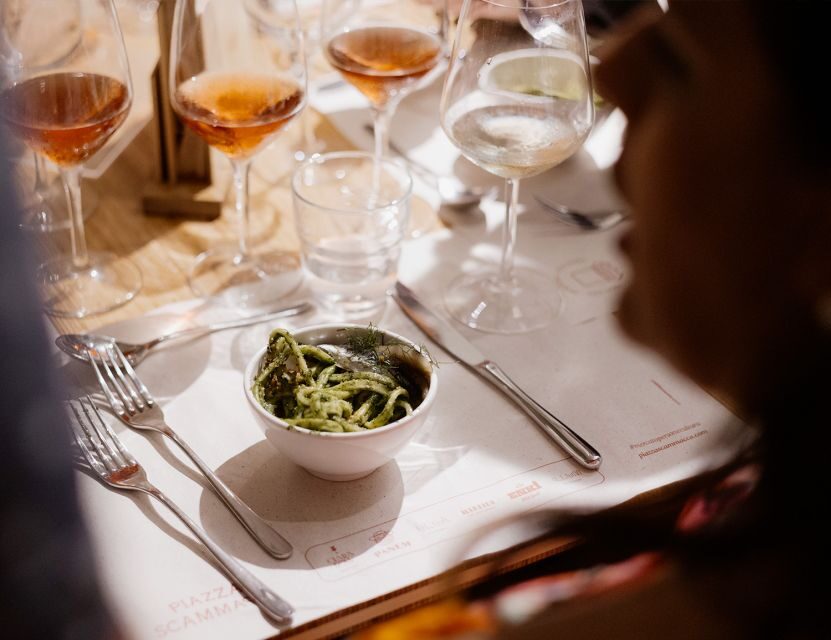
Wine tastings can fall into a trap: you get a lot of wine talk, and the food is an afterthought. Here, the food is part of the plan. You’ll sample local foods that are designed to pair with each of your four glasses.
The pairing approach is described as happening in synergy between the sommelier and chefs. In plain terms: the bites aren’t random snacks. They’re chosen to help you notice what the wine is doing. That’s a big deal because wine changes a lot when you add salt, fat, herbs, acidity, or spice.
A few specific details worth planning around:
- There’s usually enough food that you’ll feel satisfied. Several guests stress not eating dinner beforehand.
- If you have dietary needs, ask ahead. One booking notes a gluten intolerant guest and special food was prepared, so accommodations may be possible when you communicate your needs early.
- Expect small, bite-sized portions rather than a full meal service. The timing stays within 1.5 hours.
If you love food but don’t want the pressure of choosing a menu in a busy market, this is a neat middle path: structured pairing without the “where do we eat tonight” headache.
The sommelier experience: what makes it feel personal
This tasting is guided by a wine expert, with instruction in English and Italian. Several hosts are named across sessions, including Luca, Dominico, Andrea, Gabrielle, and Frederico, and the common thread is enthusiasm plus clear explanations.
What I like about this setup is the combination of science-ish talk (soil influence, origins, compositions) with human delivery. You’re not just handed a wine list; you’re hearing a story you can repeat later.
That said, one caution comes up: the flow can sometimes be a bit uneven. On some nights, you might feel a wait between pours, especially if the place isn’t packed. The upside is that you still get a chance to ask questions during pauses. The downside is if you need constant momentum to stay engaged.
If you’re the type who enjoys conversation, this helps a lot. Keep a few questions ready, like:
- What should I notice in the first aromas?
- How does volcanic soil change the grape character?
- What’s typical in Sicilian volcanic wine styles?
Other Etna wine tasting tours we've reviewed in Catania


How the geology lesson turns into tasting notes
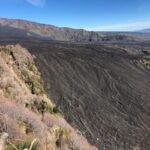
The most distinctive part here is the volcano-to-glass explanation. You’ll see how different volcano origins and compositions connect to the production of the wines you try. The experience frames it around soils that have “peculiar” characteristics, and then it translates those traits into what you smell and taste.
So what should you actually expect to notice? You’re not promised a single flavor “like ash.” Instead, you’re likely to encounter wines that feel shaped by mineral character, distinct aromatics, and often a clear sense of place. The whole concept is that volcanic influence can show up as:
- A particular aromatic profile (what arrives first on the nose)
- A different flavor texture (how it feels on your tongue)
- A lasting finish that doesn’t behave like every other wine you’ve tried
Even if you don’t use fancy descriptors, you can follow the logic. Pay attention to whether the wine feels more structured, more mineral, or more sharply defined than something from non-volcanic regions. That’s the payoff of the theme.
Timing it right in your Catania day (1.5 hours matters)
This runs about 1.5 hours, which is a sweet spot. It’s short enough that you can fit it into an evening without losing your whole plan, and long enough for four pours plus food pairings plus explanations.
Because food is included (and it’s meant to match the wines), plan your meal around the tasting:
- If you’re used to big Italian dinners, treat this like dinner with a lesson.
- If you tend to skip food until late, don’t go in totally empty—you’ll be tasting fast.
Pacing can vary. If the group size is small, it can feel more personal. If pacing stretches a bit, it can feel like waiting for the next pour. Either way, you’ll still leave with a clearer mental picture of Sicilian volcanic wine styles—plus you’ll have tasted them, not just read about them.
Is it worth $53 per person? The value check
At $53 per person, the price is really about what you get inside the time window:
- 4 glasses of wine
- food samples designed as pairings
You’re not paying only for wine. You’re also paying for the guided explanation that helps the tasting make sense, and for the chef pairing work that turns small bites into a learning tool.
Also remember what’s not included: additional food and drinks. So if you’re imagining a long dinner-style evening with extra ordering, this is not that format.
For value, think like this: if you’d gladly pay for four quality pours and would enjoy pairing food that’s chosen for the wine, this price starts to look fair. If you only want one or two tastes and don’t care about the explanation, you might prefer something less structured.
Who should book this volcanic tasting, and who should skip it
This is best for you if:
- You like wine education that connects directly to what you’re tasting
- You’re curious about Sicily beyond the usual tourist shortcuts
- You enjoy paired food (even small portions) more than you enjoy just drinking
It may not be the right fit if:
- You want a very high-energy, always-moving party vibe. Some sessions move slower between pours.
- You’re looking for a big meal experience rather than a tasting format.
It’s also not suitable for children under 18, pregnant women, or people with pre-existing medical conditions, based on the activity rules. If any of that applies, you’ll want to choose a different kind of food or wine experience.
Should you book Catania’s volcanic wine tasting at Piazza Scammacca?
I’d book it if you want a smart, Sicily-specific tasting that you can’t get anywhere else in exactly this way. The volcanic theme gives you a story with real payoff: geology that becomes aroma and flavor in your glass. Add four pours, paired bites, and hosts like Luca or Dominico (among others), and you get an experience that’s both educational and genuinely fun.
I wouldn’t book it if you’re extremely sensitive to pacing or you expect constant action. If you hate waiting, show up a little early, get comfortable, and use the time to ask questions during the pauses.
If you want a quick rule: book this when you’re hungry enough for pairings, curious enough for the volcano lesson, and flexible enough to enjoy a guided, not rushed, 1.5-hour evening.
FAQ
FAQ
How long is the wine tasting?
It lasts about 1.5 hours.
What’s included in the price?
You get 4 glasses of wine and food samples meant to pair with the wines.
How much does it cost?
The price is listed as $53 per person.
Where do I meet the guide?
Meet at the entrance of Piazza Scammacca. You’ll show your confirmation voucher to staff there.
What languages are offered?
The instructor provides guidance in English and Italian.
Is it wheelchair accessible?
Yes, the activity is wheelchair accessible.
Who is it not suitable for?
It’s not suitable for pregnant women, children under 18, or people with pre-existing medical conditions.
What’s the cancellation policy?
Free cancellation is offered up to 24 hours in advance for a full refund.