REVIEW · BAROQUE TOWNS OF SICILY
Syracuse, Ortigia & Noto
Book on Viator →Operated by DREAMING SICILY · Bookable on Viator
Syracuse, Ortigia, and Noto in one day. That sounds intense, but it’s a smart way to taste two faces of Sicily: ancient Greece and Sicilian baroque. You start in Syracuse at Neàpolis, then walk around Ortigia’s old streets, and end in Noto with its UNESCO-listed baroque glow.
What I really like here is how the day is built for variety: archaeology first, then pretty promenades and cathedral squares, and finally the baroque power-walk through Noto. I also like the included food moment—Ortigia comes with a Sicilian hot-table snack plus water and Etna wine, which turns a long day into something you actually look forward to.
One thing to consider: this is a full 9 hours with real walking. The ruins in Neàpolis and the streets in Ortigia can feel like a lot on hot days or if you have mobility limits. And if something disrupts parking at the wrong time, you may need to self-navigate part of Ortigia briefly.
In This Review
- Key things to know before you go
- Why Syracuse, Ortigia, and Noto in One Day Works
- Neàpolis Archaeological Park: Greek Theater and Dionysius’ Ear
- Ortigia Walking Route: Apollo Temple Ruins to Fonte Aretusa
- Ortigia Snack Break: Sicilian Hot Table, Water, and Etna Wine
- Noto’s Royal Gate to Nicolaci Palace: Baroque City Made for Walking
- Pacing Tips for a Full 9 Hours (So You Don’t Feel Rushed)
- Price and Logistics: Is This Good Value for $146.52?
- Who This Tour Fits Best (and Who Should Rethink It)
- Should You Book Syracuse, Ortigia & Noto?
- FAQ
- What’s the meeting time?
- How long is the tour?
- Is pickup available?
- What languages are available?
- How large is the group?
- Are entrance tickets included?
- What’s included in the price besides transportation?
- Is lunch included?
- Is the tour weather-dependent?
- What’s the cancellation policy?
Key things to know before you go
- Small group size (max 8) makes it easier to move at a human pace.
- Neàpolis time block gives you a focused look at the Greek Theater area and nearby rock-cut sites.
- Ortigia walking route starts at Temple of Apollo ruins and funnels you through Piazza Duomo and Fonte Aretusa.
- Included snack + Etna wine keeps energy up without you hunting for food right away.
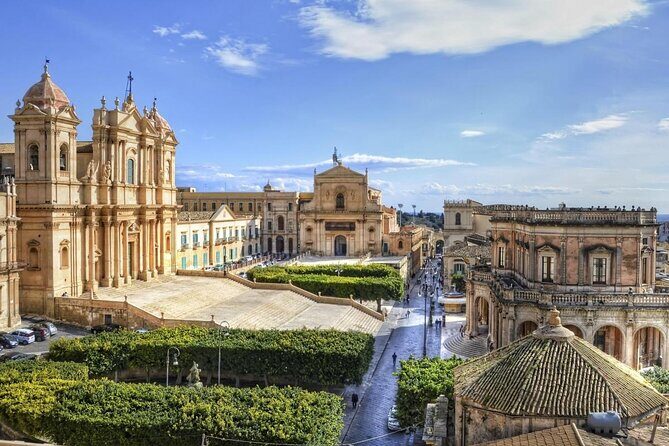
- Noto is the big payoff: Royal Gate in, then church steps, palaces, and ornate balconies.
- You’ll cover a lot in one day, so wear good shoes and plan for heat.
Why Syracuse, Ortigia, and Noto in One Day Works
This tour hits three places that are different enough to feel like separate mini-trips, but close enough to do in a day from Catania. The structure matters. You don’t just “see stuff.” You move from Greek-era Syracuse at Neàpolis, to Ortigia’s town center on the peninsula, to Noto’s baroque set-piece.
The private transportation helps a lot. With a small group (up to 8), you’re not trapped in a huge bus shuffle. You get smoother transitions between stops, and you can actually enjoy the ride with a polyglot guide who can answer questions as you travel.
The day also has built-in texture. There’s time for ruins, a proper town walk, and a baroque walking route where buildings become the main attraction. If you’ve ever wished you could compress Sicily’s “greatest hits” without turning it into a checklist sprint, this is built for that.
Other Syracuse, Ortigia and Noto tours from Catania we've reviewed in Catania
Neàpolis Archaeological Park: Greek Theater and Dionysius’ Ear
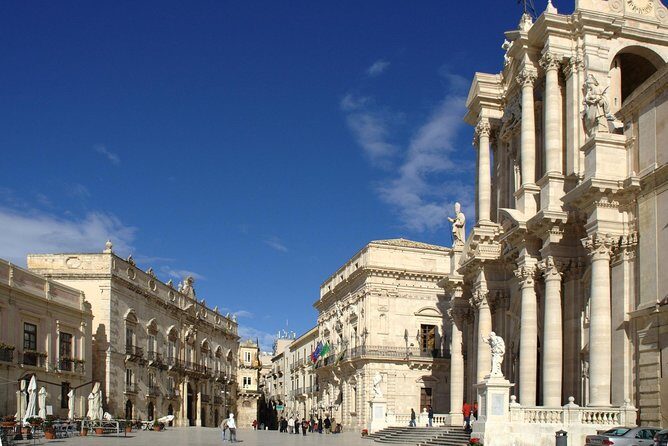
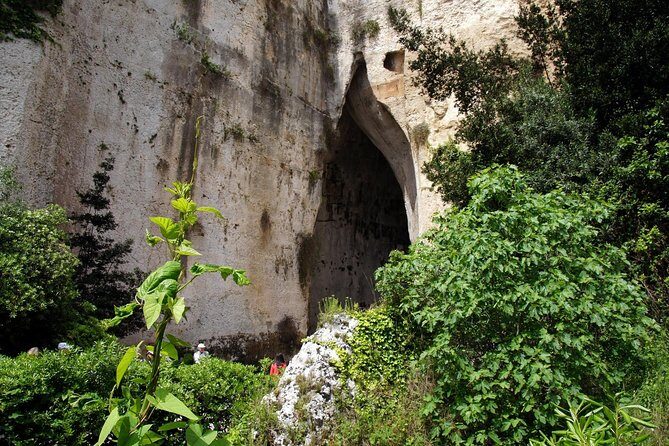
Neàpolis is where Syracuse starts to feel like a living museum. Your stop here focuses on the archaeological park in the countryside with the Greek Theater, Dionisio’s Ear, and the Latomie (rock-cut quarries/caves). This is one of the best ways to understand Syracuse’s roots because you’re seeing the setting where Greek culture literally shaped the landscape.
Plan on around 1.5 hours here. That’s enough time to orient yourself and absorb the layout without rushing. The Greek Theater area gives you a sense of scale right away, and Dionisio’s Ear adds that fascinating “sound/stone” curiosity that makes people lean in and look around more carefully.
One practical tip: this part of the day is the most “museum legs” time. Even if everything isn’t uphill the whole way, you’ll want comfortable shoes with grip. If it’s warm, consider water from the start, because you’ll be using your energy before Ortigia’s snack break.
Ortigia Walking Route: Apollo Temple Ruins to Fonte Aretusa
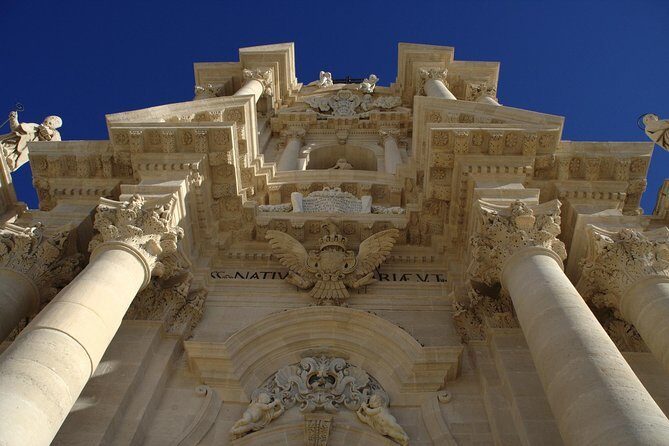
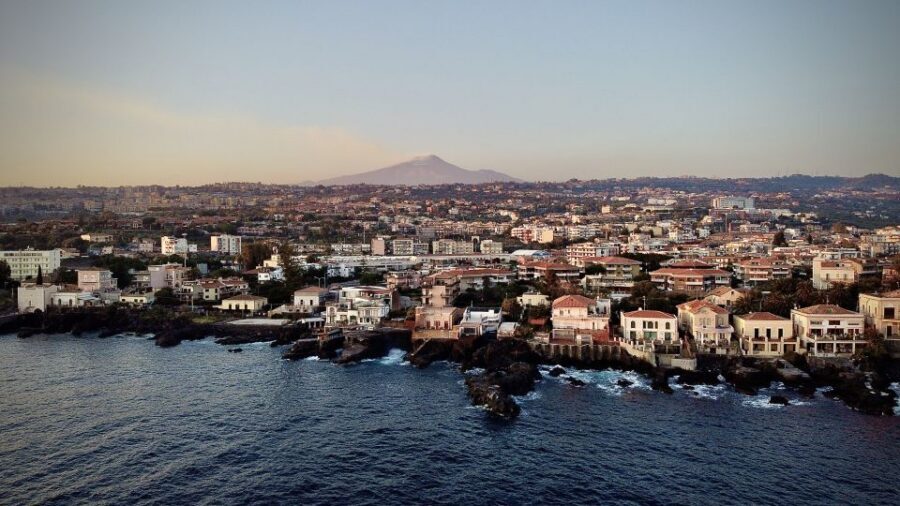
Ortigia is the peninsula you’ll keep thinking about later. The day’s walk begins with the ruins of the Temple of Apollo, then works its way through the classic old-street pattern: narrow lanes, sudden openings to squares, and buildings that wear layers of time.
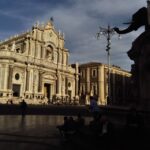
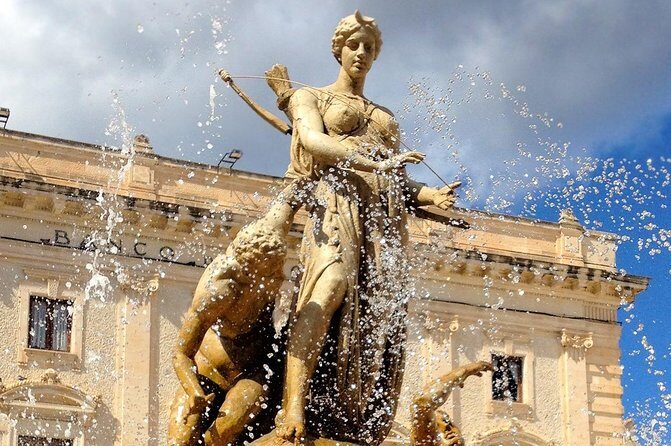
The big anchor point is Piazza Duomo. This is where the cathedral you’ll see—built on an ancient Greek temple site dedicated to Athena—makes the “palimpsest” of Syracuse feel real. You’re not reading about history in a book. You’re watching it stack up in the same footprint.
From there, the route leads you toward Fonte Aretusa and a magnificent promenade. That’s the part many people remember: you walk through town first, then you get the sea-air payoff. It also makes the snack stop feel like a reward, not a detour.
A word on pacing. Ortigia can be explored at different speeds, but the route you’re on is guided and timed. If you want a calmer experience, save your “extra wandering” for the free-lunch option. If you want photos and views, be ready to move steadily between the key points.
Ortigia Snack Break: Sicilian Hot Table, Water, and Etna Wine
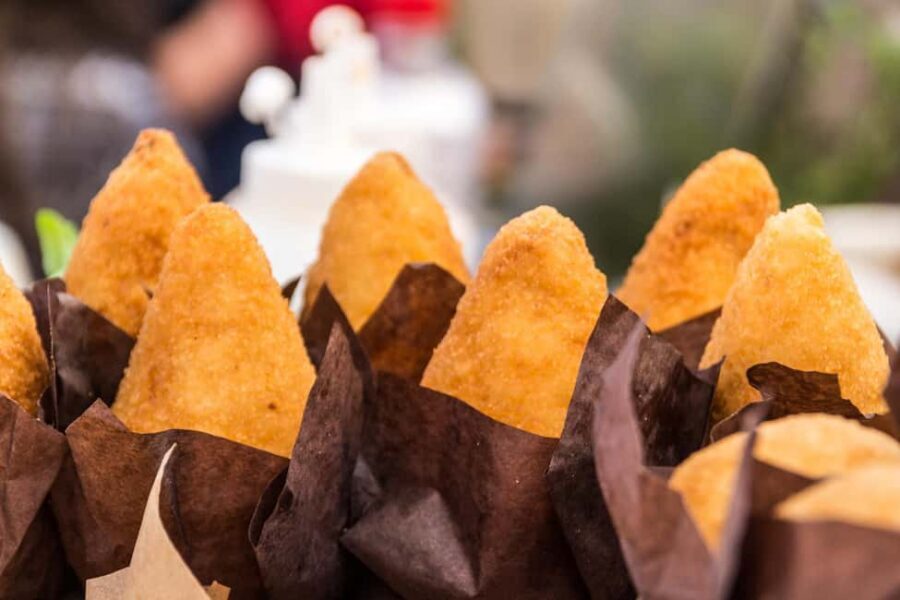
This tour does something smart with food: it schedules a Sicilian hot-table snack right while you’re in Ortigia. You get it with water and Etna wine, so you’re not left standing around trying to find a proper bite in the middle of a walk.
Why this matters: Ortigia’s best lanes are exactly the lanes that can make decision-making slow—so having the food handled keeps you from losing time hunting for lunch too early. It also means you can enjoy the day without “meal math” taking over your brain.
If you’d rather not do the included snack, you also get about an hour of free time for lunch in the alleys. That hour is useful for choosing your own restaurant vibe, but it’s also a reminder that this is still a long day. Come with a plan for what you’ll do with that hour: eat first, then walk, rather than walking first and figuring food later.
Noto’s Royal Gate to Nicolaci Palace: Baroque City Made for Walking
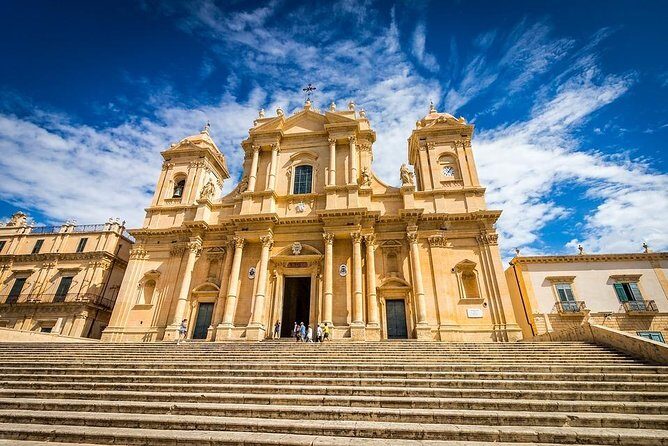
After lunch, the tour shifts to Noto, a UNESCO heritage city known for its baroque architecture. Here’s the thing: Noto doesn’t just have baroque buildings. The entire town layout feels like it was designed to be walked, photographed, and slowly stared at.
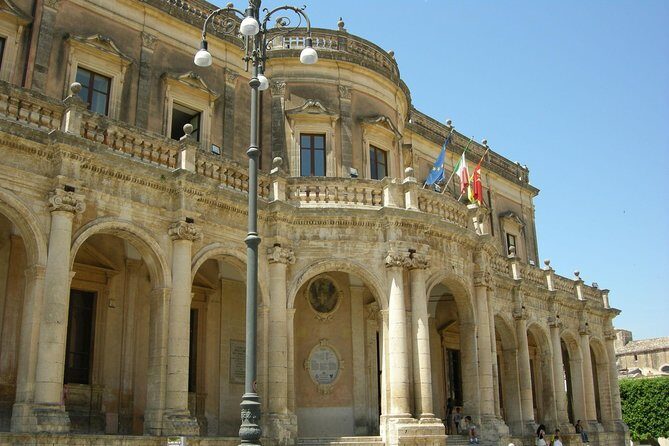
You enter through the Royal Gate, then the tour continues along the main course. Your route includes key baroque landmarks like the Church of San Francesco (from the majestic steps), Palazzo Ducezio in Piazza del Municipio, and the Mother Church with the Bishop’s palace and the Church of San Salvatore.
One of the most memorable stops is Nicolaci Palace. The ornamental balconies are a signature of the neo-baroque style, and once you start looking for that repeating detail, the town becomes a visual pattern. That’s why Noto gets described as an open-air museum: it’s not one building. It’s the street-level experience of many buildings in conversation.
Time here is about 3 hours. That’s enough to enjoy the main sights without feeling like you’re only skimming. Still, it’s a walking-heavy segment, so don’t treat it like a quick stop. If it’s hot, start strong, take small breaks, and plan to come back to the prettiest avenue areas with fresh eyes.
Other Baroque town tours of Sicily we've reviewed in Catania



Pacing Tips for a Full 9 Hours (So You Don’t Feel Rushed)
The tour is built for a calm pace, but it still compresses three destinations. That’s why the “how” matters almost as much as the “what.”
Here are the best timing strategies I’d use in your place:
- Be decisive early in each town. In Ortigia, move with purpose at the start so you hit the big highlights without doubling back too much.
- Use the free hour for lunch strategically. Eat early in that hour, then use the rest to wander. Don’t let the search for a table swallow your best light and energy.
- In Noto, take advantage of the main avenue flow. A practical approach is to head through the main sights with less stopping for the first pass, then slow down for photos and balcony detail on the way back.
- Bring a layer. Sicily heat is real, but wind off the water and shade changes can make you feel cooler in short bursts.
Also, set expectations about endurance. Neàpolis ruins and Ortigia lanes add up. If you’re older, traveling with someone who has limited mobility, or just not a confident walker, plan to take extra care with shoes and pacing. This is not a “sit down and watch” day.
Price and Logistics: Is This Good Value for $146.52?
At $146.52 per person for about 9 hours, you’re paying for a day that includes private transportation, a polyglot guide, and food. You’re also getting a small group experience (up to 8), which is usually where tours start to feel more personal.
From a value standpoint, two included items carry real weight:
- Private transportation reduces hassle, especially when you’re switching between towns.
- Food support on Ortigia (snack, water, and Etna wine) cuts down on the “I’ll eat later” stress.
What’s not included is guided monument time and entrance tickets. Even though the stops are marked with admission ticket free in the itinerary, the tour notes that entrance tickets aren’t included overall. So the safest move is to treat admissions as something you should confirm for each specific monument when you book. That one check can prevent surprise costs.
Logistics are mostly straightforward: pickup is offered, you’ll have a mobile ticket, and English is available. There’s also a confirmation window of up to 48 hours depending on availability, and service animals are allowed.
One extra caution: large events can affect parking and timing. There was at least one instance where the guide situation shifted due to a major event, and people had to self-explore briefly in Ortigia. That doesn’t mean it’s common, but it’s a real reminder that sometimes city operations beat tour schedules.
Who This Tour Fits Best (and Who Should Rethink It)
This tour is a strong match if you want:
- A high-impact day with both ancient sites and baroque streets
- A plan that gives you structure without locking you into constant museum lecturing
- A small group with private transport
- Included Sicilian food and an Etna wine moment
It may be less ideal if you:
- Have mobility challenges or fatigue easily. Neàpolis ruins and Noto walking both take effort.
- Hate tight timing. This is “see a lot,” not “stroll slowly all day and stop whenever you feel like it.”
- Need a perfectly guided experience at every single minute. If a hiccup happens (like parking), you might rely more on your own navigation for a stretch.
If you’re the type who enjoys architecture, ruins, and photo-ready streets, you’ll feel right at home here. It’s also a good fit for couples and friends who want a shared day that still feels personal.
Should You Book Syracuse, Ortigia & Noto?
Yes, I’d book it if your goal is one solid day that combines Greek roots, seaside town atmosphere, and baroque spectacle without complicated planning. The price-to-experience ratio is sensible because you get private transport, a guide, and a real food break at the right time.
But book it with the right mindset. Wear good shoes. Assume you’ll walk more than you think, especially across Neàpolis and the Noto sights. And if admissions matter to your budget, confirm what’s covered for each monument before you go.
If that all sounds like your kind of day, you’ll come away with two different Sicilies in your head: the stone echoes of Greece in Syracuse, and the sculpted drama of Noto.
FAQ
What’s the meeting time?
The tour starts at 8:30 am.
How long is the tour?
It runs for about 9 hours.
Is pickup available?
Yes. Pickup is offered.
What languages are available?
The tour is offered in English.
How large is the group?
It has a maximum of 8 travelers.
Are entrance tickets included?
The tour notes that entrance tickets are not included, even though the itinerary lists some stops as admission ticket free. Check what’s covered for each monument when you book.
What’s included in the price besides transportation?
You get a polyglot guide, snacks, and a tasting of typical products, plus private transportation.
Is lunch included?
A complete lunch is not included, but you’ll have free time in Ortigia (about an hour) to eat lunch.
Is the tour weather-dependent?
Yes. It requires good weather. If canceled for poor weather, you’ll be offered a different date or a full refund.
What’s the cancellation policy?
It’s non-refundable and can’t be changed for any reason. If you cancel, you won’t get your money back.