REVIEW · MOUNT ETNA TOURS
ETNA VOLCANO: Excursion to the Craters of 2002
Book on GetYourGuide →Operated by ETNA EXPLORER || Official volcano guide · Bookable on GetYourGuide
Volcano walking with views worth the climb. What makes this outing so interesting is that it’s not just a lookout stop—you actually walk on the Etna craters of 2002 route, while learning how the eruption shaped the ground. I especially like the guided feel of the walk across lava flows and channels, and I also love the shift into a birch forest that makes the hike feel more like a nature trail than a science lecture.
One consideration: this is about 2 hours of walking and includes some incline, so you’ll want to be ready for a physical trek rather than an easy stroll.
In This Review
- Key highlights to look for
- Why the Etna craters of 2002 hike feels different
- Meeting at Etna Nord: what the start is really like
- Walking the 2002 lava flow and spotting Le Betulle’s remains
- Birches on Etna: when the hike turns into quieter nature time
- Climbing the lava channel to the crater edge
- The view from the last four inactive craters
- Descending back to Piano Provenzana: don’t switch off
- Price and value: is $39.86 worth it?
- What to bring so the walk stays comfortable
- Who should book, and who should skip it
- Should you book ETNA VOLCANO: Excursion to the Craters of 2002?
- FAQ
- How long is the Etna craters of 2002 excursion?
- Where does the tour start and end?
- Are there guides, and what languages do they speak?
- Is the tour suitable for everyone?
- What should I bring for the hike?
- What kind of terrain will you walk on?
- What’s not allowed during the tour?
Key highlights to look for
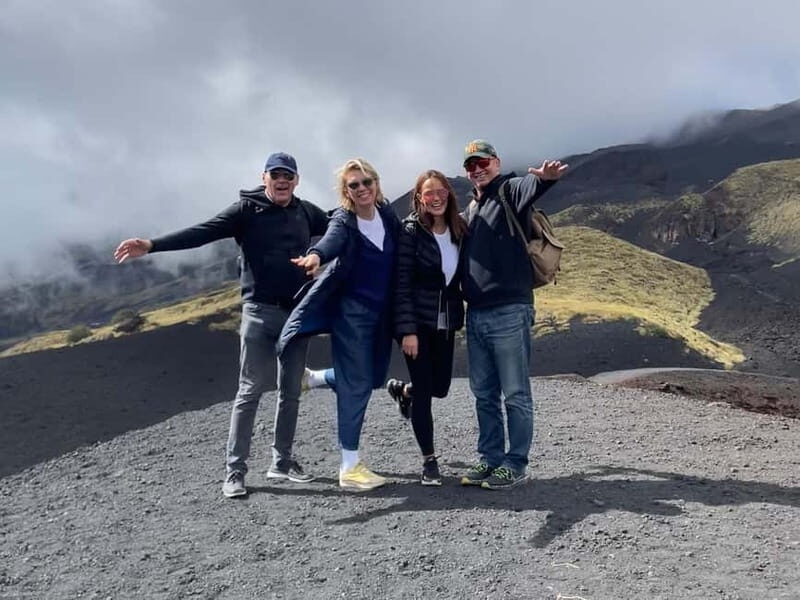
- 2002 lava under your shoes as you follow the ground the eruption changed
- A birch forest on Etna that cools things down visually and mentally
- A lava channel crossing (a wide one) before you reach the crater rims
- The last four inactive craters of 2002 from the edge with big photo angles
- Ionian coast panoramas featuring Giardini Naxos and Taormina
- A friendly, helpful volcanological guide delivering clear explanations in English or Italian
Why the Etna craters of 2002 hike feels different
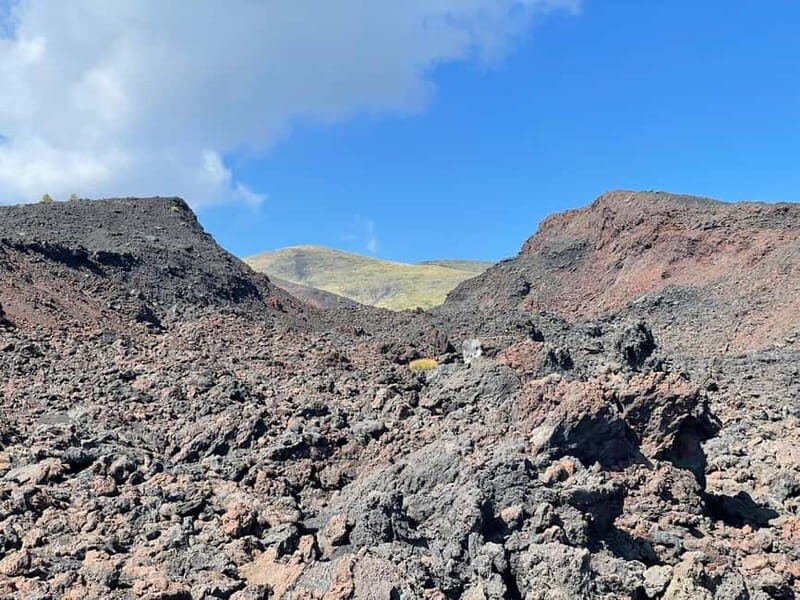
Etna can be seen from far away, but this experience makes you work your way into it. You start on the northern side of the mountain at Piano Provenzana and then follow the story of the 2002 eruption on foot—lava flows, lava channels, and the inactive crater rims.
The best part for me is that the walk connects dots. You’re not just looking at volcanic shapes; you’re walking through the places where those shapes were created. That gives the science real scale—your pace, your footing, and the ground’s texture all make the explanation stick.
And yes, the views help. Once you climb up toward the crater edge, you get a wide sweep over the Ionian coast and landmarks like Giardini Naxos and Taormina. On a good day, you’ll see why people keep returning to Etna year after year.
Other Mount Etna tours we've reviewed in Catania
Meeting at Etna Nord: what the start is really like
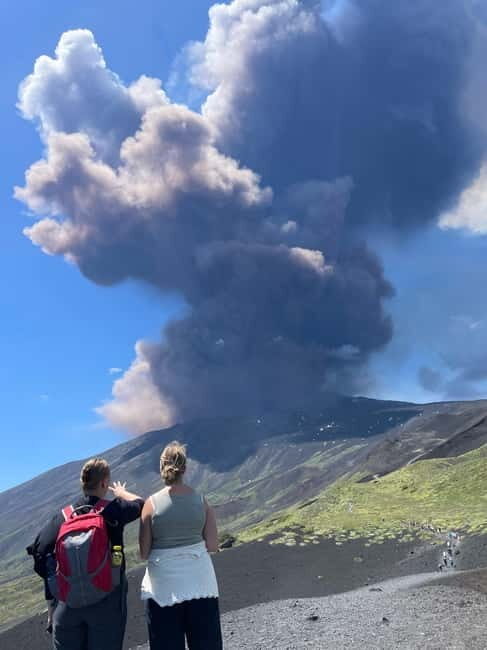
You meet in front of Chiosco bar Etna Nord. From there, the group heads to the Piano Provenzana square on Etna’s north side, where the guide gives a short briefing about what you’ll do and what you’ll see.
This matters because the walk involves uneven volcanic terrain and some climbing. A quick plan before you step into it helps you move with confidence—especially if you’re the type who likes to understand where you’re headed before the first photo.
The tour runs about 2 hours total, and you’ll have transfers between key sections. Those short transfers are useful in practice: they reduce back-and-forth and keep you focused on the walking pieces that actually matter.
Walking the 2002 lava flow and spotting Le Betulle’s remains
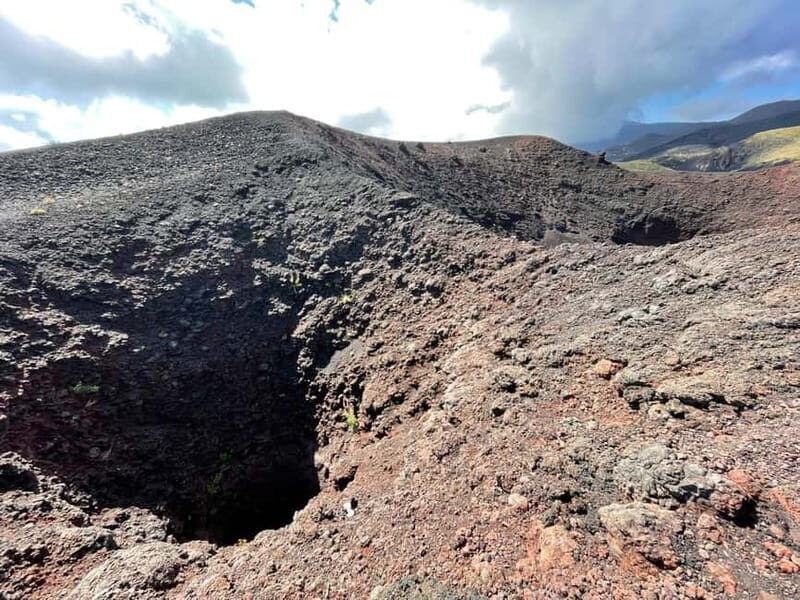
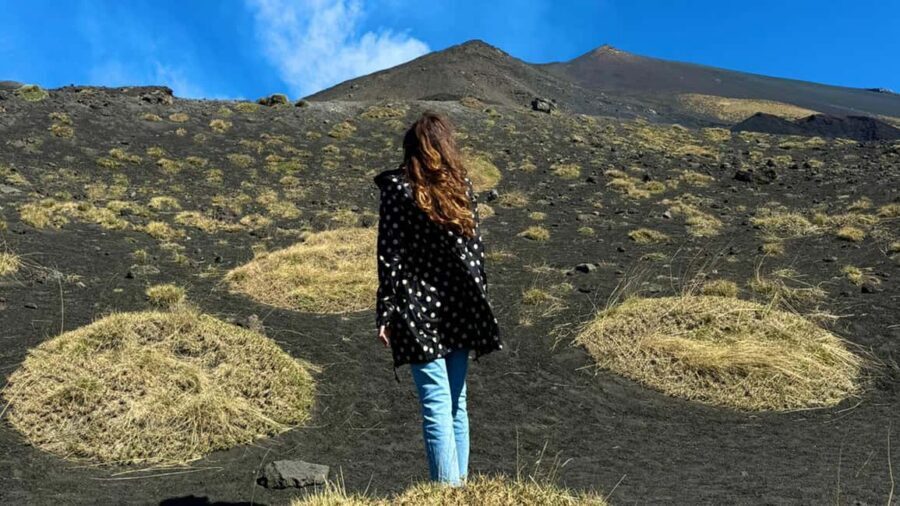
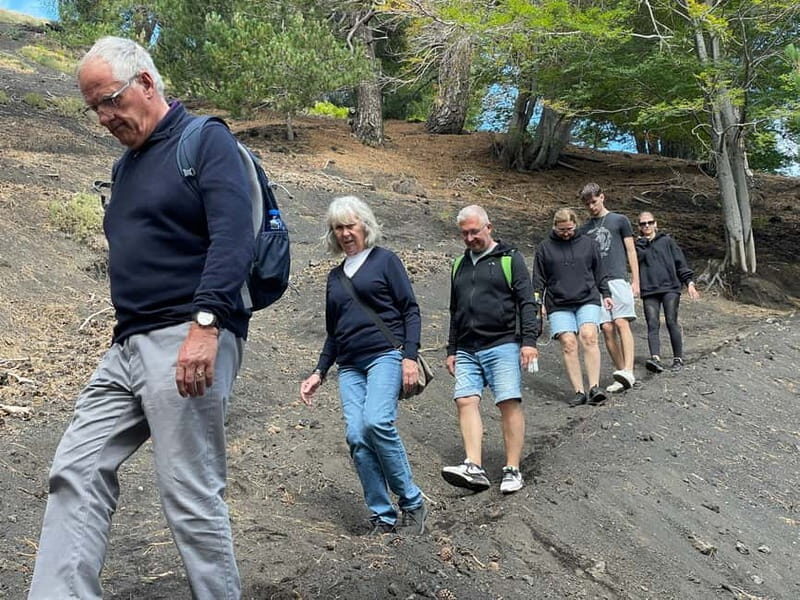
Early on, you’ll walk on the 2002 lava flow—the one that destroyed the square. After a few hundred meters, you’ll pass the remains of an old hotel, Le Betulle, also destroyed by the eruption.
That’s the “real” wow moment of the route. You’re looking at evidence, not just scenery. The lava flow is the main stage, and the ruined structure is the human scale reference that makes the eruption feel closer and more understandable.
A practical tip: keep an eye on footing right away. Lava terrain can be tricky even when the incline feels manageable. Closed-toe shoes are mandatory, and you’ll be glad you brought shoes you don’t mind getting a little dusty or dirty.
Birches on Etna: when the hike turns into quieter nature time
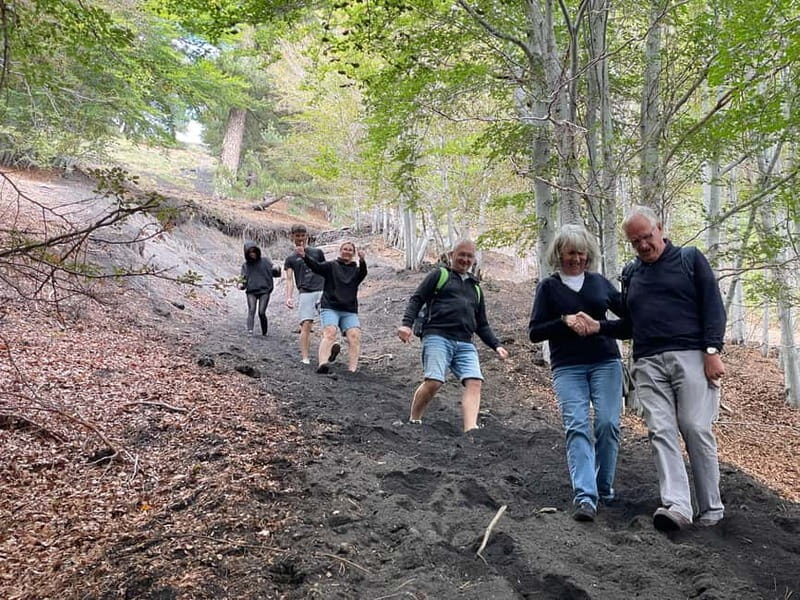
After the initial lava section, you move into a forest of Etna birch trees. This is one of those rare moments where the volcano doesn’t feel like a harsh environment—it feels alive and balanced.
For me, this part changes the tone of the hike. When you’re walking under birches, your focus shifts from “how dangerous is this?” to “what kind of ecosystem grows here?” The guide’s volcanological explanation continues, but the setting makes it easier to absorb.
It’s also a good time to reset your breathing before the climbing portion. You’ll have a calmer stretch to hydrate, check your camera settings, and make sure you’re still feeling good for the next leg.
Climbing the lava channel to the crater edge
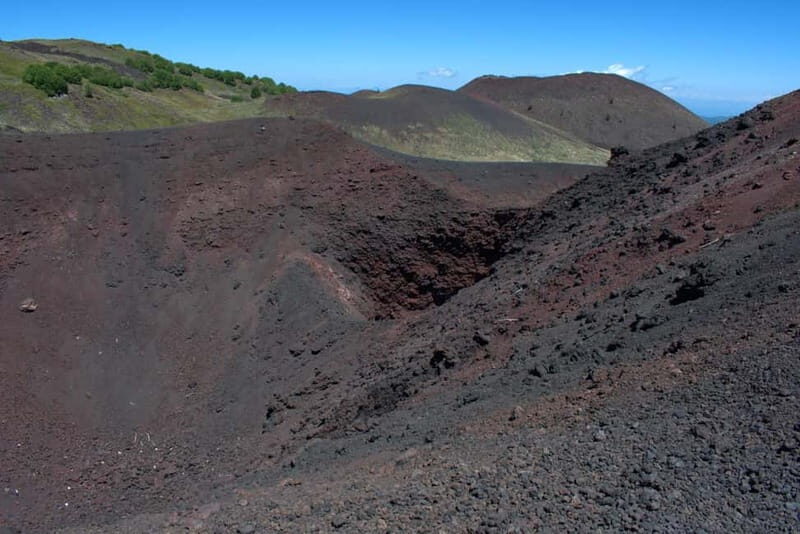
Next comes the crossing of a lava channel a few dozen meters wide. This isn’t just a landmark—it’s a piece of the eruption’s plumbing, the kind of volcanic feature that helps you understand how lava moved.
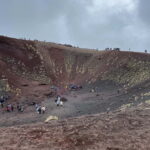
Then you climb up toward the edge of the last four majestic inactive craters of 2002. Standing at the crater rim is where the walk pays off visually. The ground under you is volcanic, but the view opens up into something almost postcard-wide.
This is also the section where you’ll feel the “fair amount of physical preparation” requirement. Reviews point out that the trail can be suitable, with only slight incline—but you should still plan to walk steadily, use your legs, and keep yourself from rushing.
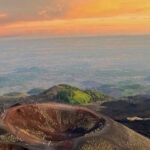
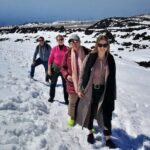
The view from the last four inactive craters
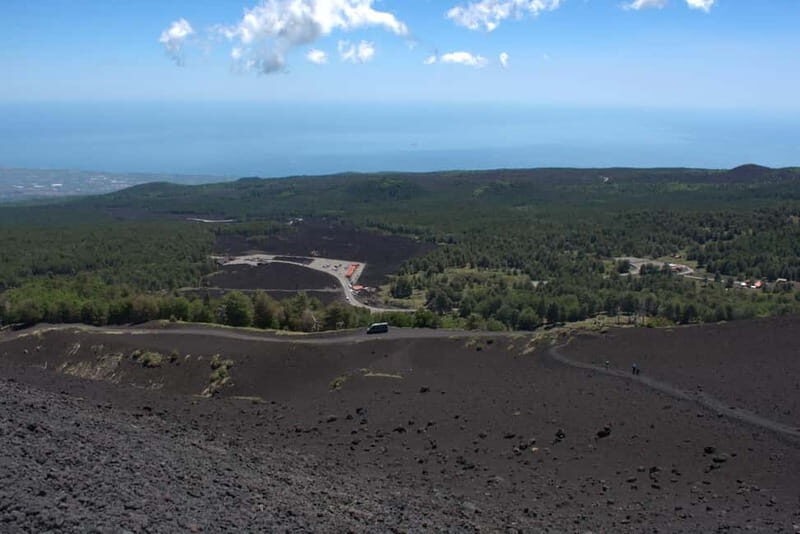
Once you reach the edge, you’ll take photos, admire the crater viewpoints, and look out across the Ionian coast. The tour includes time to stop and really see, not just pass through.
What I like about this part is how it links mountain and sea in one sweep. You’ll be watching the crater shapes up close, while far away you can spot places like Giardini Naxos and Taormina, plus the tip of Italy and Calabria in the distance (when visibility allows).
If you want better photos: take a moment to pause before you shoot. The crater rim gives angles from slightly different positions, and the difference can be huge when light is changing. Also, sunglasses help here. Bright volcanic surfaces can glare, and you’ll want your eyes comfortable.
Descending back to Piano Provenzana: don’t switch off
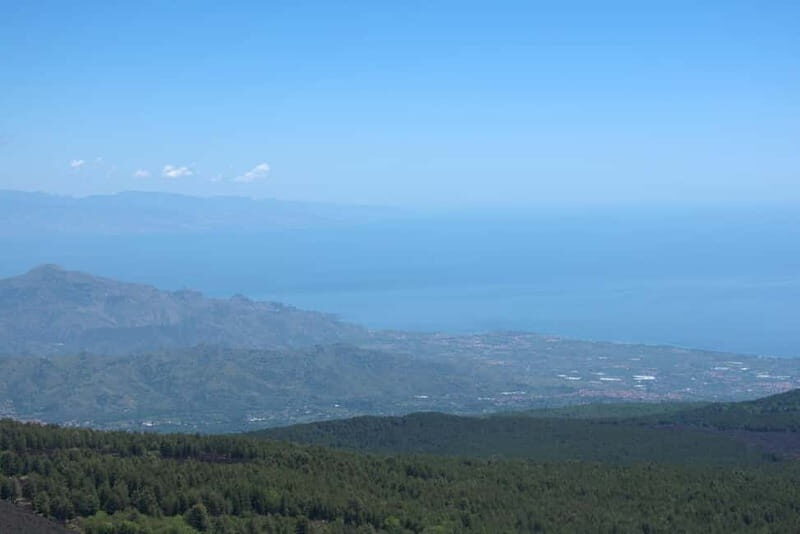
After the crater viewpoint time, you begin the descent returning to Piano Provenzana. On the way down, it’s easy to let your mind go quiet and just focus on steps—but I recommend staying present.
Why? Because the guide’s explanation is most meaningful when you can compare where you started to where you are now. You’ll start noticing how the lava flow shaped pathways and how the channel relates to the wider eruption route you walked.
You’ll end back at the meeting point area. The tour finishes where it began, which keeps logistics simple and lets you go straight to lunch or another stop without a complicated shuffle.
Price and value: is $39.86 worth it?
At $39.86 per person, this outing is a solid value if you want a guided, hands-on Etna experience for a short time. Two hours is enough time to feel like you did more than stand and look, but it’s still short enough to fit into a day around Taormina or other Etna-area sightseeing.
What you’re paying for is mainly the volcanological guide and the structured walking route. You get someone explaining what you’re seeing—lava flows, channels, and the inactive crater rims—so the hike becomes more than exercise. You’re also getting a plan that connects key points without you having to figure everything out on your own.
If you’re the type who learns best by moving—watching, listening, and then looking again with fresh context—this price makes a lot of sense.
What to bring so the walk stays comfortable
This tour is practical: it asks for the basics so you don’t get uncomfortable mid-route. Bring closed-toe shoes, long pants (recommended), and layers that include a jacket. Etna’s weather can shift, and you’ll be happier if you can adjust instead of sweating or shivering.
Pack the essentials:
- At least 1 liter of water per person
- Sunglasses and sunscreen
- Sun hat
- Food and snacks
- Change of clothes (you might get dirty)
- Camera
One more small thing that helps: wear clothes you won’t worry about. The route involves lava ground and outdoor walking, so your clothing may collect dust and grit. Avoid anything that you’ll regret later.
Who should book, and who should skip it
This walk lasts about 2 hours and requires a fair amount of physical preparation. That doesn’t mean it’s a hardcore expedition, but you should be ready to walk, climb a bit, and handle volcanic terrain.
It’s not suitable for people with heart problems or respiratory issues. It also isn’t recommended for altitude sickness risk, people with pre-existing medical conditions, or those with recent surgeries. There are also limits listed for age (not suitable for people over 70 years) and weight (not suitable for people over 287 lbs / 130 kg).
If you’re generally healthy, comfortable walking on uneven ground, and you like guided nature walks with science explanations, you’ll likely enjoy this a lot. And if you’re traveling as a couple or solo, the fixed route and guide support can make the experience feel easier to manage.
Should you book ETNA VOLCANO: Excursion to the Craters of 2002?
I’d book it if you want an Etna experience that’s active and guided. The standout ingredients are the 2002 lava walk, the birch forest stretch, and the chance to stand near the inactive crater edges with big views over the Ionian coast.
Skip it if you need a very easy, flat walk, or if you fall into any of the listed medical and physical limitations. This isn’t a couch-to-crater situation—it asks you to move, and it rewards you with context and scenery once you’re there.
If you want a short Etna outing that feels grounded in how volcanoes work, this one is worth your time.
FAQ
How long is the Etna craters of 2002 excursion?
The duration is about 2 hours.
Where does the tour start and end?
You start in front of Chiosco bar Etna Nord, and the activity ends back at the meeting point.
Are there guides, and what languages do they speak?
Yes, you’ll have a live volcanological guide. The tour is offered in Italian and English.
Is the tour suitable for everyone?
The tour requires a fair amount of physical preparation and includes walking and some incline. It is not suitable for people with heart problems, respiratory issues, altitude sickness concerns, pre-existing medical conditions, recent surgeries, people over 70 years, or people over 287 lbs (130 kg).
What should I bring for the hike?
Bring sunglasses, a sun hat, sunscreen, a jacket, closed-toe shoes, a camera, food and drinks, snacks, and at least 1 liter of water per person. Also consider clothes that can get dirty and a change of clothes.
What kind of terrain will you walk on?
You’ll walk on the 2002 lava flow, pass through a forest of Etna birch trees, cross a lava channel a few dozen meters wide, and climb to the edge of the last four inactive craters of 2002.
What’s not allowed during the tour?
Swimwear, alcohol and drugs are not allowed. Also, shoes indoors are not allowed, and wearing a costume is not allowed.