REVIEW · BENEDICTINE MONASTERY
Benedictine Monastery of Catania – English Guided Tour
Book on GetYourGuide →Operated by Officine Culturali · Bookable on GetYourGuide
Catania hides a monastery museum underground. This English guided walk through the Benedictine Monastery of San Nicolò l’Arena packs 2,000 years of change into about 75 minutes, with access to areas that are usually closed.
I like that you get two time periods in one building: the Roman houses you can see beneath a modern library mezzanine, and the monastic spaces above them. I also love the mix of late Baroque architecture and everyday life details, from the cloisters and novices’ garden to the famous kitchens and cellars.
One consideration: if you’re hoping to reach every special viewpoint, plan to ask your guide about what’s included on your specific visit. A couple of people noted that some elevated areas may depend on the time slot.
In This Review
- Key things that make this tour worth your time
- San Nicolò l’Arena: a monastery that feels like a time machine
- Late Baroque architecture and Vaccarini details you’ll actually notice
- Roman houses under a library mezzanine: past meeting present
- Two cloisters plus the novices’ garden: calm spaces with a purpose
- Kitchen, dining rooms, and 18th-century cellars: the everyday side
- Libraries on lava: the 16th-century cellar and the UNICT humanities link
- What the guide adds: clear English, humor, and smart context
- Tour pace, what you’ll see, and small practical tips
- Price and value: why $11 feels fair here
- Should you book the Benedictine Monastery of Catania tour?
- FAQ
- How long is the Benedictine Monastery of Catania English guided tour?
- How much does the tour cost?
- Where do I meet the guide?
- Is there a guide and is it in English?
- Does the tour include areas that are normally not accessible?
- What parts of the monastery will I see?
- Is skip-the-ticket-line included?
- Is baggage storage available?
- Is the tour wheelchair accessible?
- Can I get help if English is not my main language?
- FAQ
- Is there free cancellation?
- Can I reserve now and pay later?
Key things that make this tour worth your time
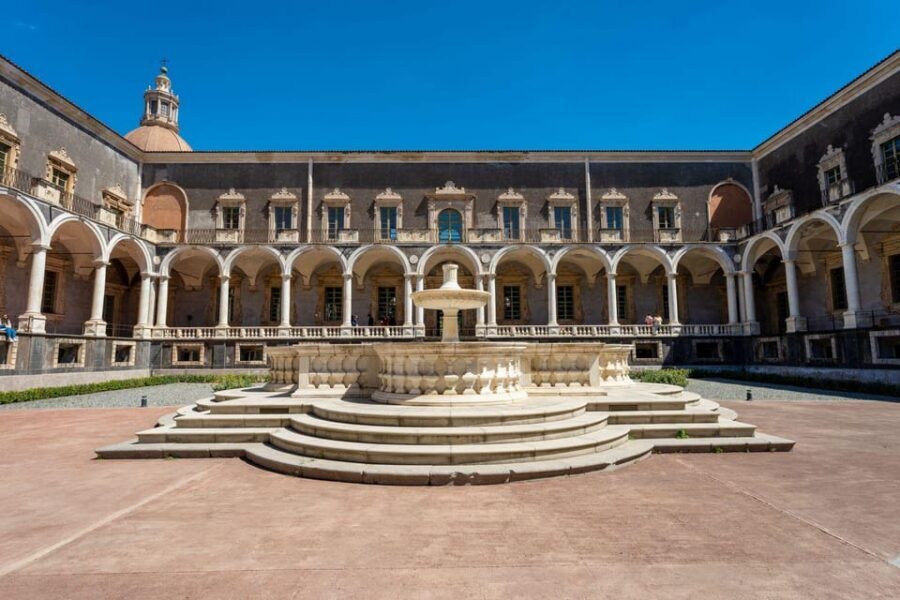
- Roman layers under the modern library: look down at Roman houses under a student-used mezzanine.
- Lava-built cellar: the 16th-century cellar is tied to the library space.
- Cloisters, kitchen, and routines: you don’t just see rooms, you see how life worked.
- Vaccarini and De Carlo: Baroque grandeur plus contemporary refurbishment shaped by Giancarlo De Carlo.
- Guides with personality: Carmen, Giovanni, and Nicola are repeatedly praised for clear English and humor.
- Real value for $11: you get guided access to parts that aren’t normally open.
San Nicolò l’Arena: a monastery that feels like a time machine
If you only know Catania for its street life and the pull of Mount Etna, this tour gives you another angle: the city’s layers of power, devotion, and everyday routine—stacked in one complex.
The pace is built for focus. In 75 minutes you’ll move through key zones, including areas that are not typically accessible, without turning the visit into a long slog. It’s a great way to understand why this monastery became one of Europe’s biggest monastic sites.
If you're still narrowing it down, here are other tours in Catania we've reviewed.


Late Baroque architecture and Vaccarini details you’ll actually notice
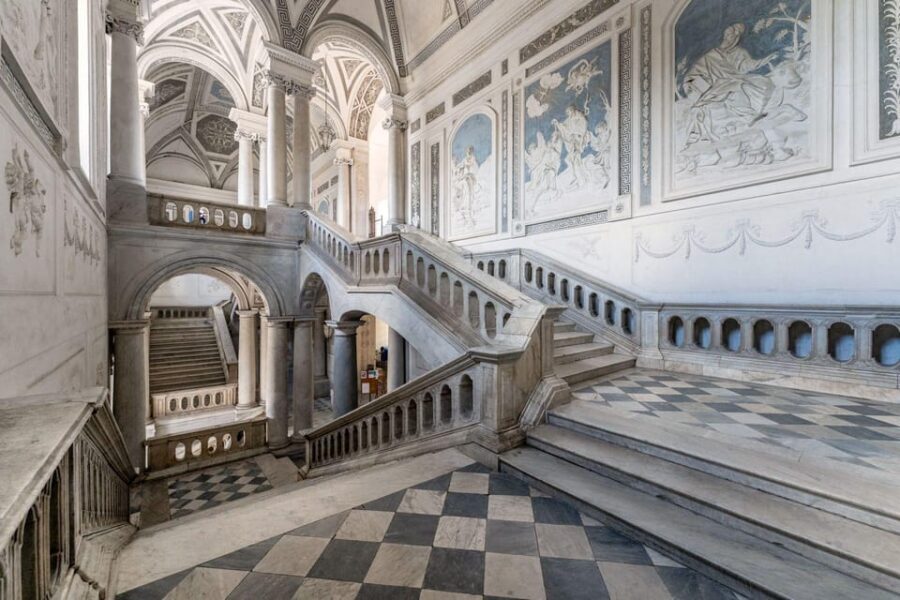
What hits you early is scale. The monastery’s Baroque look isn’t just decoration—it signals how wealthy and influential the Benedictines were, and how much they could invest in building and rebuilding over time.
One of the architectural threads you’ll hear about is the work associated with Vaccarini. Even if you’re not a design nerd, you’ll recognize the “big statement” feel: grand transitions, impressive vertical moments, and spaces that were meant to impress visitors as well as support monastery life.
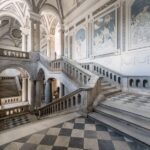
The tour also points out the monumental staircase, which is one of those places where a guide’s timing matters. You’ll get there when the whole route makes sense—so it feels less like you’re moving between random rooms and more like you’re walking through a designed experience.
Roman houses under a library mezzanine: past meeting present
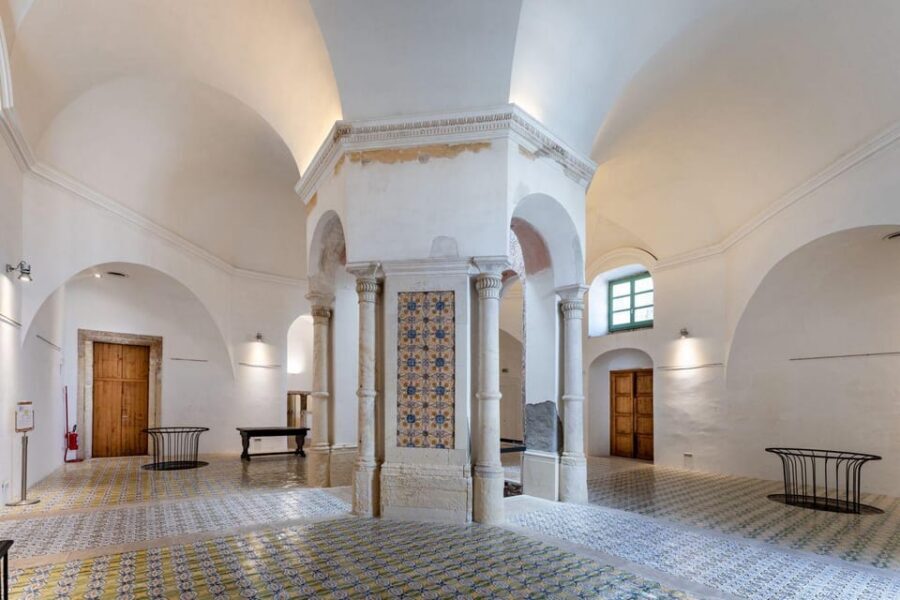
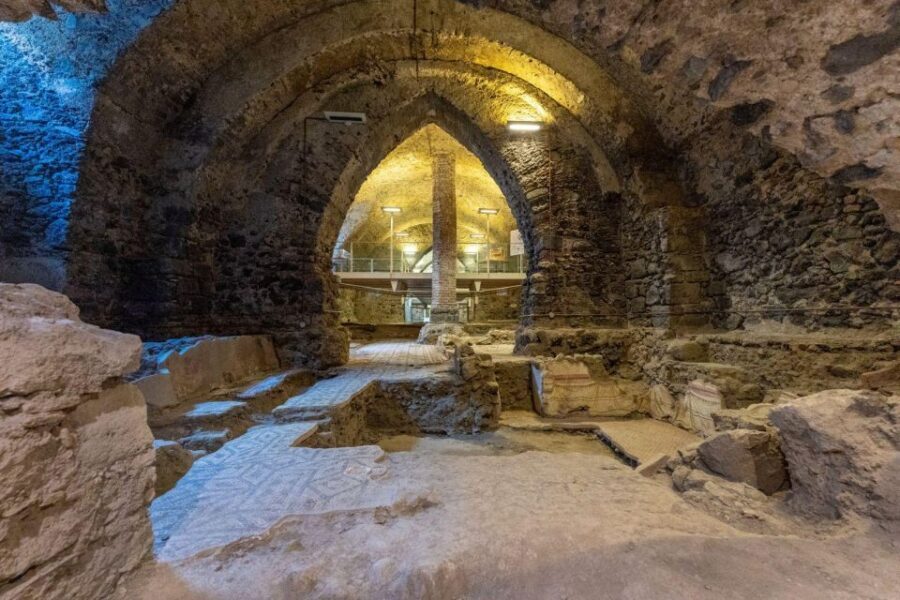
This is the part that makes the whole building feel unusual. You’ll continue to the Roman House that sits visibly beneath a modern mezzanine used by students as part of the library area.
Seeing Roman remains inside a working academic setting changes how you think about the site. The monastery isn’t trapped in the past. It’s actively used, restored, and adapted—so you get archaeology with context instead of archaeology boxed in by glass.
If you like architecture that tells a story, this stop does it in a quiet but powerful way: you’re literally looking down at older foundations while modern students move above.
Two cloisters plus the novices’ garden: calm spaces with a purpose
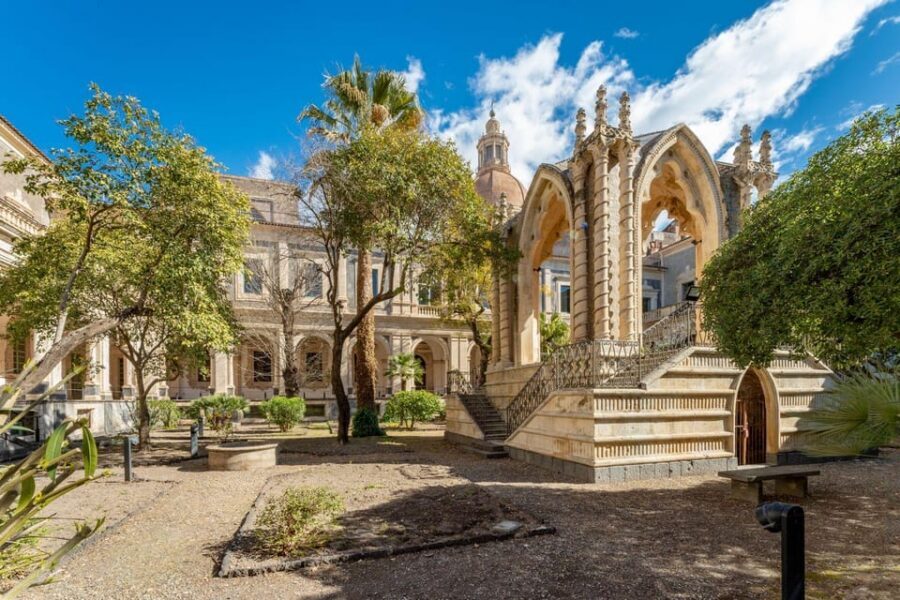
Cloisters are often described as peaceful. Here, they also feel functional, like part of a daily rhythm. In your walk you’ll see two cloisters, which helps you compare how light and movement work from one space to another.
Then you’ll head to the Garden of the Novices. That name matters. It’s not just a pretty courtyard; it’s tied to training and formation, so the space makes sense in human terms. A monastery isn’t only about worship halls—it’s about how people were taught, housed, and prepared.
Even if you’re not religious, you can read this as a study in community life. The monastery layout shows what Benedictine routine looked like on a physical level.
Kitchen, dining rooms, and 18th-century cellars: the everyday side
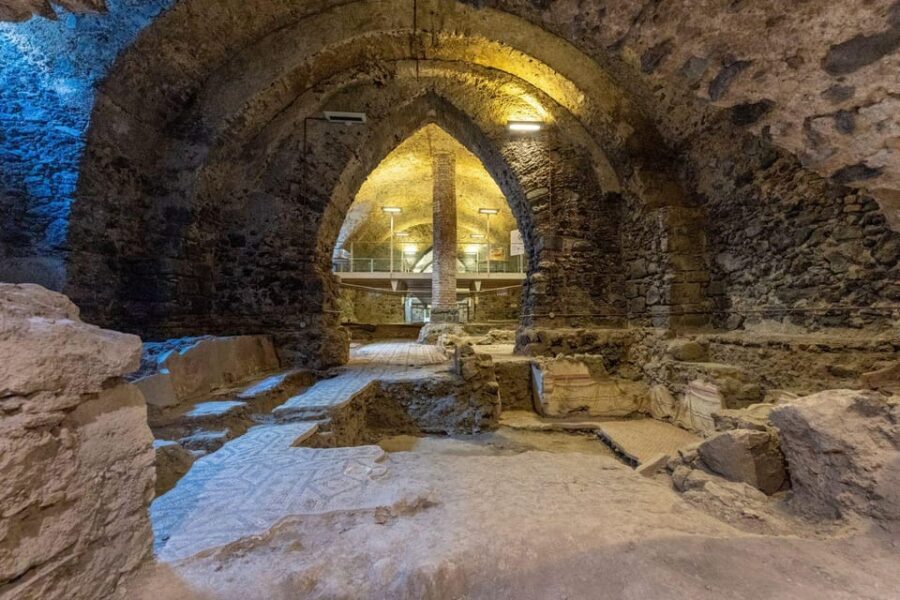
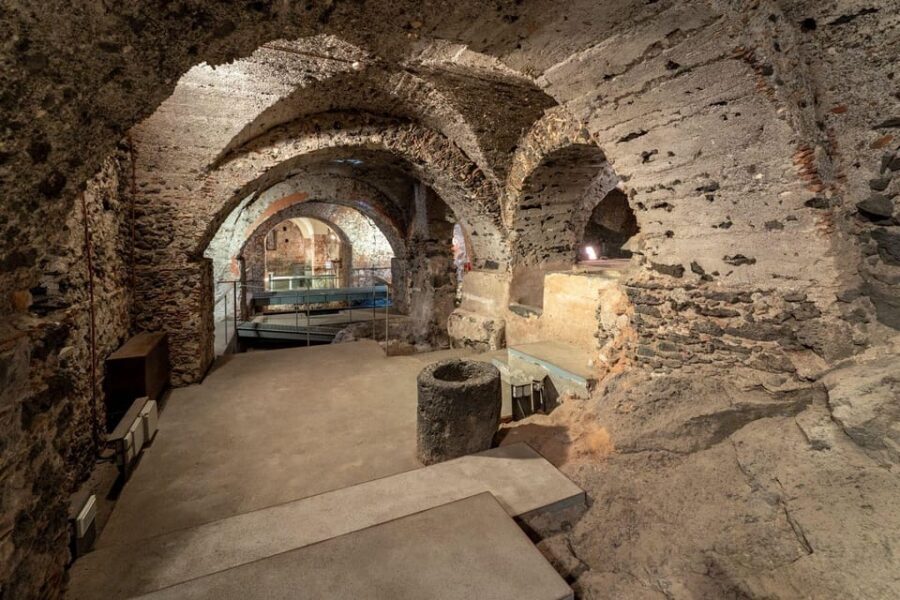
A lot of monastery visits focus on the grand rooms. This one gives you the working side too—especially the famous 18th-century kitchens and cellars.
You’ll move through spaces connected to feeding a community, storing supplies, and running the monastery like a small, complex operation. Seeing kitchens in particular helps you understand wealth without needing a lecture. The scale and planning show it.
If you’re the type who likes practical details, you’ll enjoy how the tour explains what you’re looking at while keeping the flow easy to follow. Many people also praise the guides for answering questions with patience, so if you’re curious about daily life, this is a good tour to ask “how did they…?” questions.
Other guided tours in Catania



Libraries on lava: the 16th-century cellar and the UNICT humanities link
The monastery’s restoration story is a big deal here, not trivia. You’ll learn that the refurbishment work lasted more than 30 years, and that the current adaptation ties into a modern project led by Giancarlo De Carlo.
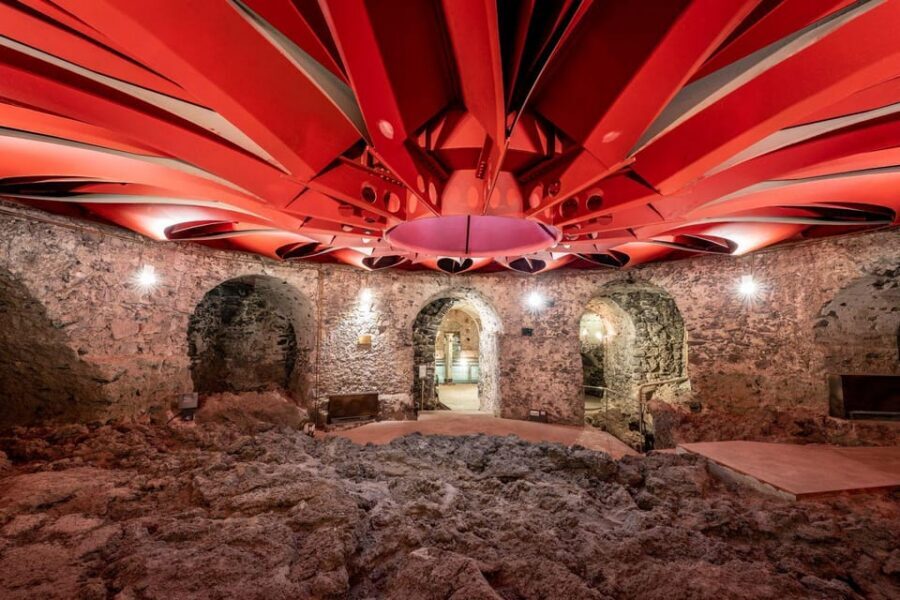
The centerpiece you’ll want to time with your attention is the 16th-century cellar, described as built on lava. In plain terms: this is where the geology and the monastery’s survival meet. The structure doesn’t feel like an isolated basement exhibit—it feels like part of the living site.
That cellar area is now used as part of the Library of the Department of Humanities (UNICT). So you’re not only touring a past space. You’re walking through a place that students and academics use.
This is also why the tour feels more than scenic. It shows how conservation can be active, not just protective—how old architecture can keep serving a public purpose.
What the guide adds: clear English, humor, and smart context
You’re in English with a live guide, and the guide’s delivery really shapes the value of this tour. A recurring theme in the feedback is that guides like Carmen, Giovanni, and Nicola manage to teach without sounding like they’re reading off slides.
The good part isn’t just that the English is strong. It’s the way the stories get told. People mention humor, lively pacing, and clear explanations—plus the guide’s willingness to answer questions.
You’ll also get some context about Catania beyond the monastery itself, including how locals relate to the city’s geography and identity. That kind of framing makes the building feel less like a standalone attraction and more like a piece of how Catania works.
Tour pace, what you’ll see, and small practical tips
The itinerary is intentionally compact: you start at the Benedictine Monastery of San Nicolò l’Arena and return there after the 75-minute circuit. You’ll see cloisters, kitchen spaces and cellar areas, the novices’ garden, library-linked zones, and the Roman remains under the modern mezzanine.
This tour also includes access to parts that are normally off-limits, which is a big reason to book the guided version rather than trying to piece things together on your own. Even if you’re comfortable walking around museums, the monastery’s layout can be labyrinthine. A guide keeps you oriented, and you’ll understand why each stop belongs in the sequence.
Meeting point tip: As soon as you pass the main gate on Piazza Dante, look for the info point in the courtyard on the right. Plan to arrive a few minutes early so you’re not rushing into the group.
One more practical note: the complex can feel pleasantly cool underground in cellar areas, which is helpful on hot days. If you tend to get overheated easily, you’ll probably appreciate that your route includes lower-level spaces.
Price and value: why $11 feels fair here
At about $11 per person for 75 minutes, this is one of the better deals in Catania for a guided architecture and history experience. You’re not only paying for interpretation. You’re also paying for special access to areas that are usually closed off.
Skip-the-line access helps too. In a place like this, time goes into walking and learning, not standing around at a ticket counter.
The value shows up in the variety. You get architecture (Baroque), archaeology (Roman houses), daily-life spaces (kitchen and dining areas), and a living academic connection (UNICT library use). For the price, it’s a lot of “types” of seeing in one visit.
Should you book the Benedictine Monastery of Catania tour?
Book it if you want a short, structured way to understand why this monastery matters. It’s ideal for first-time visitors to Catania who want more than a quick look at a beautiful building—this gives you the logic behind the layout and the layers of history.
Skip (or ask lots of questions before you go) if your main goal is a very specific viewpoint or top-level platform. One review experience suggested that access to a viewing platform may depend on the tour time, so it’s smart to confirm with your guide.
If you like guided tours where the English sounds natural and the guide actually reacts to questions, this one is consistently praised for that. And if you enjoy architecture that tells you how people lived—not just how buildings look—you’ll probably leave feeling you learned something real.
FAQ
How long is the Benedictine Monastery of Catania English guided tour?
The tour lasts 75 minutes.
How much does the tour cost?
The price is listed as $11 per person.
Where do I meet the guide?
Meet at the info point in the courtyard on the right, right after the main gate on Piazza Dante.
Is there a guide and is it in English?
Yes. You get a live English-speaking guide.
Does the tour include areas that are normally not accessible?
Yes. Access to the monastery includes parts that are not normally accessible.
What parts of the monastery will I see?
You’ll visit highlights such as the cloisters, kitchen areas, Roman houses, one of Sicily’s important libraries linked to UNICT, and the lava-built cellar.
Is skip-the-ticket-line included?
Yes, skip the ticket line is included.
Is baggage storage available?
Yes. There is baggage storage at the meeting point.
Is the tour wheelchair accessible?
Yes, it is wheelchair accessible.
Can I get help if English is not my main language?
If English isn’t your main language, written translations in French or Spanish can be provided.
FAQ
Is there free cancellation?
Yes. You can cancel up to 24 hours in advance for a full refund.
Can I reserve now and pay later?
Yes. The option listed is reserve now & pay later.
(That’s all the tour data provided—if you want, tell me your travel month and I’ll help you pick the best time to fit it into your Catania day.)