REVIEW · ETNA SUMMIT TREKS
Etna: Winter excursion to 3.000mt
Book on Viator →Operated by Ashàra Etna & Stromboli Guides · Bookable on Viator
Snow on Etna changes everything. This winter excursion takes you from Sapienza up by cable car and then onto the snowy, icy slopes near 3,000m, with volcano-focused guides and close-up stops you can’t see in summer.
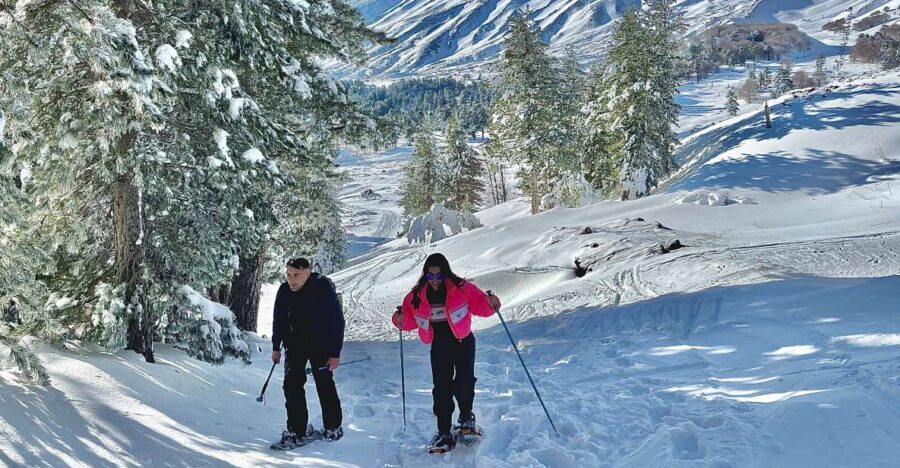
I especially like two things: you get gear support (helmet, high-neck hiking shoes, trekking pole) and real volcano-and-alpine guidance from professionals who know how to read conditions on the mountain. In the day-to-day sense, that means you hike with less guesswork and more confidence.
One key consideration: this is a demanding winter hike on ice and snow. You should go in with upper-intermediate comfort on steep footing, not just “I hike sometimes” confidence.
In This Review
- Key things that make this Etna winter hike work
- From Sapienza to near 3,000m: how the day flows
- Cable car up to 2,500m: why this start is smart
- The trek on snow and ice: what to expect underfoot
- Stop by stop: Etna’s volcanic highlights in winter
- Funivia dell’Etna and the transition to hiking
- Mount Etna: the climb and the 2001 eruption cone
- Valle del Bove: the wide views and the “inside” feel
- Barbagallo craters: crater fields you can actually study
- Summit craters from a safe distance, plus an optional lava channel
- Guides and safety: why this tour feels controlled
- Price and value: what $108.84 really buys you
- Who should book this Etna winter excursion—and who should wait
- Practical tips for your 9:00am start at Sapienza
- Should you book this Etna 3,000m winter hike?
- FAQ
- Where is the meeting point for the Etna winter excursion?
- What time does the tour start?
- How long does the excursion last?
- What’s included in the tour price?
- What is not included?
- What level of fitness is required?
- How big are the groups?
- Is the tour offered in English?
- What happens if the weather is bad or the minimum number isn’t met?
Key things that make this Etna winter hike work
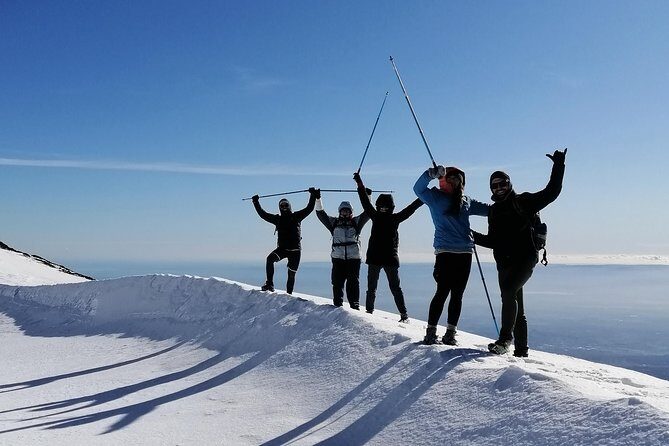
- Small groups (max 15) for safer pacing on icy terrain
- Cable car to about 2,500m, then trekking starting around 3,000m
- Snow-and-ice suited for expert hikers, not a casual winter stroll
- Volcano targets like the 2001 eruption cone, Valle del Bove, and Barbagallo craters
- Summit craters from a safe distance, with an extra option for a lava flow channel if snow conditions permit
- Gear + insurance included, so you’re not arriving to Sicily with half a shopping list
From Sapienza to near 3,000m: how the day flows
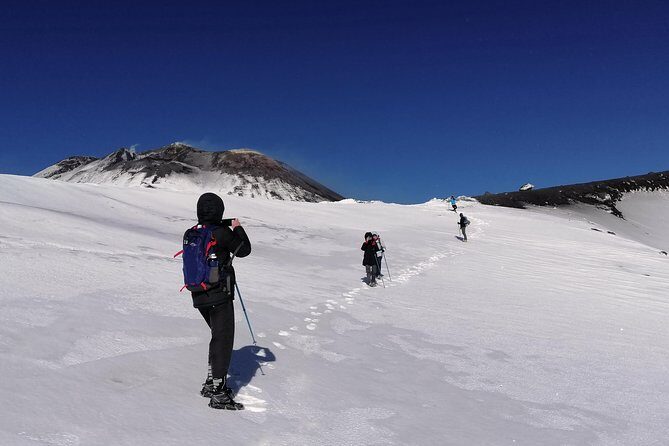
The experience is built around one simple idea: use the cable car to get high fast, then spend your energy hiking where Etna actually gets dramatic. You meet at Ashàra Etna & Stromboli Guides at Piazzale Rifugio Sapienza (95030 Nicolosi, CT), and the start time is 9:00am. The total day is about 5 hours (approx.), and it ends back at the same meeting point.
That structure matters in winter. Higher altitude means colder air and sharper wind, so any way you can reduce “wasted time” at lower, messier conditions is a win. The tour also stays small, which helps when you’re moving through snow that can hide slick patches.
You’ll spend the early part getting to about 2,500m by cable car, and then you begin trekking around 3,000m. From there, the route is designed to connect volcanic highlights without treating you like a ski tour.
Other Mount Etna tours we've reviewed in Catania
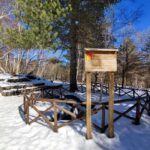
Cable car up to 2,500m: why this start is smart
Going up by cable car to roughly 2,500 metres does two things for you. First, it shortens the time you spend battling cold and wind at lower altitude. Second, it puts you on the mountain’s “real playground” sooner, so the hike feels like the main event instead of the warm-up.
You should plan for winter reality even before you step onto the snow. Your body can overheat quickly once you start climbing, especially if you layer too much. One of the best bits of advice I can give is to wear layers you can remove easily—because once you’re moving, you may get hot even in freezing temperatures.
And yes, the cable car has a separate cost on the return. The tour includes the hiking-side logistics and guide support, but the return cable car ticket is not included and is listed at €52 per person. (More on value later.)
The trek on snow and ice: what to expect underfoot
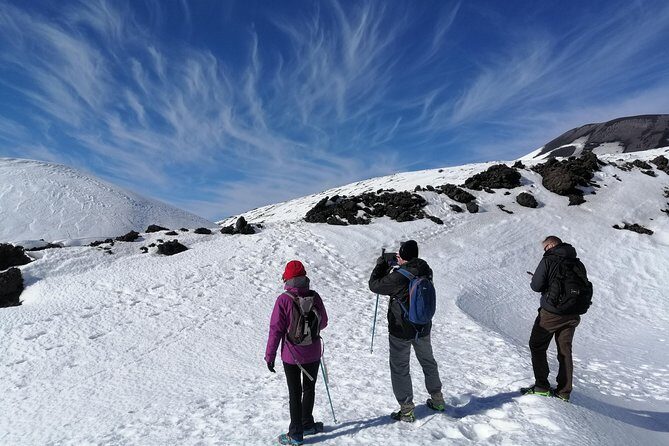
This isn’t a winter “walk in the park.” The tour explicitly has ice and snow, and it’s described as suitable for expert hikers. That doesn’t mean you need to be mountaineering-ready, but you do need comfort moving on uneven ground when traction changes moment to moment.
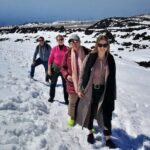
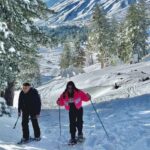
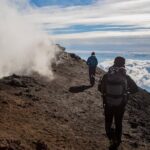
You’ll be on long stretches of snow while moving between volcanic sites. You’ll also climb and manage cold conditions, so your pacing is a big deal. In a winter hike like this, the smartest pace is steady, controlled, and never rushed.
One review shared a sense of scale from the climb: about 7.5 km and around 2.5 hours for the ascent portion at roughly the 3,000m mark. Your time can vary with conditions and group pace, but that gives you an idea of what “expert hiker” can feel like in practice.
Two small things you’ll appreciate once you’re on the ground:
- Trekking poles help you keep balance when the volcanic ground is uneven or partly buried.
- High-neck hiking shoes give extra ankle support and help with traction on slick sections.
If the wind is strong or the surface is especially icy, you can also expect the guides to slow things down. That’s not delay—it’s safety math.
Stop by stop: Etna’s volcanic highlights in winter
Funivia dell’Etna and the transition to hiking
The first stop is essentially the gateway: the Funivia dell’Etna cable car ride up. This is where you switch from travel mode to hike mode. Once you’re dropped near the trekking start altitude, you begin the long climb through snowy volcanic terrain.
This transition is worth thinking about. After a cable car ride, you’re “cold but not warmed.” If you go out too heavily layered, you’ll sweat; if you go too light, you’ll shiver early. That’s why the tour provides key footwear and a helmet, but you still need to wear smart layers.
Other Etna summit treks we've reviewed in Catania
Mount Etna: the climb and the 2001 eruption cone
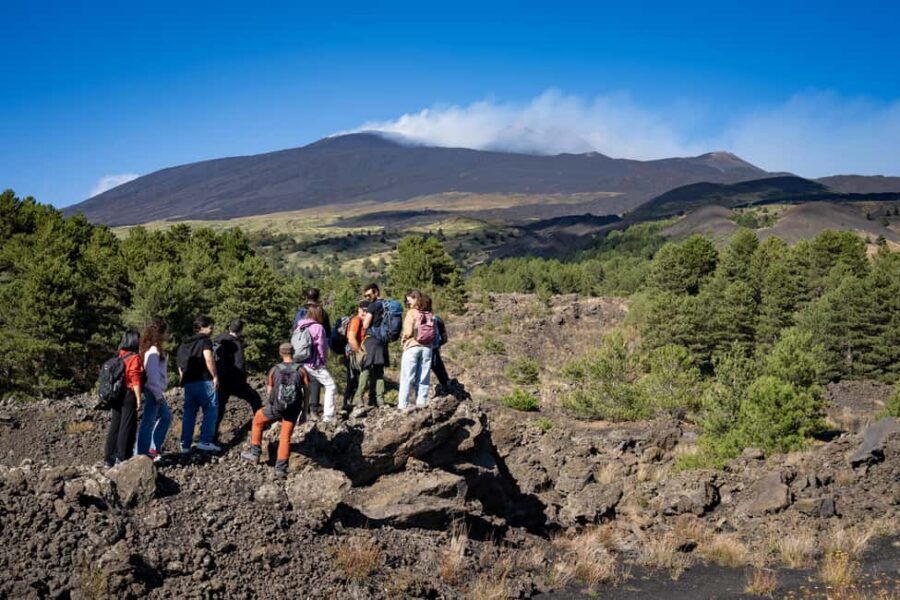
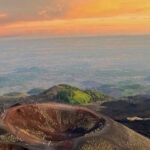
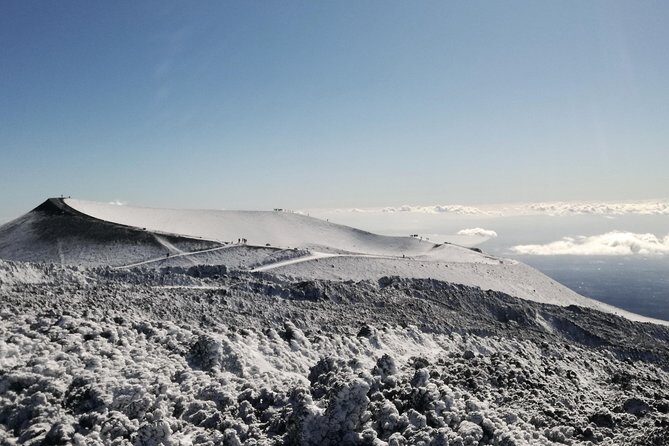
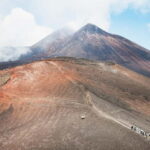
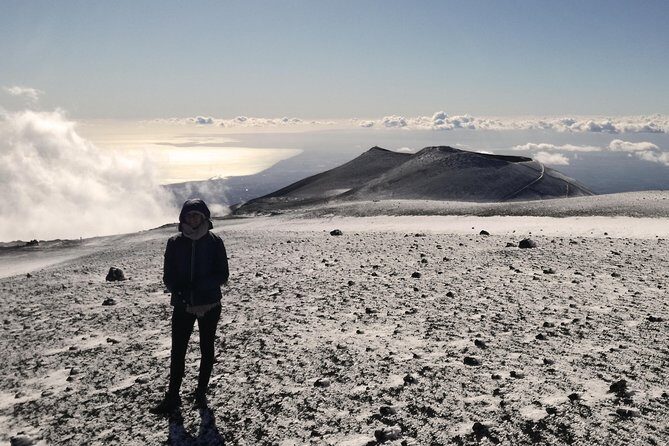
Once the trek begins, you’re moving along snow-covered slopes toward volcanic features. One of the highlights is a visit to the cone of the 2001 eruption. In winter, the cone doesn’t look like summer’s ash-and-rock drama. Instead, you get a different kind of clarity: snow lines the edges and forces your eyes to focus on shape and elevation.
This is a good moment to remember what’s happening under your feet. Etna is not a single mountain. It’s a system of volcanic activity, and the guides help you connect the visible features to the way eruptions changed the terrain.
Valle del Bove: the wide views and the “inside” feel
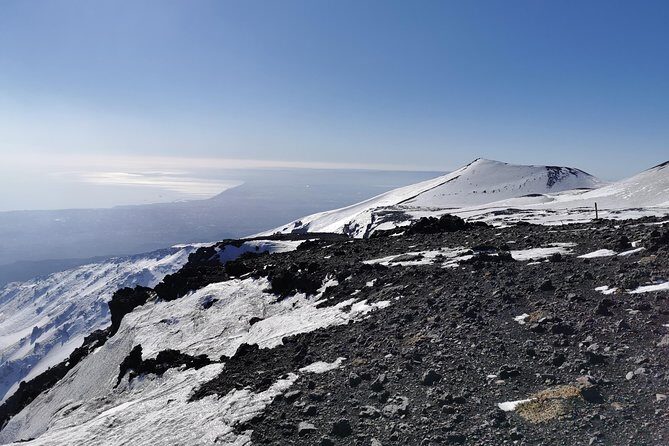
The route also includes Valle del Bove. Even in winter, you’re not just hiking—you’re reading a huge bowl-shaped volcanic valley with steep walls and dramatic scale. Winter snow can make distances feel deceptive, so keep trusting your guide’s pacing and direction cues rather than your own “I can see it, I’ll reach it” instincts.
This is also where the tour’s small-group setup pays off. In a bigger group, winter turns into a shuffle. With fewer people, your guide can pause when needed and keep everyone together without leaving you standing around too long in the cold.
Barbagallo craters: crater fields you can actually study
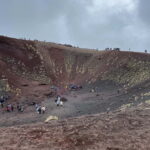
Another planned stop is the Barbagallo craters. Craters are easier to understand when you’re not rushing. Winter helps here: the ground can be crisp, and the volcanic shapes stand out against snow.
The best part is how guides turn a “pretty view” into something you can interpret. You’ll get context about what you’re seeing—based on alpine observations and volcanology knowledge—so the walk feels like learning, not just sightseeing in weather.
Summit craters from a safe distance, plus an optional lava channel
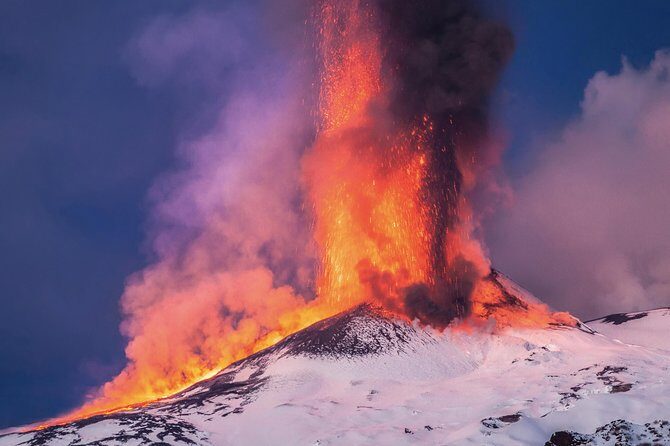
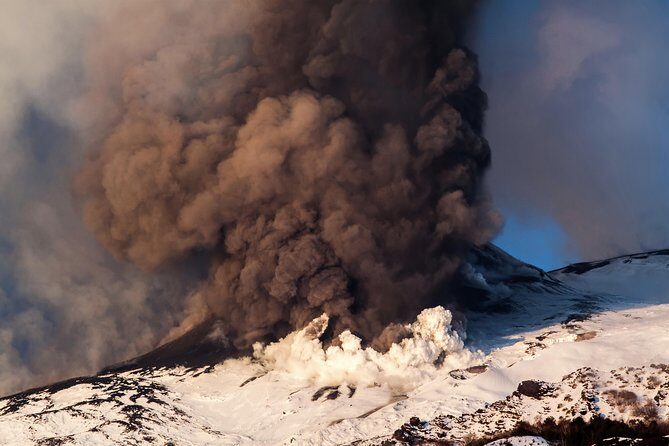
Near the end of the main trekking section, you’ll admire Etna’s summit craters from a safe distance. In winter, that safe distance is even more important. Wind, visibility, and footing all change fast at high altitude.
If snow conditions permit, the route may include a visit to a lava flow channel before heading back to the upper cable car station. That optional add-on is the kind of bonus you only get when the mountain cooperates.
This is also a good time to think about what “winter conditions permit” really means. If the snow is too deep, too icy, or visibility is poor, you may simply not have that segment. A good guide will still make sure you get the core volcanic experience without taking unnecessary risks.
Guides and safety: why this tour feels controlled
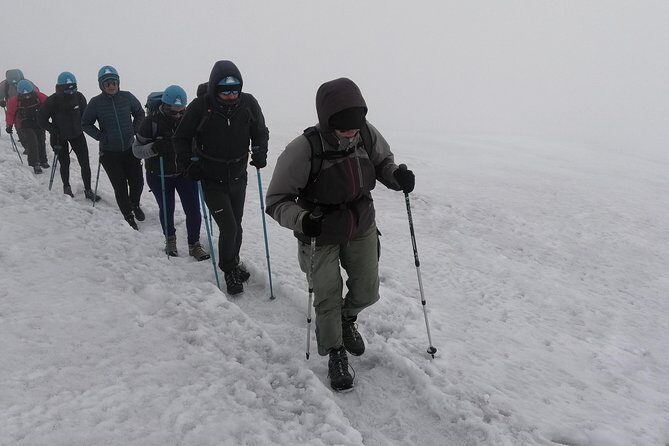
This excursion is led by authorized alpine and volcanological guides, and the group size is capped at 15. That combo is a big deal in winter. When you have a capable guide team and a smaller group, you’re less likely to get separated, and decisions about pacing and route changes happen quickly.
The guide roster you might encounter includes names like Simone, Max, and Giuseppe. Across those guides, the consistent theme is practical coaching—how to move in snow, how to dress for wind, and how to approach the hike safely.
You’re also covered by insurance. That sounds like paperwork until you’re on a winter mountain with ice underfoot. It’s one more reason this is a “real expedition day” rather than a casual add-on.
Gear is included, too:
- Free rental rock helmet
- High-necked hiking shoes
- Trekking pole
- Plus the guide and insurance
In real-world terms, that means you can pack lighter than you would for a self-guided winter hike, which is a quiet value win if you’re traveling from elsewhere.
Price and value: what $108.84 really buys you
The tour price is $108.84 per person, and you should also budget for the return cable car ticket (€52 per person). That puts you in the ballpark of roughly $160+ total for the day, depending on the exchange rate and any rounding.
So is it worth it? In my view, the value is in three places:
- Pro guidance (alpine + volcanology) for a hike on ice and snow
- Winter safety gear and traction support included, not sold as add-ons
- Insurance bundled into the experience
If you had to source helmets, poles, and proper footwear yourself—or hire a guide for a winter outing—costs add up fast. Here, the tour aims to keep you focused on the hike, not the shopping.
The main “non-price” expenses you’ll want to handle:
- Bring at least 1.5 L of water
- Plan for snacks/packed lunch (not included)
Cold makes you underestimate how thirsty you’ll get. Keep water in your plan from the start.
Who should book this Etna winter excursion—and who should wait
This experience is a fit if you want a serious winter hike with a volcano focus. It’s listed for people with moderate physical fitness, but it also says the trek is suitable for expert hikers due to ice and snow. Translation: you should be comfortable with steep, cold, traction-changing footing and you shouldn’t need frequent “slow down, I’m lost” guidance.
You’ll enjoy it most if you like:
- Steady hiking with stops to learn and look around
- Winter conditions as part of the challenge, not a reason to bail
- Volcano interpretation: eruption history, crater areas, and how routes connect them
I’d think twice if:
- Winter walking on snow/ice makes you nervous
- You’re not used to hiking for a few hours with a climb at altitude
- You hate the idea of wind and cold shaping the route
It can be demanding even when the guide manages the pace well for mixed abilities. That’s part of the deal with non-private small groups.
Practical tips for your 9:00am start at Sapienza
Winter on Etna rewards preparation. Based on what the tour includes and what you’ll likely face on snow, here’s what I’d do:
- Layer smart. Expect to get warm on the ascent, then cool quickly when you pause. You want layers you can adjust fast.
- Wear gloves you trust. The tour lists included gear like helmet, shoes, and poles, but winter hand protection is a personal call—use what feels safe for you.
- Bring more water than you think. Cold suppresses thirst signals.
- Pack snacks or a full packed lunch. You’ll need fuel, and the hike isn’t described as a light stroll.
- Use poles if you have them (or borrow them). The included trekking poles are there for a reason.
- Plan for wind. Winter can mean strong gusts at altitude. Even with good guides, you’ll feel it.
Also, start with realistic expectations. The goal of the day is to see and understand Etna in winter, with safe distances and careful route choices—not to “race the mountain.”
Should you book this Etna 3,000m winter hike?
Book it if you want a small-group winter hike on Etna that focuses on real volcanic features—cone of the 2001 eruption, Valle del Bove, Barbagallo craters, and summit craters from a safe distance—while staying guided and gear-supported. If you’re comfortable hiking in cold conditions and you like learning as you walk, this is a strong choice.
Skip it (or choose a gentler option) if winter hiking on ice makes you anxious, or if you’d struggle with a demanding, altitude-driven climb. The route is winter-specific, and it’s meant for people who treat snow and wind as part of the adventure.
FAQ
Where is the meeting point for the Etna winter excursion?
You meet at Ashàra Etna & Stromboli Guides, Piazzale Rifugio Sapienza, 95030 Nicolosi CT, Italy.
What time does the tour start?
The start time is 9:00am.
How long does the excursion last?
It runs for about 5 hours (approx.).
What’s included in the tour price?
Included are a free rental rock helmet, high-necked hiking shoes, trekking pole, an alpine and volcanological guide, and insurance.
What is not included?
You’ll need to bring at least 1.5 L of water and plan snacks/packed lunch. The return cable car ticket is not included and is listed at €52 per person.
What level of fitness is required?
The tour notes moderate physical fitness, but it also states the trek is suitable for expert hikers because of ice and snow.
How big are the groups?
The excursion has a maximum of 15 travelers.
Is the tour offered in English?
Yes, it is offered in English.
What happens if the weather is bad or the minimum number isn’t met?
The experience requires good weather. If it’s canceled due to poor weather, you’ll be offered a different date or a full refund. If it’s canceled because the minimum number of travelers isn’t met, you’ll also be offered a different date/experience or a full refund.
If you want, tell me your hiking background (and whether you’ve walked on snow/ice before), and I’ll help you decide if this one fits you well.