REVIEW · AUDIO TOURS
Catania Walking Tour with Audio and Written Guide by a Local
Book on Viator →Operated by Walking Cap · Bookable on Viator
Catania teaches itself when you walk. This self-guided route strings together the city’s best stops with a local audio guide and built-in Google Maps support, so you’re not guessing what you’re looking at. You can move at your pace, pause when you want, and keep things light even when the streets crowd in around you.
I love that the highlights are practical, not random. You’ll hit Ursino Castle, the fish market area near the Duomo, and the Baroque heart of Catania at Piazza del Duomo and Basilica Cattedrale di Sant’Agata, all while the guide keeps you oriented street by street.
One thing to plan for: you’ll rely on your phone. You need a smartphone with internet to use the digital guide, and headphones aren’t included, so bring your own or use the phone’s speakers.
In This Review
- Key things I think are especially worth your attention
- Why this Catania route is such a smart way to travel on your own
- Price and time: what you’re really buying
- The phone-based guide setup: what to do before you start walking
- Ursino Castle: lava stone walls and a sea-edge past
- The Pescheria fish market and Fontana dell’Amenano: everyday Catania, explained
- Piazza del Duomo and Basilica Cattedrale di Sant’Agata: Baroque power after 1693
- Piazza Università and the bronze lamppost legends
- Anfiteatro Romano underfoot: the option you can add with a 4€ ticket
- Via dei Crociferi: a cinematic street with old bones
- Benedictine Monastery of San Nicolò l’Arena: the bigger finale
- Where to eat: use the built-in restaurant advice on your route
- Who this self-guided Catania walk is best for
- My quick advice before you book
- FAQ
- How long is the Catania walking tour?
- Is the Anfiteatro Romano ticket included?
- Do I need headphones?
- Do I need internet on my phone?
- What languages are available for the guide?
- Where does the tour start and end?
- Can I cancel for a full refund?
Key things I think are especially worth your attention

- Audio + written content in multiple languages (English, Spanish, Italian, German, French)
- Built-in Google Maps connection that helps you keep moving without getting lost
- Most stops are free to enter, with only the Anfiteatro Romano ticket (4€) not included
- A route that balances big sights and everyday Catania, including the Pescheria fish market
- Start/stop flexibility so you can linger at churches, squares, or street corners
- Local restaurant tips aimed at authentic food rather than generic menus
Why this Catania route is such a smart way to travel on your own
Catania is a city where the details matter. The stones look like lava because they are, the monuments have layers from ancient Rome to post-earthquake rebuilds, and the streets have personality that you miss when you speed through. This format helps you slow down without feeling trapped.
Because the guide is digital, you decide the rhythm. If you want photos at the fountain, you stop. If you want to watch vendors at the fish market, you stop. If a church line or a square scene pulls you in, the tour doesn’t force you to rush.
Also, the price is unusually approachable for a route that covers a lot of “main character” Catania. At $7.83 per person for a 3 to 4 hour experience, you’re paying mostly for context and navigation, not for expensive admissions. The one optional paid moment (the Roman amphitheater ticket) is clearly separated, so you can choose.
Other Catania walking tours we've reviewed in Catania



Price and time: what you’re really buying
You’re looking at about 3 to 4 hours on foot, depending on how long you spend in each square and whether you add the Anfiteatro Romano. The route is grouped into short segments, so it feels doable even if you’re not a marathon walker.
Value-wise, most listed stops are free to access, and the guide is doing the heavy lifting: explaining what you’re seeing, tying monuments to the bigger story of Catania, and pointing you toward local food spots. The guide isn’t “free” in the sense that it costs something, but compared to paying for a bunch of individual guided experiences, this is a low-stress way to get educated while staying independent.
You should also note that this is offered in English, but the audio and text are available in several languages. If you’re traveling with someone who prefers Italian or German, for example, you’re covered.
The phone-based guide setup: what to do before you start walking

This tour is self-guided with an audio-guide and text version. You’ll use your smartphone, and it’s designed so you can hear the audio through your speakers or through headphones if you have them.
That means your success depends on basic prep:
- Make sure your phone has internet before you begin.
- Read the activation instructions in your voucher carefully, since the guide is unlocked using details you’ll receive during booking.
- Since headphones aren’t included, plan to either bring earbuds or accept that you’ll hear through your phone speakers.
One more practical point: the route is capped at a maximum group size, but since there’s no in-person guide, you’re not stuck in a big huddle. You’re moving as individuals through the same historic core.
Ursino Castle: lava stone walls and a sea-edge past

Start at Ursino Castle, in Piazza Federico di Svevia (21). The guide makes the castle feel less like a standalone building and more like part of Catania’s geography.
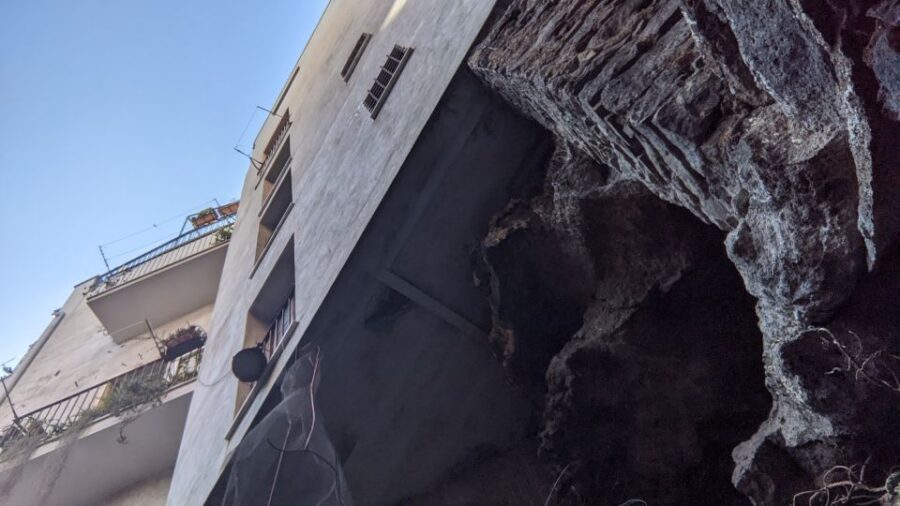
Why this first stop works: the castle’s story is tied to the city’s position. The building originally stood close to the sea, protected by defensive structures and a moat. Even the construction hints at its purpose: the outside wall uses well-squared lava stone blocks, while a second inner wall is much more irregular.
Admission is free for this stop, and you’re given about an hour. That’s plenty of time to look around and let the guide’s explanations sink in before you move into the busier central streets.
If you’re the kind of traveler who likes orientation, begin here. It sets the stage for the rest of the walk: ancient layers, rebuilds after disasters, and the way Catania’s volcanic materials shape everything you see.
The Pescheria fish market and Fontana dell’Amenano: everyday Catania, explained
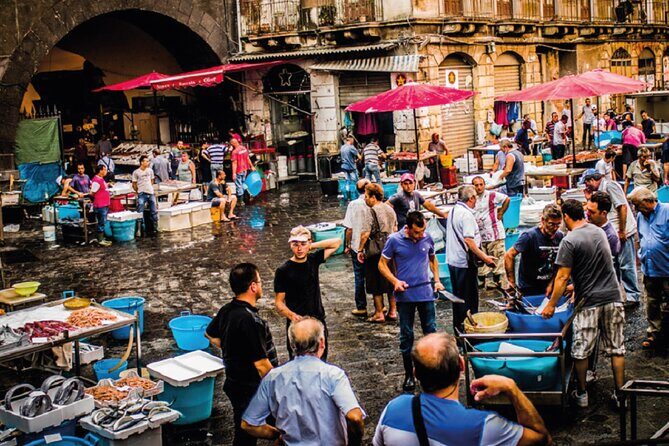
Next you’ll head to A’ Piscaria (Mercato del Pesce). This is the famous fish market in the historic center, near Piazza del Duomo and the Fontana dell’Amenano. Locals call it Piscarìa, a term that comes from Sicilian dialect.
This stop is only about 20 minutes, but that’s enough to get the point. You’re not there to “tour” vendors; you’re there to watch how everyday life and historic central landmarks share the same space. Even if you just stand for a few minutes, you’ll understand why Catania doesn’t feel like a museum city.
Then it’s straight to Fontana dell’Amenano, a fountain created in 1867 by sculptor Tito Angelini from Carrara marble. The fountain is dedicated to the Amenano, the underground river that flows beneath the city of Etna.
This is a great quick mental switch. After castle walls and market energy, you get a piece of the hidden infrastructure under your feet. It makes the city feel layered, not flat.
Other walking tours we've reviewed in Catania




Piazza del Duomo and Basilica Cattedrale di Sant’Agata: Baroque power after 1693
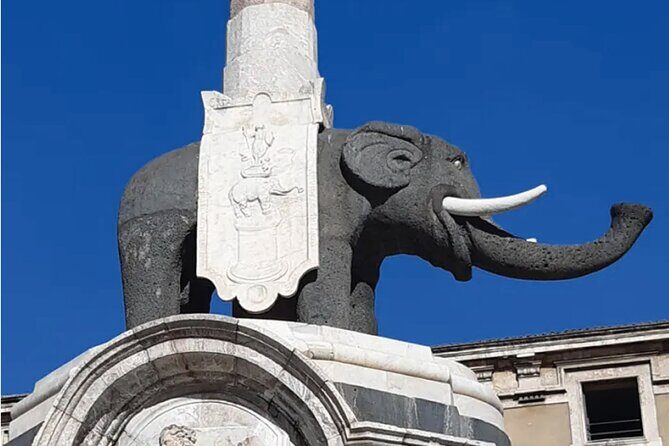
Piazza del Duomo is the beating heart of Catania. Expect iconic monuments clustered together, including the Cathedral of Sant’Agata, which the guide frames as the city’s patron-saint story told through architecture.
The walk gives you around 20 minutes for the square and then another 20 minutes for the cathedral itself. This timing matters because it keeps you from rushing the main visual payoff and then running out of time for photos.
Here’s what makes Sant’Agata especially important to understand before you look:
- It’s a major example of Baroque architecture.
- Its construction began in 1090 on the remains of an ancient Roman temple dedicated to Jupiter.
- A huge earthquake in 1693 destroyed much of the city, and the cathedral was rebuilt afterward.
That earthquake detail changes how you look at the building. You stop seeing it as just ornate stone and start thinking about resilience and rebuilding—Catania’s identity after catastrophe.
Piazza Università and the bronze lamppost legends

After the cathedral zone, you move to Piazza Università, named for Palazzo degli Studi (also called Palazzo Università). The highlight here is clever and slightly theatrical: four bronze lampposts at the corners, each tied to a legend.
The guide points you toward the figures portrayed:
- Gammazita, the young figure from popular legend
- Cola Pesce, the sailor known for underwater skill
- Anfinomo and Anapia, the brothers
- Uzeta, the legendary Catania paladin
This is about 10 minutes, and that’s right. You’re meant to find the lampposts, read what they represent, and then keep moving. If you do it slowly, you’ll start seeing the square as a living stage for stories, not just an open patch of pavement.
Anfiteatro Romano underfoot: the option you can add with a 4€ ticket
At Piazza Stesicoro, the guide brings you to Anfiteatro Romano. It’s an ancient Roman theatre dating back to the 1st century BC, but it’s not sitting peacefully in the open. It’s been submerged over centuries by eruptions of Etna and seismic events.
You won’t enter as part of the main guided flow. The tour explicitly doesn’t include the admission ticket, but it gives you the idea: you can visit it yourself if you want. The ticket cost is 4€.
This is a good moment to choose your own level of effort. If you’re into archaeology and want the physical “under the city” experience, add it. If you’d rather protect your time and energy for the later monuments, skip it and keep your focus above ground.
Via dei Crociferi: a cinematic street with old bones
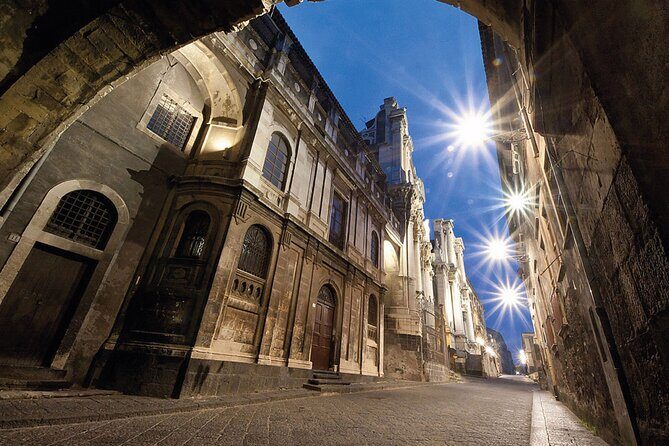
Then comes Via dei Crociferi, one of the oldest and most evocative streets in Catania’s historic center. The guide frames it as a filming favorite because of its cinematic charm.
You get about 10 minutes here. Think of it as your palate cleanser between heavy monument zones: a chance to walk the street, look up, and feel the rhythm of architecture that doesn’t need a ticket to be interesting.
Even if you don’t stop for long, you’ll leave with a sharper sense of Catania’s street scale and the way the city looks from eye level.
Benedictine Monastery of San Nicolò l’Arena: the bigger finale
The end point is Benedictine Monastery of San Nicolò l’Arena, at Piazza Dante Alighieri (32). You’ll get about 30 minutes at this final stop.
This monastery matters because it’s described as a major reference point in Catania’s history. In particular, it’s highlighted for the eighteenth century—its grandeur, the richness of its rooms, and the noble origins of the monks who lived there.
A 30-minute window is a solid amount of time for a final “slow down” moment. It’s also a strong closing image: after market energy, cathedral grandeur, and legend-filled squares, you end with a site shaped by discipline, scholarship, and the long memory of the city.
One more smart detail: even though the tour has a clear end location, the guide is digital and you decide your ending point. In practice, that means if you want to linger near the last square, you can.
Where to eat: use the built-in restaurant advice on your route
This experience includes best advice for local restaurants with authentic food. The guide is meant to support you between monuments, not just explain stone.
Here’s how I suggest you use it: pick one restaurant option that’s near where you’ll naturally be later in your walk. Don’t force yourself to walk an extra 30 minutes just for a recommendation. Catania’s historic center is tight, and you’ll enjoy your meal more if you’re not dragging your feet.
Who this self-guided Catania walk is best for
This is a great fit if:
- You like learning on your own schedule.
- You’d rather spend money on a meal than a pricey guided service.
- You want the core highlights of Catania in one coherent loop.
It’s also ideal for people who dislike large groups. The route is structured, but you’re not locked into a marching line.
It may be less ideal if you want answers in the moment. There’s no in-person guide, so if you’re the type who asks dozens of questions, you’ll have to rely on what the guide provides.
My quick advice before you book
Book it if you want a low-cost way to understand Catania while you walk through the main sights, with freedom to pause and adjust. The free-entry concentration is a big reason it feels like a bargain.
Think twice if you don’t want to depend on your phone for navigation and audio, or if your internet connection tends to be unreliable. In that case, consider downloading everything you can ahead of time and double-checking the activation steps in your voucher.
Overall, this is one of the easiest ways to turn a normal walk through the center into a clear, story-driven route that helps you see more than you would on autopilot.
FAQ
How long is the Catania walking tour?
It takes about 3 to 4 hours.
Is the Anfiteatro Romano ticket included?
No. The Anfiteatro Romano ticket costs 4€ and is not included.
Do I need headphones?
Headphones are not included. You can hear the audio through your smartphone speakers or use your own headphones.
Do I need internet on my phone?
Yes. You need a smartphone with an internet connection to use the digital guide.
What languages are available for the guide?
The audio-guide and text are available in English, Spanish, Italian, German, and French.
Where does the tour start and end?
It starts at Ursino Castle, Piazza Federico di Svevia 21, Catania, and ends at the Benedictine Monastery of San Nicolò l’Arena, Piazza Dante Alighieri 32, Catania.
Can I cancel for a full refund?
Yes. You can cancel up to 24 hours in advance for a full refund.