REVIEW · BAROQUE TOWNS OF SICILY
From Catania: Neapolis of Syracuse, Ortygia, and Noto Tour
Book on GetYourGuide →Operated by Kemedia · Bookable on GetYourGuide
Greek ruins, baroque streets, one long day. You’re taking in Neapolis in Syracuse (Greek Theatre, latomie) plus the island of Ortigia and then finishing in Noto for that famous Sicilian Baroque glow. It’s a UNESCO-heavy day that mixes big stone monuments with real street scenes.
Two things I love about this tour. First, the pacing gives you real time to wander: Neapolis is largely self-guided, so you can linger where your feet take you instead of being rushed from photo spot to photo spot. Second, the human part really matters here—your multilingual guide (I’ve seen guides such as Nando, Lorena, Salvo, Andrea, and Franco on this route) tends to explain what you’re looking at in plain language, and that makes the ruins feel less like labels and more like a story.
One drawback to plan for: it’s an 8–9 hour day with a lot of moving between places, and it’s not suitable for people with mobility impairments. Also, since Neapolis is self-guided, you may want to ask your guide for a quick route plan before you step into the park so you don’t miss the best bits.
In This Review
- Key highlights worth your time
- How This Day Fits Together: Catania → Neapolis → Ortigia → Noto
- Neapolis Archaeological Park: Greek Theatre and the Big-Spectacle Moments
- Latomie and San Nicolò ai Cordari: Where the Ear of Dionysius Lives
- Ortigia Island by Foot: Arethusa Fountain and Piazza del Duomo’s Palaces
- Noto’s Sicilian Baroque Stone Garden: Corso Vittorio Emanuele on Show
- Guides, Group Size, and the Real-World Pace
- Practical Stuff That Helps: Shoes, Lunch Timing, and Comfort
- Who This Tour Suits Best (and Who Might Want Something Different)
- Should You Book This Catania to Neapolis, Ortigia, and Noto Tour?
- FAQ
- Is the Neapolis Archaeological Park part guided?
- How long is the tour?
- Where does pickup happen?
- How large is the group?
- What languages are spoken by the tour leader?
- Is lunch included?
- Is this tour suitable for people with mobility impairments?
- Are pets allowed?
- Can I cancel for a full refund?
Key highlights worth your time
- Greek Theatre with an enormous cavea: one of the biggest Greek seating areas ever built
- Latomie and the Ear of Dionysius: a dramatic limestone quarry-cave you can’t unsee
- Ortigia on foot: historic streets with Greek, Christian, and Arabian layers
- Arethusa Fountain and Piazza del Duomo: the symbolic heart of Ortigia
- Noto’s “Stone Garden”: Sicilian Baroque clustered into palaces and churches on Corso Vittorio Emanuele
How This Day Fits Together: Catania → Neapolis → Ortigia → Noto
This is a classic “three stops, one story” day. You start in Catania, ride in a shuttle to Syracuse’s archaeological zone, then cross over to Ortigia, and finally continue to Noto in the Val di Noto area where the Baroque style puts on its best costume.
Expect long travel legs and a walking day that keeps moving. The payoff is you get two UNESCO sites worth of atmosphere—ancient Syracuse’s ruins and the Baroque townscape of Noto—without having to manage trains or rental cars.
Other Syracuse, Ortigia and Noto tours from Catania we've reviewed in Catania
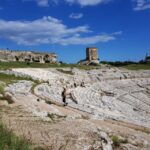
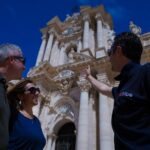
Neapolis Archaeological Park: Greek Theatre and the Big-Spectacle Moments
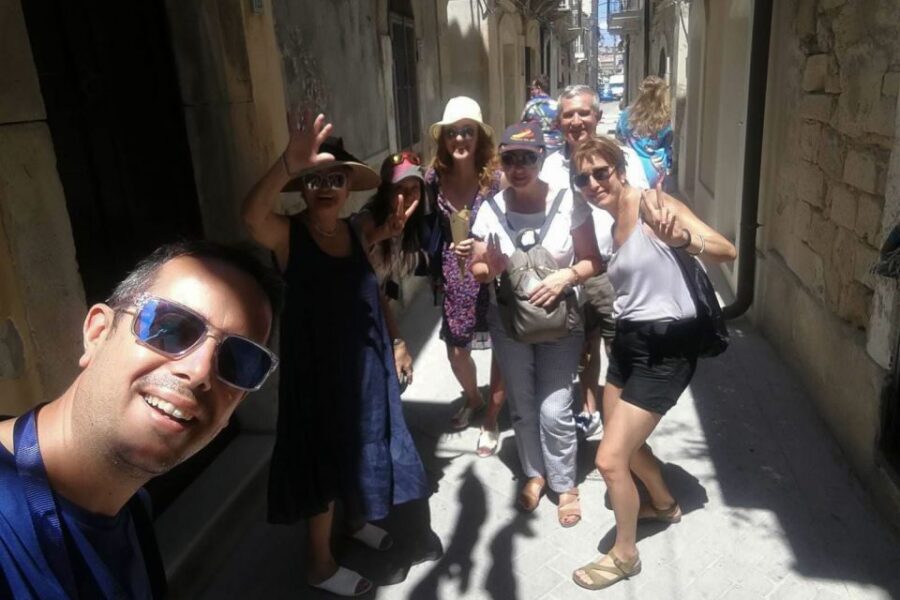
Neapolis is where Syracuse becomes a time machine. You’ll enter the archaeological park and spend about an hour moving at your own pace, which is exactly the right amount of time if you pick a few must-sees instead of trying to cover everything.
The headline is the Greek Theatre. What matters isn’t just that it’s old—it’s the cavea, the seating bowl, which is described as the largest ever built by the ancient Greeks. Standing there, you can feel why performances and public life mattered so much in Greek cities: the geometry does the work for you.
Nearby, you’ll also see the park’s Roman imperial-age amphitheatre, adding another layer of how the city kept reusing space for mass gatherings. If you like archaeology, this combo—Greek stage, Roman crowd—helps you understand Syracuse as a living city, not a frozen museum.
Practical note: because your Neapolis time is self-guided, I’d treat it like a mission. Decide you want the Theatre and the latomie, then use the rest of the hour to wander Roman streets and smaller highlights.
Latomie and San Nicolò ai Cordari: Where the Ear of Dionysius Lives
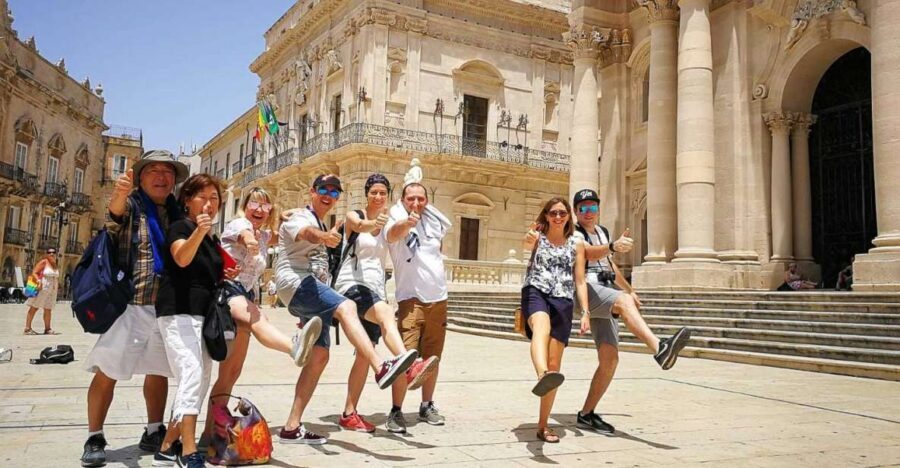
Right around the Theatre area, the tour’s best “I didn’t expect that” moment shows up: the latomie—limestone quarries and cave spaces tied to the city’s later history. One of the most famous spots here is the Ear of Dionysius, a limestone cave associated with echoing acoustics. Even if you already know the legend, the physical place is powerful: it’s stark, enclosed, and visually different from open-air ruins.
You’ll also pass the Christian Church of San Nicolò ai Cordari. Seeing a church tucked near older structures is one of the real lessons of Sicily: new communities build on top of old places, and the results can look messy in a good way.
This is where the “self-guided” approach can work for you. If you want context, find your guide near the park entrance for a quick orientation question, then use your hour to choose what you want to look at up close.
Ortigia Island by Foot: Arethusa Fountain and Piazza del Duomo’s Palaces
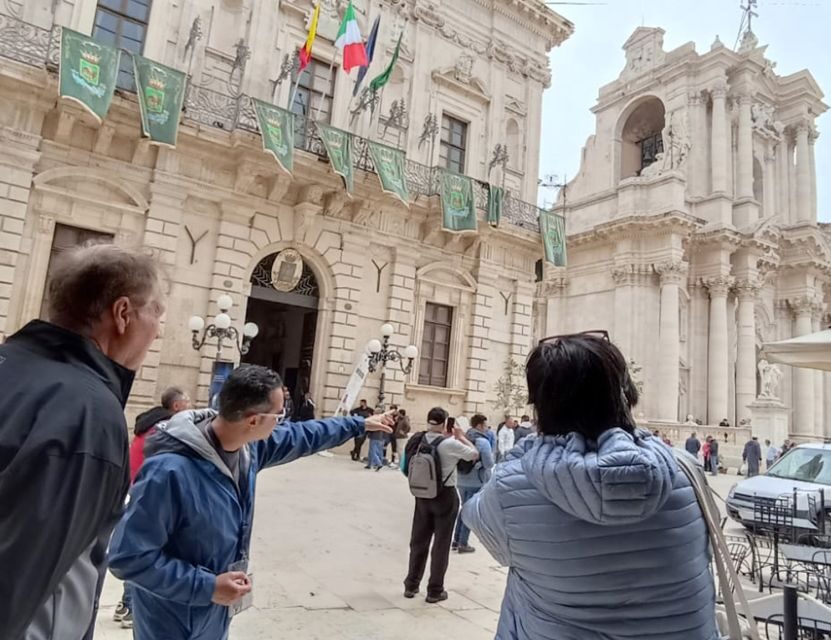
After Neapolis, the day shifts from ruins to street life. Ortigia is Syracuse’s historic center, separated from the mainland by a narrow channel and packed with layers you can actually walk through—Greek temple spaces, Christian churches, and the feel of older Arabian-influenced streets.
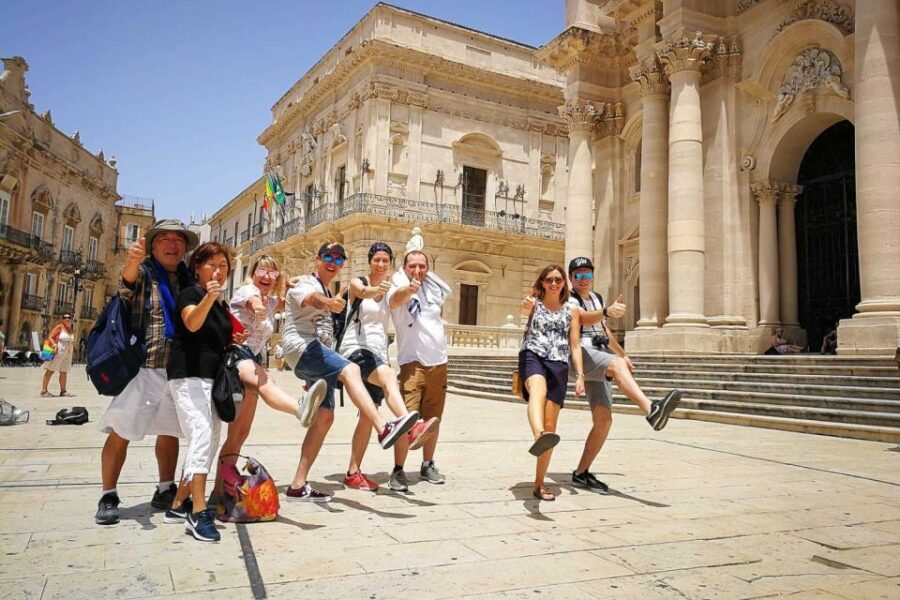
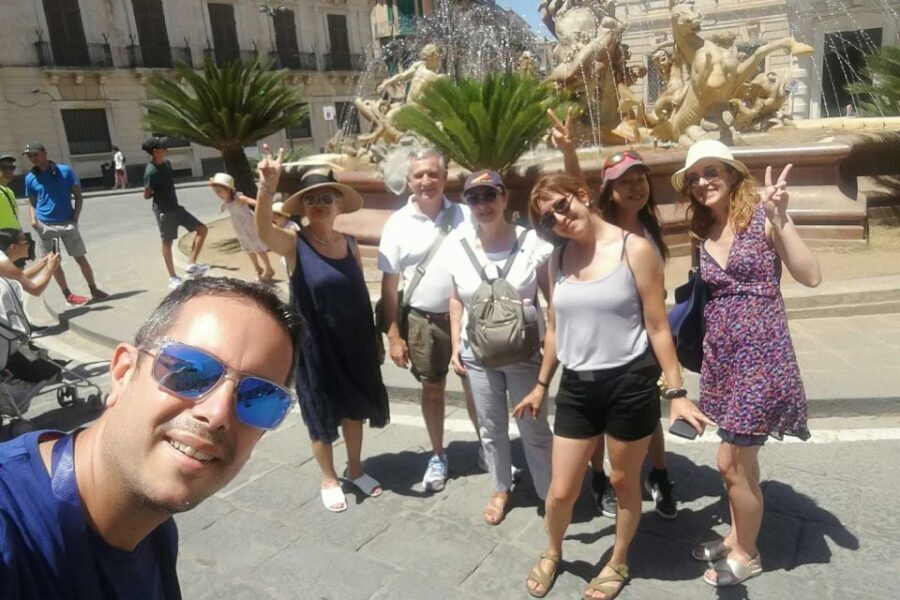
You’ll spend about an hour and a half on Ortigia, which is enough time to see the key symbols without turning it into a sprint. The Arethusa fountain is usually the first must-stop vibe check—small, memorable, and tied to Syracuse’s identity. Then you’ll head toward Piazza del Duomo, where the Baroque palaces show off their drama.
Two specific palaces you may notice around the square include the Beneventano del Bosco Palace and the Senate Palace. Look up and you’ll see why people call this part of Sicily visually theatrical: it’s stone architecture built to be stared at.
A smart move here is to pause in a couple of spots instead of trying to photograph everything while walking. Ortigia rewards slow glances—doorways, church facades, and street rhythm. With limited time, you want “best moments” rather than “all moments.”
Noto’s Sicilian Baroque Stone Garden: Corso Vittorio Emanuele on Show
Noto is the day’s final big style shift, and it’s a UNESCO World Heritage Site. This is Sicilian Baroque as public art—palaces and churches grouped together so you feel like you’re walking through an open-air design gallery.
You’ll have about 1.5 hours in Noto with a guided component. The big street to aim for is Corso Vittorio Emanuele, lined with the town’s most striking facades. The description “Stone Garden” fits because the architecture feels grown, not assembled—golden tones, ornate details, and repeating patterns that make the street look composed even when you’re just wandering.
If you’re the kind of traveler who likes structure and design, Noto delivers. If you’re more “show me the view,” you’ll still appreciate the way the town seems to frame Sicily’s landscape with its pale, warm stone.
One planning thought: Noto is popular, and this kind of day can overlap with festivals or crowds. If streets feel busy, focus on the best facades you can reach comfortably, and treat the rest as bonus.
Other Baroque town tours of Sicily we've reviewed in Catania





Guides, Group Size, and the Real-World Pace
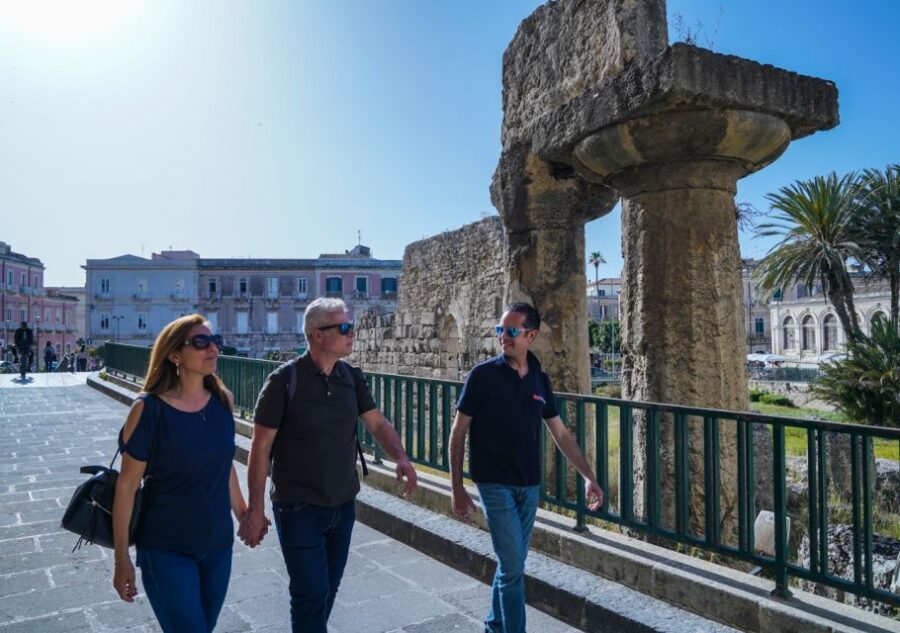
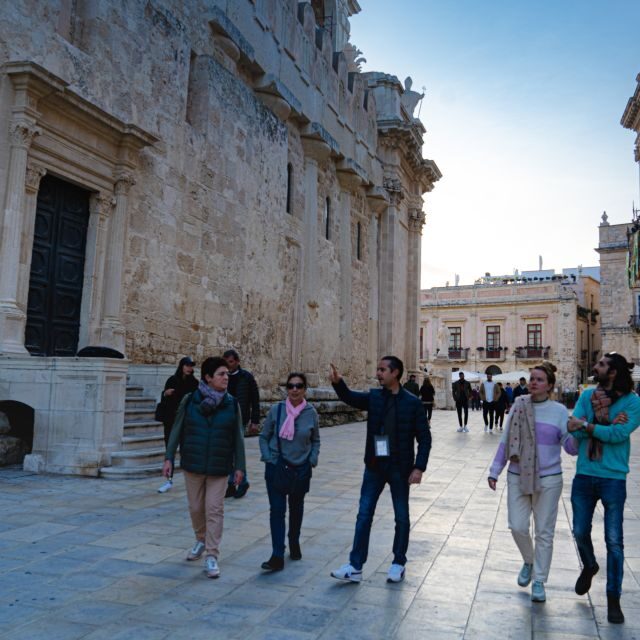
This is a small-group tour limited to 8 participants, and that matters more than you’d think. With fewer people, it’s easier to ask a question, get a recommendation, or have the guide adjust pace when someone needs a photo or needs a bathroom stop.
The strongest pattern in the experience is guide quality. Guides like Nando, Lorena, Salvo, Andrea, and Franco have been singled out for being engaging and helpful—often with clear English plus real enthusiasm for what you’re seeing. That’s not fluff. On a day like this, good explanations help you read ruins faster and enjoy churches more, because you know what you’re looking at.
Still, I’d go in expecting a packed schedule. Some days run smoothly and some days don’t—time can get chewed up by traffic, parking, or the simple fact that you’re moving between three towns. If you hate feeling rushed, build in some acceptance beforehand, and use your self-guided time wisely.
Practical Stuff That Helps: Shoes, Lunch Timing, and Comfort
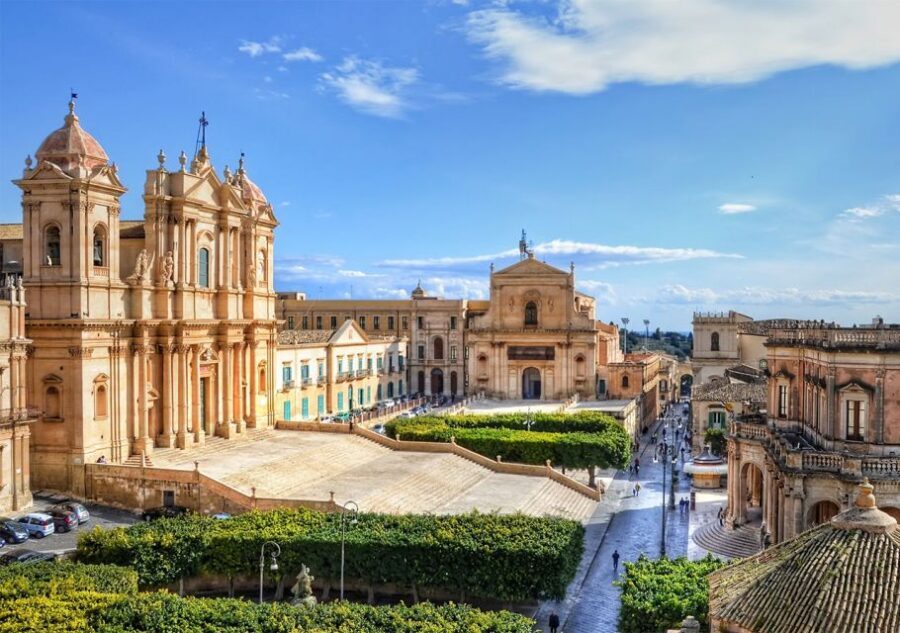
You’ll be walking on a mix of ancient stone, uneven surfaces, and streets that can be a bit tight. Wear comfortable shoes you trust. Bring weather-appropriate clothing; this part of Sicily can be hot, and it can also turn in a hurry.
Lunch is on your own. My advice: don’t treat lunch like an afterthought because it affects your afternoon. If you can, eat something simple near the places you’ll actually be. Then you won’t lose time hunting for food or waiting for a table.
Also, since Neapolis is self-guided, you may benefit from a quick strategy before you enter the park. When your guide gives you the rundown, mentally mark two targets: the Greek Theatre and the latomie/ear area. Everything else becomes flexible.
If you’re sensitive to hearing explanations in a moving van, choose a seat closer to the front when possible. There’s no guarantee of special audio equipment.
Who This Tour Suits Best (and Who Might Want Something Different)
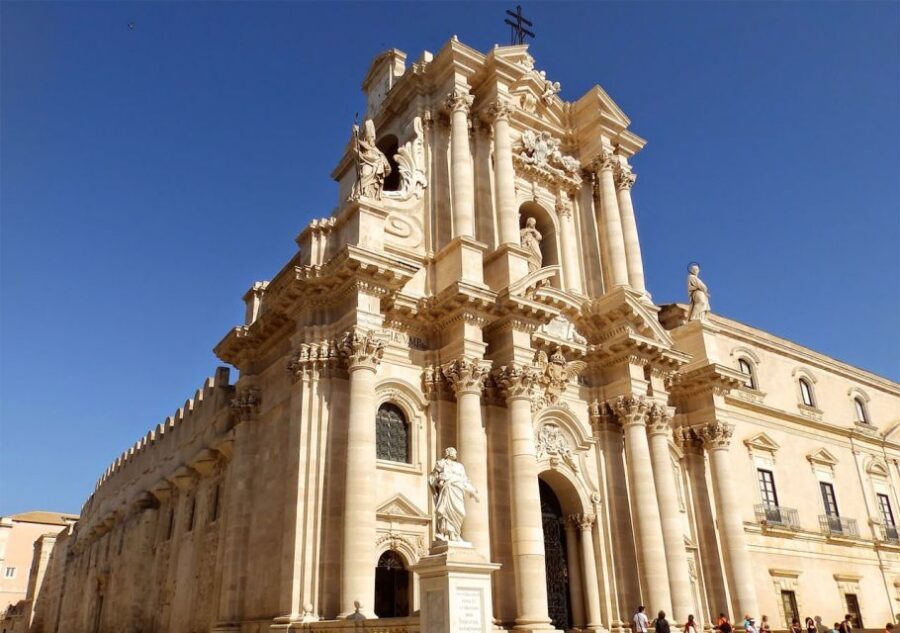
Book this if you want a single-day hit list of ancient Syracuse and Sicilian Baroque without the hassle of planning multiple independent trips. It’s ideal for first-timers who want the highlights—Greek Theatre, Ear of Dionysius, Ortigia fountain and cathedral square, and Noto’s Baroque streets—and don’t want to manage timing between them.
It’s also a good fit for history lovers who appreciate context, but want flexibility. Self-guided Neapolis works well if you like walking at your own pace after getting the key info from the guide.
Skip this tour if you need lots of accessibility support. It’s listed as not suitable for people with mobility impairments and involves a long day with walking and transfers.
Should You Book This Catania to Neapolis, Ortigia, and Noto Tour?
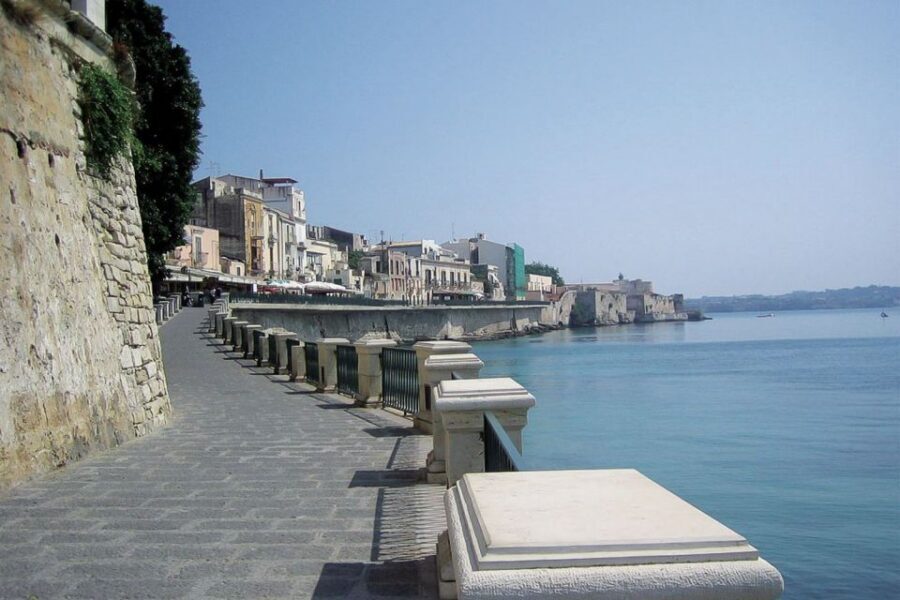
I’d book it if your main goal is a high-value, highlight-packed day that covers ancient Syracuse plus Noto’s Baroque style. The combination is strong: guided orientation where it counts, self-guided freedom where it helps, and stops that are genuinely different from each other.
I’d think twice if you hate long days or you’re the type who needs every minute explained step-by-step. Because Neapolis is self-guided and the day is time-tight, you’ll get the most from it by using those two Neapolis targets (Theatre and latomie/ear area) and then slowing down in Ortigia and Noto for the best “wow” moments.
If that sounds like your style, this is a smart way to see a lot of Sicily’s defining faces in one go.
FAQ
Is the Neapolis Archaeological Park part guided?
You’ll have the entry ticket for Neapolis included, but a guided tour of Neapolis is not included. You explore Neapolis at your own pace.
How long is the tour?
The duration is listed as 8–9 hours, depending on the starting time available.
Where does pickup happen?
Pickup and drop-off are included for hotels and B&Bs in Catania only.
How large is the group?
The tour is a small group limited to 8 participants.
What languages are spoken by the tour leader?
The live tour leader speaks Italian, English, and Spanish.
Is lunch included?
No. Food and drinks are not included, so lunch is on your own expense.
Is this tour suitable for people with mobility impairments?
No. It is not suitable for people with mobility impairments.
Are pets allowed?
No. Pets are not allowed.
Can I cancel for a full refund?
Yes, you can cancel up to 24 hours in advance for a full refund.