REVIEW · CATANIA COOKING CLASSES
Cooking Class with lunch or dinner
Book on GetYourGuide →Operated by Futuro e Lavoro · Bookable on GetYourGuide
Cooking in Sicily beats sightseeing on a rainy day. This Mediterranean cooking class in Catania turns you from spectator into cook, using typical Sicilian ingredients and a menu you can actually repeat at home. I really like the hands-on setup where everyone helps, and I love the meal-style ending with tasting and Sicilian wine. The one drawback to consider: it’s a 3-hour experience, so if you’re not ready to cook and eat, you may feel rushed.
You meet at the laboratory kitchen in Catania, and the group stays small (minimum 2, maximum 12). If you’re the type who wants real recipes, not just photos, this format makes sense. You’ll leave with the taste of Catania on your plate and a clear idea of how these dishes come together.
In This Review
- Key highlights to look for
- Sicilian Cooking in Catania: Hands-On, Not a Lecture
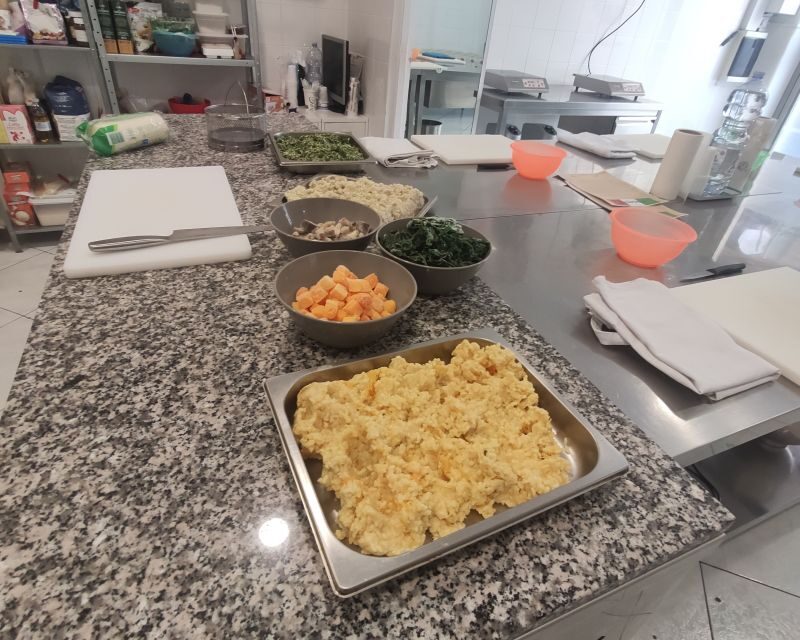
- Inside the Laboratory Kitchen: What the Setup Means for You
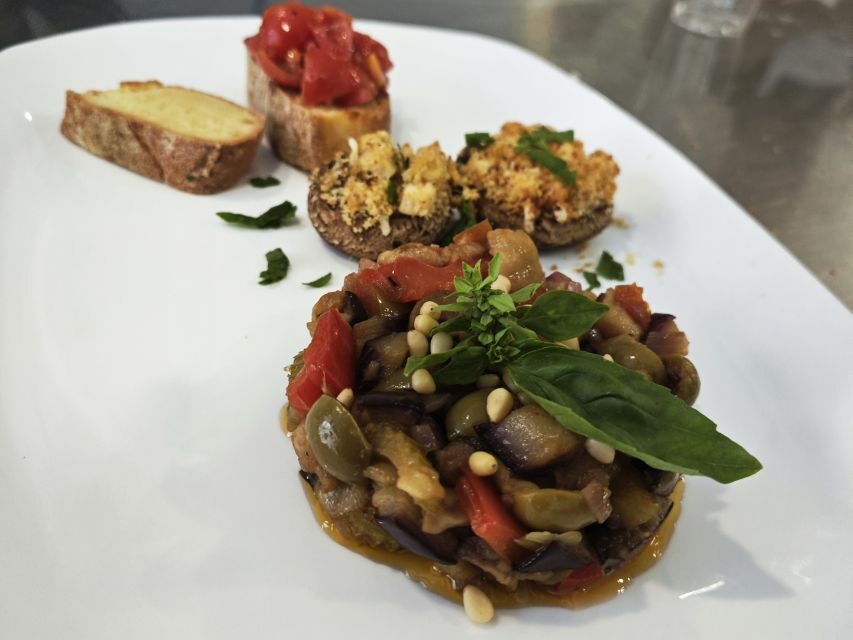
- The Menu You’ll Cook: Bruschetta, Caponata or Parmigiana, Pasta, Cannolo
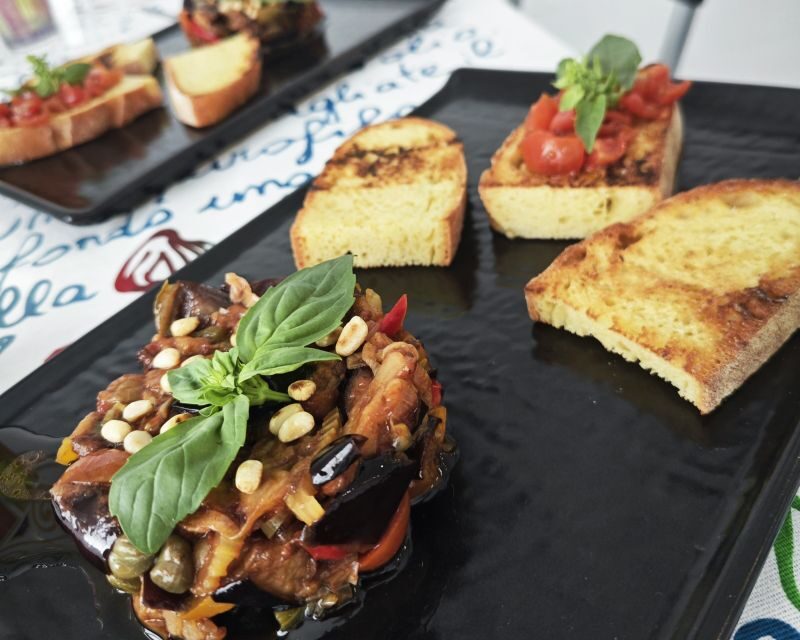
- Sicilian bruschetta (your starter)
- Caponata (sweet and sour) or eggplant parmigiana
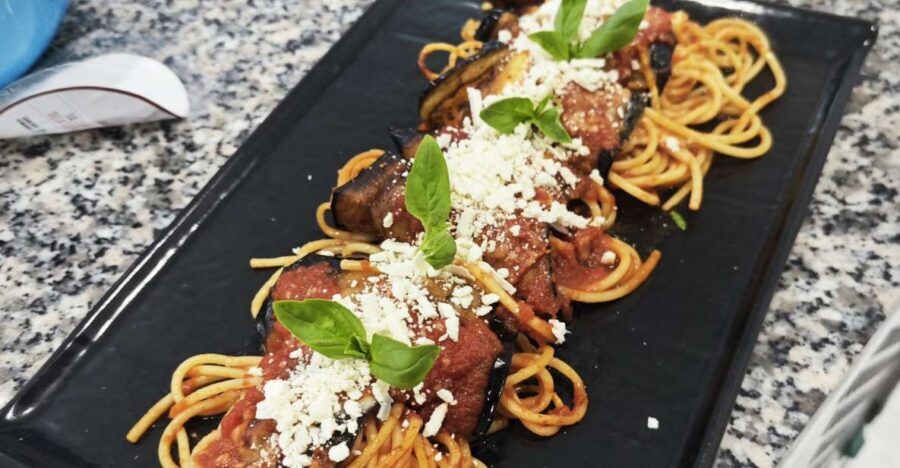
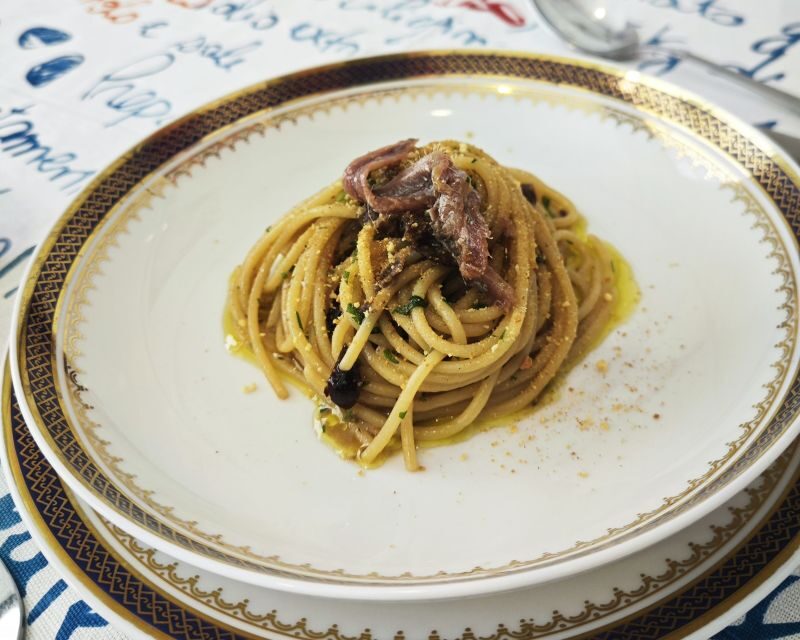
- Pasta course: spaghetti rolls or short pasta with ricotta, tomato, and basil
- Cannolo: decoration and tasting
- Tasting and Wine: How the Meal Fits Together
- Instructor Simona and the Teaching Style That Gets Results
- Value Check: Is $107.62 Worth It?
- Timing and What to Plan for on Your Day
- Who This Class Is Best For (and Who Should Skip It)
- Should You Book This Cooking Class in Catania?
- FAQ
- FAQ
- What is included with the cooking class?
- How long is the class in Catania?
- How big is the group?
- Where do I meet for the class?
- What languages are offered?
- What dishes are included in the menu?
Key highlights to look for
- Small-group class (2 to 12 people) so you’re not lost in a crowd
- English or Italian instruction to match how you want to learn
- Hands-on prep: you’ll help make island dishes you can replicate at home
- A Sicilian menu with multiple courses, including cannolo decoration and tasting
- Wine built into the experience, plus lunch or dinner with a bottle of Sicilian wine
- Professional lab equipment and a kitchen built for cooking, not demos
Sicilian Cooking in Catania: Hands-On, Not a Lecture
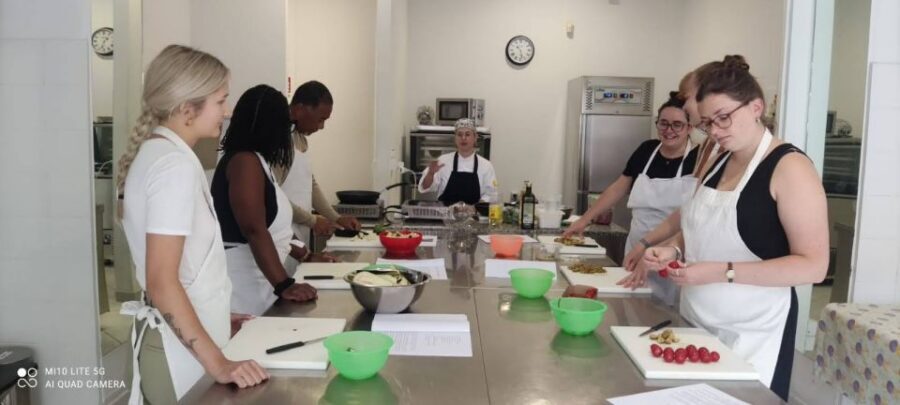
This class is built around the idea that Sicilian food is best learned with your hands. Instead of watching someone else cook, you’ll participate in preparing the dishes, using professional cooking equipment in a properly equipped laboratory. The pace is friendly and practical, and the goal is simple: you should be able to recreate what you make once you’re back home.
Catania is a smart place to do this because you’re close to the everyday cooking style that shaped the island’s flavors. The menu focuses on classic Sicilian comfort foods, with options like caponata and eggplant parmigiana, plus pasta and dessert. If you love food that feels bold but not fussy, you’ll probably enjoy the balance here.
The class also keeps things grounded. It’s not about showing off technique for its own sake. It’s about giving you working knowledge: what to prep, what to watch for, and how the dishes are meant to taste together.
Other Catania cooking classes we've reviewed in Catania
Inside the Laboratory Kitchen: What the Setup Means for You
You start and end where it begins: at the laboratory meeting point in Catania, with the activity finishing back at the same place. That matters more than it sounds. You don’t waste your energy hunting for transfers or trying to navigate between stops. You can just focus on cooking and eating.
The kitchen setup includes typical Sicilian products and professional tools, which is a big deal for learning. When equipment and ingredients are on hand and set up for teaching, you’re more likely to grasp the flow of the recipe instead of guessing later.
English and Italian are both available, and that helps if you’re unsure about food vocabulary. Also, because the group size can be as small as 2 people, you can often get more direct attention than in big tours. In a small class, questions don’t feel awkward, and you can actually understand what the instructor is aiming for.
If you’re the kind of traveler who likes to learn by doing, this kind of lab-style kitchen is a strong match.
The Menu You’ll Cook: Bruschetta, Caponata or Parmigiana, Pasta, Cannolo
The class menu is built to cover the core Sicilian flavors people come for. You’ll see the lesson through several dishes, not just one. Based on the example menu, here’s what you can expect to cook and taste:
Sicilian bruschetta (your starter)
You’ll work with a Sicilian typical bruschetta. This is the kind of dish that teaches you more than bread and toppings. It shows how simple ingredients become special when the flavors are balanced and used at the right intensity.
This course is also a nice warm-up. You’ll get comfortable with the kitchen rhythm early, before moving into richer dishes.
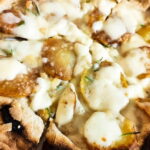
Caponata (sweet and sour) or eggplant parmigiana
Next comes a major fork in the menu: caponata in sweet and sour style or aubergine parmigiana. Both are Sicilian classics, but they teach very different lessons.
- Caponata is about that signature sweet-sour contrast: not just sweet, not just tangy, but both working together.
- Eggplant parmigiana shifts you toward layering and comfort, with the focus on rich flavors and texture.
You’ll likely appreciate having a choice (or a class variation) because Sicily loves both traditions. Eggplant fans usually feel at home here.
Other cooking classes in Catania

Pasta course: spaghetti rolls or short pasta with ricotta, tomato, and basil
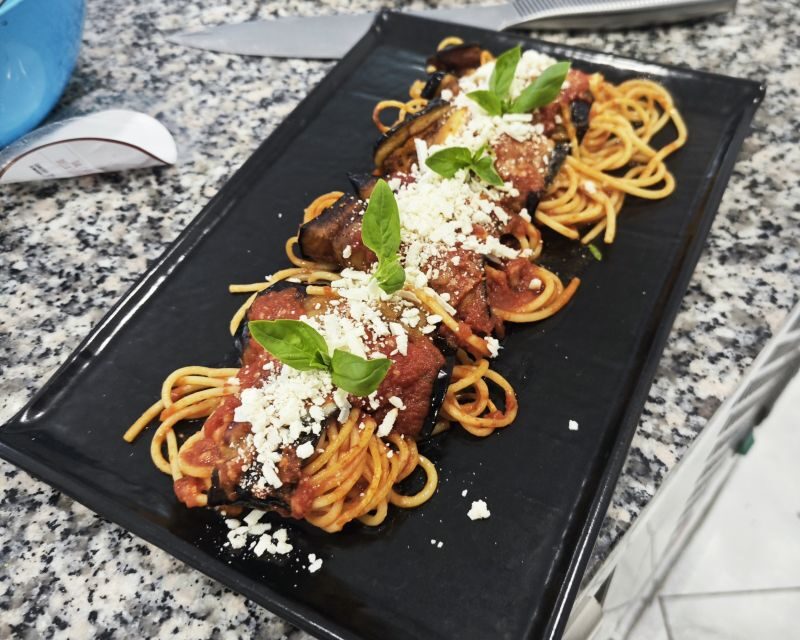
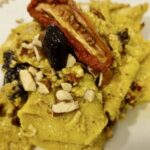
For the main, you’ll tackle pasta. The menu example includes spaghetti rolls with the norm (or a similar version) or a short pasta option with ricotta, tomato, and basil.
Even if you’re not a pasta expert, this part is useful because it connects sauce flavor to the way pasta carries it. You learn how to season properly, not just what ingredients to use.
Cannolo: decoration and tasting
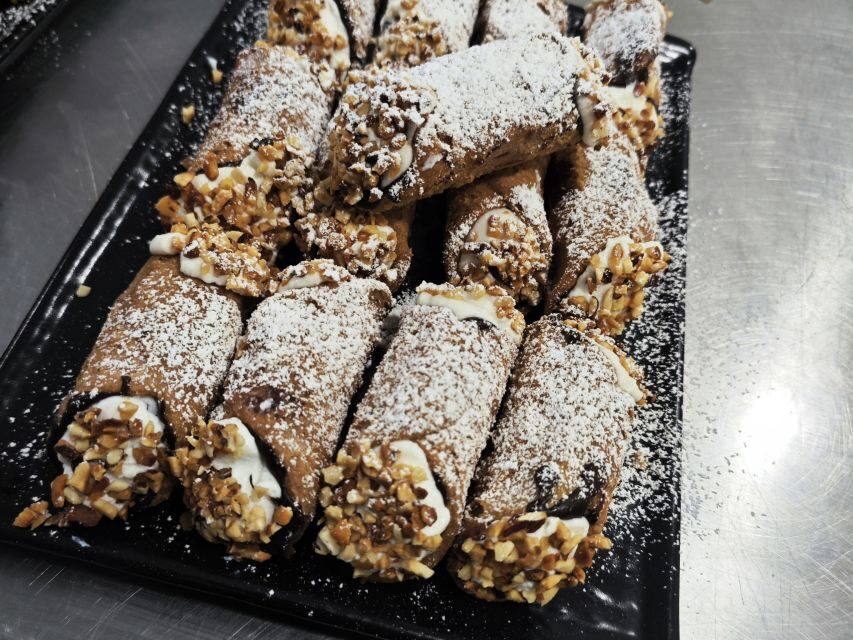
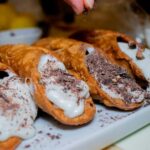
Dessert is where this class delivers. You’ll do Sicilian cannolo decoration and tasting, which is fun and very “Sicily” in a way that’s hard to fake. Cannolo isn’t just a sweet finish here; it’s a hands-on moment that makes the whole meal feel earned.
You’ll leave with a clearer picture of what makes a good cannolo taste right, and what changes when you assemble it.
Tasting and Wine: How the Meal Fits Together
The experience ends with lunch or dinner using the dishes you prepared. You’ll also get a bottle of Sicilian wine included with the meal. That means the class isn’t only cooking practice; it’s also a full food moment where you get to taste the results.
There’s also a typical wine tasting mentioned as part of the experience. Wine is one of the easiest ways to understand why these dishes work. When you taste along the way, you start to connect acidity, richness, and herbs to how they pair.
The best practical advice here is to arrive hungry and ready to eat. The class is structured around producing multiple courses, and the meal is not a tiny snack. One of the standout points from past participants is how much food there is, and that you get to enjoy it with wine.
If you plan your day around it, treat this as your main event meal. Don’t schedule something heavy right before.
Instructor Simona and the Teaching Style That Gets Results
One detail that pops up clearly is the instructor. In the feedback, Simona is described as fantastic, friendly, and easy to understand, with help that makes the process feel approachable. That matters because Sicilian cooking can sound intimidating until someone explains it in plain steps.
What I like about this style of teaching is that it’s not just about getting through a recipe. It’s about making sure you understand how the dish should taste while you cook. When the instruction is clear and the instructor is helpful, you’re more likely to remember what you did and why.
You’ll probably find that the small group size also supports learning. In a class that maxes at 12, questions land quickly, and you’re less likely to feel stuck waiting for attention.
Value Check: Is $107.62 Worth It?
The price is $107.62 per person for a roughly 3-hour cooking experience. On paper, that might look like “just a class.” In practice, it’s more like paying for a hands-on cooking session plus a proper meal.
Here’s what’s doing the heavy lifting for value:
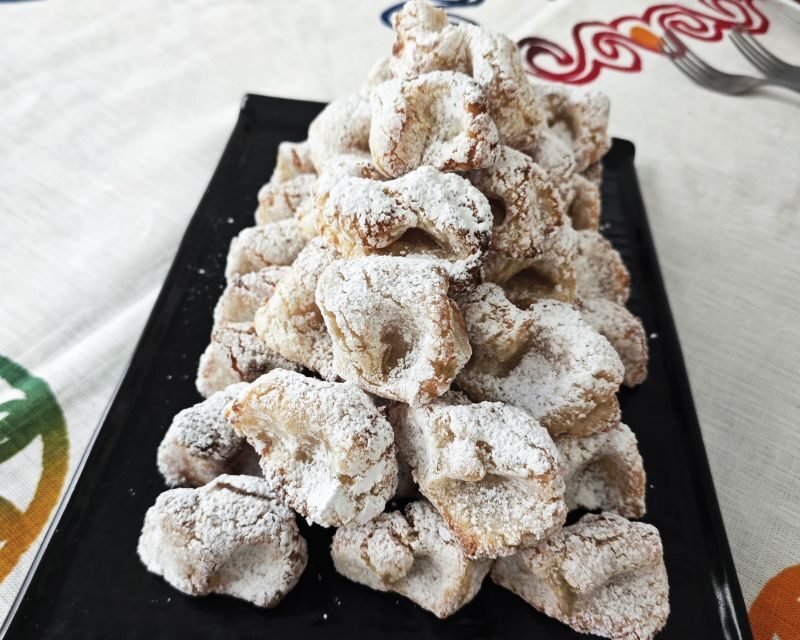
- Multiple dishes (bruschetta, caponata or parmigiana, pasta, cannolo)
- Lunch or dinner built from what you cook
- A bottle of Sicilian wine included
- Use of professional cooking equipment
- Typical Sicilian ingredients
- Small-group instruction (2 to 12)
- English or Italian guidance
If you were going to eat a full Sicilian meal and spend extra time learning recipes, it would add up quickly. This format bundles it together. You’re not just buying food; you’re buying the process and the know-how.
If you’re on a tight budget, you might compare it to dining out. But if you genuinely want to bring Sicily home through food, this looks like fair value for what’s included.
Timing and What to Plan for on Your Day
The duration is listed as 3 hours, with starting times depending on availability. That’s a sweet spot: long enough to cook several dishes and enjoy lunch or dinner, short enough to still enjoy other parts of Catania afterward.
Because it ends back at the meeting point, you don’t need a complicated return plan. You can treat the class as a self-contained block in your schedule.
A smart move is to build your day around this meal, not around squeezing in extra stops. You’ll be cooking, then eating, then tasting wine. Even if you’re comfortable in the kitchen, your energy will go toward the food experience.
Who This Class Is Best For (and Who Should Skip It)
This class is a great fit if you:
- want recipes you can repeat at home
- enjoy learning through hands-on cooking
- like Sicilian classics like caponata, parmigiana, pasta, and cannolo
- care about food paired with Sicilian wine
- appreciate small groups and clear instruction
It may be less ideal if you:
- dislike cooking and prefer watching
- want a long sightseeing tour with minimal food involvement
- are short on time and can’t fit a 3-hour block
If you’re traveling with someone who eats well and cooks only on vacation, this is one of those experiences where you both leave happier.
Should You Book This Cooking Class in Catania?
If your idea of a great Sicily day is food that you can recreate, I’d book it. The combination of small-group hands-on cooking, a multi-course menu, and a real meal with Sicilian wine included makes this feel like a full experience, not a quick activity.
I’d especially consider it if you want instruction in English or Italian and you like the comfort of a structured menu: bruschetta, caponata or parmigiana, pasta, and cannolo. Come hungry, ask questions while you cook, and you’ll get more than a nice dinner.
FAQ
FAQ
What is included with the cooking class?
You use professional cooking equipment, use typical Sicilian products to prepare the dishes, and you get lunch or dinner with the dishes you prepare. A bottle of Sicilian wine is included.
How long is the class in Catania?
The duration is listed as 3 hours, and starting times vary based on availability.
How big is the group?
The cooking class runs with a minimum of 2 people and a maximum of 12 people.
Where do I meet for the class?
The start is at the laboratory. The activity ends back at the meeting point.
What languages are offered?
The instructor offers English and Italian.
What dishes are included in the menu?
An example menu includes Sicilian bruschetta, caponata (sweet and sour or aubergine parmigiana), a pasta dish with options like spaghetti rolls with the norm or short pasta with ricotta, tomato, and basil, and Sicilian cannolo for decoration and tasting. A typical wine tasting is also included.